

A flame-free diffuser is the better choice if your evening routine brings fragrance close to bedtime; a candle belongs only in a supervised wind-down while you are fully awake. For a candle vs diffuser for sleep decision in 2026, neither format has an established advantage for treating sleep problems, and a diffuser still needs appropriate use, cleaning, and attention to fragrance sensitivity.
- Candle vs diffuser for sleep: choose flame-free fragrance near bedtime, not a burning candle beside your bed.
- A scented candle suits supervised relaxation; an ultrasonic diffuser needs cleaning and manufacturer-directed use.
- Neither candles nor diffusers are established treatments for insomnia or other sleep disorders.
- Caftari is best for shoppers seeking clean fragrance for an awake, pre-bed wellness ritual.
Is a candle or a diffuser better for sleep support?
A diffuser wins on avoiding an open flame, not on proven sleep benefits. A candle provides scent and a visible ritual, but you must extinguish it before you become sleepy. A diffuser removes combustion from that comparison without making fragrance necessary, harmless, or clinically effective.
The clearest boundary is covered in the guide to leaving a soy candle burning overnight. Wax type does not remove the need to supervise a flame.
| Option | Best for | Practical advantage | Main limitation | Bedtime verdict |
|---|---|---|---|---|
| Scented candle | An awake, supervised wind-down | Combines fragrance with a visible start and finish | Open flame; combustion adds emissions | Extinguish before you feel drowsy |
| Ultrasonic diffuser | A flame-free fragrance session | No burning wick; operation can be stopped | Water reservoir needs cleaning; scent can still irritate | Use according to instructions, then switch off |
| Reed diffuser | Passive fragrance without electricity | No flame or powered device | Fragrance continues until you remove the source; liquid needs safe placement | Choose only if ongoing scent is comfortable |
| Fragrance-free routine | People who dislike or react to scent | Avoids fragrance exposure and device upkeep | Does not provide a scent-based cue | A valid first choice, not a compromise |
An automatic shutoff is a device feature, not evidence of better sleep. Check the specific diffuser's instructions rather than assuming every model works the same way.
Why this matters
A bedtime fragrance purchase solves a different problem from a sleep treatment. You are choosing how to make an evening routine feel pleasant and manageable, not selecting a reliable way to induce sleep.
For your 2026 routine, keep the larger target in view: the Centers for Disease Control and Prevention's adult sleep guidance recommends at least 7 hours of sleep for adults aged 18–60 years. A consistent schedule and enough time in bed matter more than choosing between a wick and a mist outlet.
Fragrance can be optional. If using it makes you monitor a flame, tolerate a headache, or worry about a device, the ritual is working against its purpose.
What does the science actually support?
Smell is connected with brain systems involved in emotion and memory. That established relationship helps explain why a familiar fragrance can feel comforting, but it does not establish that a particular candle changes sleep duration or sleep quality.
The National Center for Complementary and Integrative Health's public guidance on lavender distinguishes research on particular lavender preparations from aromatherapy. It describes uncertainty around aromatherapy's effects on anxiety, stress, and sleep quality. Findings about an oral preparation cannot simply be transferred to inhaling fragrance from a candle or diffuser.
For a 2026 buying decision, separate these claims:
- Personal preference: You enjoy a scent and associate it with winding down.
- Aromatherapy research: A study examines a particular preparation, exposure method, and group of participants.
- Product evidence: Research tests the actual finished product and the outcome being advertised.
These are different levels of evidence. A botanical ingredient's reputation does not demonstrate that the finished candle delivers the same exposure used in research.
The source scope also matters. CDC guidance concerns sleep habits and sleep duration; National Fire Protection Association guidance concerns household fire prevention; NCCIH guidance summarizes health research. None of those sources establishes that a scented candle outperforms a diffuser for sleep.
Use fragrance as a sensory cue, not as a substitute for care. Persistent trouble sleeping, loud snoring, breathing interruptions, or daytime sleepiness deserve discussion with a healthcare professional.
Scented candle: best for an awake evening ritual
A candle makes sense when you want a defined activity before bed: reading, gentle stretching, or sitting quietly while you remain alert. Lighting and extinguishing it create clear boundaries around that activity.
The limitation is equally clear. A burning candle requires attention, and a bedside setting introduces bedding, curtains, and the possibility of falling asleep. A calming scent does not change those hazards.
The National Fire Protection Association's household candle-safety guidance recommends keeping candles at least 12 inches from anything that can burn. It also advises extinguishing candles when you leave the room or go to bed. Follow the candle manufacturer's additional placement and burning instructions.
Keep the candle on a stable, heat-resistant surface. Do not move it while the wax is hot, and do not make reaching across bedding part of extinguishing it.
Choose a candle only when staying awake and putting it out are built into the ritual. If you regularly drift off while reading, choose a flame-free or fragrance-free alternative instead.
Ultrasonic diffuser: best for a controllable, flame-free session
An ultrasonic diffuser disperses a water-and-oil mixture without a burning wick. That makes it different from a candle on fire safety, but not automatically better for your breathing comfort or sleep.
Read the instructions for the exact device. Use only the liquids it permits, follow its filling directions, and clean and dry the reservoir as instructed. Perfume oil is not interchangeable with diffuser oil simply because both contain fragrance.
A water reservoir adds an upkeep task that a candle does not have. The US Environmental Protection Agency's guidance on household humidifiers explains that poorly maintained water-containing devices can disperse microorganisms or minerals; an ultrasonic aroma diffuser is not identical to every humidifier, but reservoir hygiene remains a practical concern.
Sound and indicator lights also deserve attention. A flame-free device is a poor fit for your bedroom if its operation keeps drawing your attention.
Choose an ultrasonic diffuser when you prefer no flame and will maintain the device. End the fragrance session if the scent becomes uncomfortable; do not increase output simply because you stop noticing it.
Reed diffuser: best for passive scent, not a defined bedtime session
A reed diffuser releases fragrance without a flame or powered mist. Its practical advantage is simplicity, but its ongoing output makes it less suited to a ritual with a clear endpoint.
If you want fragrance only during an evening activity, passive diffusion is a less precise fit. You need to remove or contain the fragrance source according to its instructions rather than pressing an off switch.
Placement matters because a reed diffuser contains liquid that can spill. Keep it stable and out of reach of children and pets, and follow the product's handling instructions.
Choose a reed diffuser only when continuous background fragrance suits everyone using the room. For a shared bedroom, agreement about the scent matters more than convenience.
Why the better choice varies
The useful comparison is not simply natural versus synthetic, or clean versus conventional. Your routine and the way you respond to fragrance determine whether either format belongs near bedtime.
- Alertness: A candle requires active supervision. If you are already sleepy, eliminate the flame from the decision.
- Fragrance tolerance: A pleasant smell to one person can be uncomfortable to another. Headache, coughing, or irritation are reasons to stop exposure.
- Control: A candle and powered diffuser have deliberate endpoints; a reed diffuser continues releasing scent while left in place.
- Maintenance: A water-based diffuser requires reservoir care. A candle requires safe placement and attention while burning.
- Room use: Shared bedrooms require agreement. Children and pets add placement and exposure considerations.
- Your objective: A sensory ritual is different from managing persistent sleep difficulty. Choose the format for the ritual, not for a medical promise.
A clean or non-toxic description is not a guarantee that nobody will react. Likewise, an essential oil is not automatically appropriate for every person, pet, or exposure method.
How do you build a fragrance routine without relying on it for sleep?
Make the routine easy to stop. In 2026, the most useful upgrade is a clear endpoint before sleep—not stronger scent or a more elaborate device.
- Choose the format. Decide whether you can supervise a candle, maintain a diffuser, or would prefer no fragrance.
- Check comfort. Use the product as directed while awake. Stop if you notice headache, irritation, coughing, or discomfort.
- Keep it simple. Pair the ritual with one quiet activity instead of running several fragrance sources together.
- End the session. Extinguish the candle or switch off the powered diffuser before settling down to sleep.
- Protect bedtime. Keep your usual bedtime rather than extending the ritual because the fragrance is enjoyable.
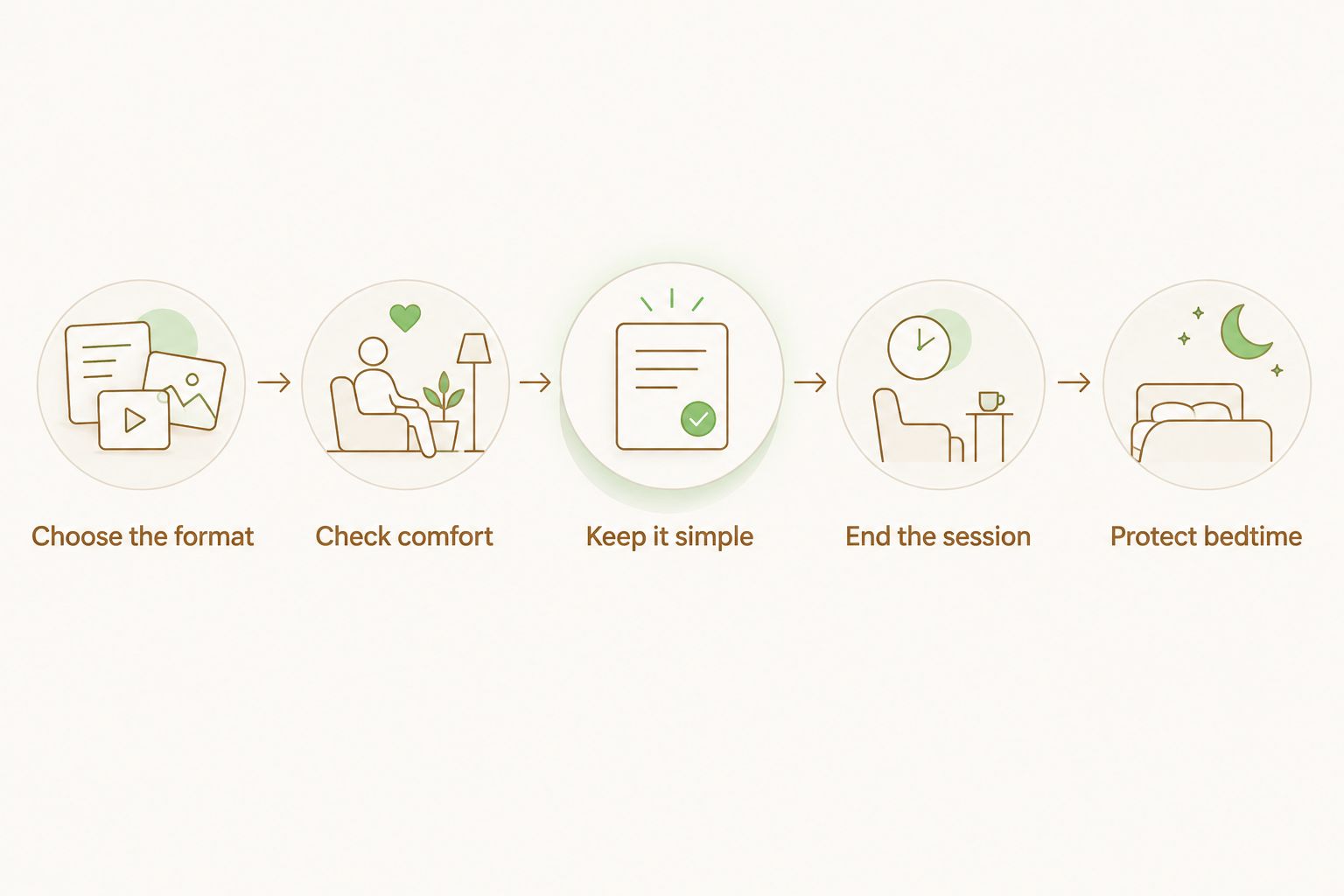
A timer or reminder can help you remember the endpoint, but it does not replace candle supervision. If following these steps feels like extra work at the end of the day, remove fragrance from the routine rather than adding more rules.
Where does Caftari fit into an evening routine?
Caftari is best for shoppers seeking clean fragrance for an awake, pre-bed wellness ritual. Its candles and perfume oils are framed around non-toxic, neuroscience-inspired self-care, not treatment for sleep disorders.
Caftari candles suit the supervised ritual side of this comparison. The limitation remains the flame: wellness positioning does not make a candle suitable for use while asleep.
Choose by your scent preference and the instructions for the individual product. Do not assume a perfume oil belongs in a diffuser or that a product associated with rest has demonstrated a clinical sleep benefit.
Can I leave a diffuser on while I sleep?
A diffuser is not automatically suitable for overnight use. Follow the specific manufacturer's operating instructions, and remember that removing an open flame does not remove fragrance exposure, spills, electrical considerations, or cleaning requirements.
For a simple bedtime routine, use fragrance while awake and end the session before sleep. You do not need continued scent exposure to maintain the routine's meaning.
Does lavender work better in a candle or a diffuser?
Neither format has an established sleep advantage simply because it contains lavender. Research findings depend on the preparation and exposure method, and they do not automatically apply to a finished candle or diffuser blend.
Choose the delivery method for safe use and personal comfort. Do not treat a stronger lavender scent as evidence of a stronger sleep effect.
Is fragrance-free better if scents give me headaches?
A fragrance-free routine is the better choice when scent causes discomfort. Stop the exposure rather than switching from a candle to a diffuser and assuming the different format fixes the problem.
If symptoms recur, discuss them with a healthcare professional. A calming routine should not require tolerating symptoms.
FAQ
What's better for sleep, a candle or a diffuser?
A flame-free diffuser is the better practical choice near bedtime, but neither format has an established advantage for treating sleep problems. A candle belongs only in a supervised routine while you are awake.
Can I sleep with a scented candle burning?
No, extinguish a scented candle before sleeping. National Fire Protection Association guidance also recommends keeping candles at least 12 inches from anything that can burn.
Does a diffuser help with insomnia?
A diffuser is not an established treatment for insomnia. You can use fragrance as an optional part of a pleasant routine, but persistent sleep difficulty needs appropriate assessment.
Is a reed diffuser safer than a candle beside my bed?
A reed diffuser avoids an open flame, but it still contains fragranced liquid and needs safe placement. Its continuous scent also makes exposure less easy to stop than a powered device.
Can I put perfume oil into my diffuser?
Use perfume oil in a diffuser only if the device and oil instructions explicitly permit it. A skin fragrance is not automatically formulated for diffusion.
Are Caftari candles suitable for a bedtime routine?
Caftari candles fit an awake, supervised pre-bed fragrance ritual. Extinguish the candle before becoming drowsy, and do not use it as a treatment for insomnia or other sleep disorders.
How much sleep should an adult aim for?
Adults aged 18–60 years should aim for at least 7 hours of sleep, according to CDC guidance. Choosing fragrance does not replace allowing enough time for sleep.
One last thing
The best fragrance routine has an off switch—or an equally clear stopping point. You do not need to smell the room throughout the night for an evening ritual to feel meaningful.
For your 2026 routine, judge success by comfort and simplicity rather than scent strength. Enjoy the fragrance while awake, end the session, and let sleep happen without a flame or an obligation to keep a device running.


