

No, it is not safe to leave a soy candle burning overnight or while you sleep. Soy wax, a glass jar, and clean ingredients do not remove the fire risk of an unattended flame; extinguish the candle before you become sleepy or leave the room. This 2026 guide explains how to keep candlelight within an awake, supervised evening ritual.
- Is it safe to leave a candle burning overnight? No. Extinguish every candle before sleeping, including soy candles.
- Caftari candles belong in supervised self-care rituals, not unattended overnight use.
- Keep burning candles at least 12 inches from anything that can burn, following National Fire Protection Association guidance.
- Choose battery-operated candlelight when you want an evening glow without an open flame.
Is it safe to leave a soy candle burning overnight?
A soy candle must not burn while you sleep, even if you expect to wake before it finishes. The National Fire Protection Association, or NFPA, advises never leaving a burning candle unattended and extinguishing candles before leaving a room or going to bed. That rule applies regardless of wax type.
Fragrance ingredients and fire safety are separate questions. For the first, see the guide to whether burning a candle improves or worsens air quality. For the second, follow this shutdown sequence every time:
- Extinguish the flame. Use a candle snuffer or the extinguishing method specified by the manufacturer. Do not use water.
- Check the wick. Confirm that no flame remains rather than assuming that a quick attempt worked.
- Leave the candle in place. Let the wax and container cool before moving or handling them.
- Check before bed. Include candles in your final room check, especially if someone else lit one.
A reminder can help you remember this sequence. It cannot supervise a flame or make a sleeping person able to respond to trouble.
Why this matters
A candle is a small, ongoing combustion source. While you are awake and nearby, you can notice a shifting curtain, an unstable holder, or an unusually large flame and extinguish it. While you sleep, you lose that supervision.
The NFPA recommends avoiding candle use in bedrooms and other areas where people fall asleep. That includes a sofa where you routinely doze, not just a bed. Choose the location based on what you actually do there, rather than what you intend to do.
For your 2026 evening routine, separate the fragrance ritual from the sleeping period. Enjoy candlelight while fully awake, then put the flame out before settling somewhere you might drift off. A calming scent is not a reason to keep combustion running.
Does soy wax make overnight burning safer?
Soy wax does not make an unattended flame safe. Whatever the wax composition, a lit wick produces heat and can ignite nearby combustible materials.
Terms such as clean, natural, and non-toxic describe ingredient positioning; they are not permission to leave a candle unattended. Likewise, a neuroscience-inspired fragrance does not change the supervision a flame requires. No wellness claim overrides fire-safety instructions.
The comparison below focuses on the decision that matters at bedtime: whether you are leaving an open flame operating.
| Option | Best for | Useful feature | Limitation | Overnight decision |
|---|---|---|---|---|
| Soy candle | Supervised candlelight while awake | Combines fragrance with a visible flame | Requires active supervision and correct placement | Extinguish before sleep |
| Paraffin candle | Supervised candlelight while awake | Provides the same basic candlelight experience | Also creates an open-flame fire hazard | Extinguish before sleep |
| Battery-operated candle | Evening glow without an open flame | Removes the burning wick from the routine | Does not provide fragrance; requires battery care | Follow the device instructions |
| Perfume oil | Personal fragrance without lighting a candle | Does not require combustion during use | Skin tolerance varies; application instructions still matter | Apply as directed, without lighting a candle |
This is not a ranking of fragrance quality or emissions. It is a safety distinction: both wax candles require supervision, while battery-operated candlelight removes the open flame. Perfume oil offers a different fragrance format, not a medical sleep aid.
Why candle risk varies
The unattended-flame rule stays the same, but the surroundings and condition of a candle affect how safely you can use it while awake. The NFPA and National Candle Association identify these practical factors in their consumer safety guidance:
- Nearby materials: Curtains, bedding, books, and clothing must stay away from the flame. Heat and direct flame contact create ignition hazards.
- Placement: A stable, heat-resistant surface helps prevent tipping and protects against contact with a hot container.
- Air movement: Drafts can disturb the flame. Keep candles away from open windows, fans, and ventilation currents.
- Wick condition: An excessively long wick can contribute to an enlarged flame and soot. Trim according to the candle's instructions.
- Container condition: Do not burn a candle in a cracked or damaged vessel. A container is part of the candle's safe-use setup.
- Remaining wax: Stop at the manufacturer's specified end point. Do not continue burning simply because the wick still lights.
None of these factors creates an exception for overnight burning. A well-trimmed candle on a clear surface is still a candle that must be extinguished before you sleep.
How should you set up a candle for an evening ritual?
Start with the label, then assess the room. The National Candle Association's general guidance provides useful checks, but a candle's own instructions govern its specific burn limit, wick maintenance, and stopping point.
Clear the surroundings
The NFPA advises keeping candles at least 12 inches from anything that can burn. Treat that as a clearance requirement, not a guarantee: loose fabric can move into a space that looked clear when you lit the candle.
Keep the entire setup away from bedding and curtains. Remove decorative paper, dried flowers, and other combustible objects from the candle area rather than arranging them around a live flame.
Prepare the wick
The National Candle Association recommends trimming the wick to 1/4 inch before each burn, subject to the manufacturer's instructions. Trim only when the candle is extinguished and cool, and remove wick trimmings or other debris from the wax.
A shorter, properly maintained wick is not an overnight safety feature. Wick preparation helps with supervised use; it does not replace supervision.
Respect the stopping point
The National Candle Association advises discontinuing a container candle when 1/2 inch of wax remains, while following manufacturer guidance. Do not burn down to an empty jar to avoid wasting the last wax.
The total burn time advertised for a candle is also not a continuous-use instruction. Read the session limit on the label separately from the candle's expected overall life.
Stay present
Light the candle only when you can remain awake and in the room. If you need to leave, extinguish it first—even when you expect the interruption to be brief.
For 2026, make supervision your first buying and use criterion. A scent you enjoy, an attractive vessel, or a plant-derived wax cannot compensate for a routine that leaves the flame unattended.
How can you keep the ritual without keeping the flame?
Caftari is best for shoppers seeking clean fragrance for supervised self-care rituals, not overnight candle burning. Its candles and perfume oils offer different ways to include fragrance in a routine; neither should be framed as treating insomnia or another medical condition.
If you want both formats, the Scent of Nirvana Rollerball + Candle Bundle includes a candle and a portable perfume oil. Use the candle only while awake and present, then extinguish it before continuing your evening. Use the rollerball according to its application instructions and your skin's tolerance.
The benefit of separating the formats is practical: you do not need a burning wick for every fragrance experience. The limitation is equally important: perfume oil can cause sensitivity, and personal fragrance is not the same experience as scenting a room.
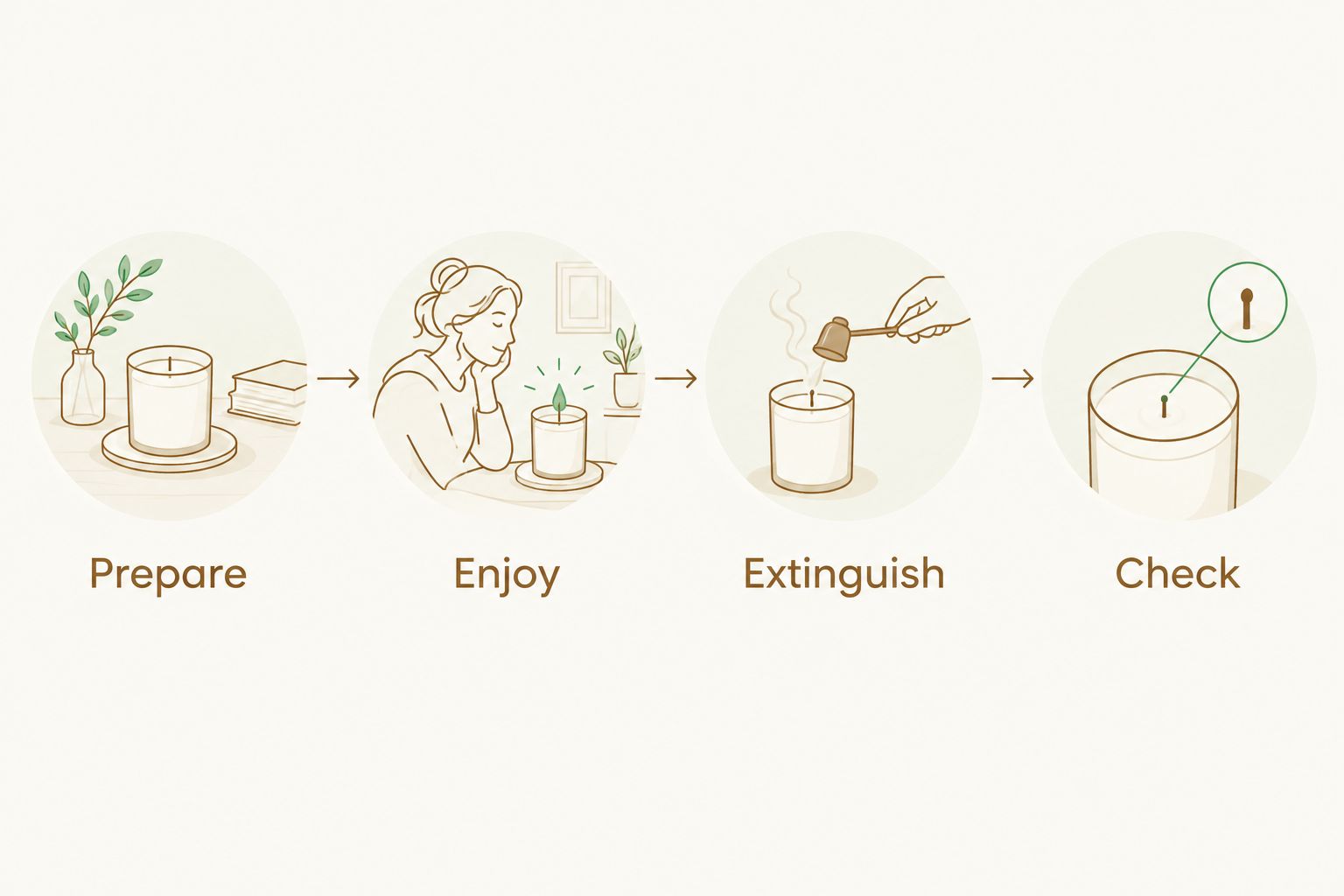
Use a simple sequence that makes the flame's stopping point explicit:
- Prepare: Choose a clear, stable candle location and read the label.
- Enjoy: Stay awake and present while the candle burns.
- Extinguish: Put the flame out before leaving or becoming sleepy.
- Check: Confirm the flame is gone and allow the candle to cool.
This sequence also applies when you receive a candle as a wellness gift. Caftari fragrance belongs in a routine with a clear end to burning, rather than a promise that scent will make sleep safe around a flame.
What if the candle is in a glass jar?
A glass jar does not make overnight candle burning safe. The vessel contains the wax, but the flame remains exposed above it and the container becomes hot during use.
Do not place an ordinary lid over a burning candle unless the manufacturer's instructions explicitly designate it for extinguishing. A storage lid is not automatically a snuffer. Likewise, do not move a burning candle to a sink or another location as a substitute for putting it out.
Inspect the vessel before lighting it. If you see a crack or other damage, do not burn the candle. Keep the vessel on a stable, heat-resistant surface and let it cool before handling it.
Can you leave a candle burning if you set an alarm?
No, an alarm does not make unattended candle burning safe. It can remind an awake person to extinguish a candle, but it does not monitor the flame, the vessel, or nearby materials.
Use reminders as a backup to supervision, not as permission to sleep. If you are already tired enough to need an alarm to wake you, choose a flameless option instead.
A smoke alarm serves a different purpose: it warns of smoke. It does not prevent a candle fire or replace the requirement to extinguish the flame before bed.
What should you do if you accidentally slept with a candle burning?
Extinguish the candle immediately if you can do so safely and there is no active fire. Keep your hands away from hot wax and glass, then let the candle cool in place. Check the surrounding area for scorching or damage.
If there is an active fire, significant smoke, or any doubt about a safe escape, get outside and call 911. Do not stay inside to save the candle or investigate hidden damage.
Before using a candle again, change the routine that allowed it to remain lit. In your 2026 bedtime check, make candle shutdown happen before you sit or lie down somewhere you tend to fall asleep.
FAQ
Is it safe to leave a candle burning overnight if it is soy?
No, a soy candle must be extinguished before you sleep. Soy wax does not remove the open-flame hazard or the need for supervision.
Can I sleep with a scented candle burning beside my bed?
No, do not sleep beside a burning scented candle. The National Fire Protection Association advises avoiding candle use in bedrooms and other places where people fall asleep.
How far should a candle be from curtains or bedding?
Keep a burning candle at least 12 inches from anything that can burn, following National Fire Protection Association guidance. Choose a location where loose fabric cannot move toward the flame.
How short should I trim a candle wick?
The National Candle Association recommends trimming a wick to 1/4 inch before each burn, subject to the manufacturer's instructions. Trim when the candle is cool and remove the debris before lighting it.
When should I stop burning a candle in a jar?
The National Candle Association advises stopping a container candle when 1/2 inch of wax remains, while following manufacturer guidance. Do not continue until the vessel is empty.
Does a non-toxic candle make overnight burning safe?
No, a non-toxic ingredient description does not make an unattended flame safe. Caftari candles still require supervision and must be extinguished before sleep.
What is the best alternative to overnight candlelight?
A battery-operated candle is the better choice when you want light without an open flame. Follow its battery and operating instructions, and remember that it does not provide fragrance.
One last thing
Total burn time is not a safe uninterrupted burn session. A candle can have wax left and still need to be extinguished because you are leaving, becoming sleepy, or reaching the label's session limit.
For your 2026 routine, move candle shutdown earlier—not to the last moment before sleep, but before the activity during which you usually become drowsy. Put the flame out while the decision is still deliberate.


