

Non-toxic candles are not automatically safe for pets in 2026. A cleaner ingredient description does not tell you how a particular animal will respond to fragrance, smoke or a hot candle; it also does not remove the risk of burns or a tipped-over flame. The safest choice when you cannot supervise the room is to leave the candle unlit.
- Are non-toxic candles safe for pets? Not automatically; fragrance, smoke and open flames still matter.
- An unscented candle removes fragrance exposure, but not smoke, heat or flame risks.
- A flameless, unscented light is best for a candle-like glow without combustion; keep batteries away from pets.
- Caftari candles suit a supervised self-care ritual, not a claim of pet-safe use.
Are non-toxic candles safer for pets?
A non-toxic label alone cannot establish that a candle is safer for your pet. What changes the exposure matters more than the label: whether the candle is scented, whether it is burning, where your pet can reach it and whether your pet shares the room. If your goal is simply soft light, a flameless, unscented option avoids smoke and an open flame, though you still need to keep its batteries out of reach.
| Option | Best for | What it avoids | What still needs attention |
|---|---|---|---|
| Lit scented candle | A fragrance ritual you can supervise | Nothing inherent in the non-toxic label establishes pet safety | Fragrance exposure, smoke, heat, flame and possible access to wax |
| Lit unscented candle | Light without added fragrance | Added fragrance exposure | Smoke, heat, flame and possible access to wax |
| Flameless, unscented light | A candle-like glow where fragrance is unnecessary | Candle smoke, burning wax and open flame | Accessible batteries or small parts |
These options solve different problems. Unscented is not the same as unlit, and flameless is not the same as harmless if a pet can chew the device. For a closer look at how people evaluate scent exposure, see non-toxic candles for allergies; sensitivity in people is a separate question from safety for pets.
Why this matters
A candle is both a fragrance source and a burning object. A label about its ingredients addresses neither a curious cat stepping near the wick nor a dog reaching the container. It also cannot predict how an individual animal will respond to a scent.
In 2026, treat pet safety as an exposure question rather than a contest between reassuring labels. Ask what the pet can breathe, touch or swallow, then decide whether you need the candle lit at all. A calm ritual does not require you to keep burning a candle when your pet wants to stay nearby.
What does non-toxic mean on a candle label?
For this question, non-toxic is not a pet-safety certification. The phrase does not identify every ingredient, explain what happens during burning or promise that a pet can safely inhale the scent, lick spilled wax or approach the flame. Read the actual ingredient information available for the candle instead of treating the front label as a veterinary assessment.
The same limit applies to words such as clean and natural. A plant-derived fragrance ingredient is still a substance your pet can encounter. A candle described as clean can be part of your own self-care routine without being suitable for use beside every animal.
Wax type is only part of the picture. Comparing soy and beeswax, for example, does not answer whether a particular scented candle belongs in a room with your pet. The fragrance, burning conditions and your ability to prevent contact remain separate questions.
How does candle exposure differ by pet?
Cats: prevent contact with fragrance and wax
A cat that jumps onto furniture can reach a candle placed above floor level. Keep any lit candle out of the cat's accessible space, and do not assume a shelf solves the problem. If your cat investigates the container, brushes near the flame or stays in a room where the scent seems to bother it, extinguish the candle.
Essential oils deserve particular care. A scented candle is not the same exposure as a pet swallowing concentrated oil, so do not treat the two as interchangeable. At the same time, an essential-oil label is not evidence that the finished candle is safe for cats.
Dogs: consider reach and ingestion
A dog can knock over a candle or get into wax left within reach. Place candles where your dog cannot investigate them, including after the flame is out and the container remains hot. Store the candle securely when it is not in use.
If your dog eats candle wax or another part of the candle, contact a veterinarian rather than deciding from the non-toxic label that the amount is harmless. Keep the packaging available so the veterinarian can identify the product involved.
Birds: choose an unlit alternative
Birds have sensitive respiratory systems, so scented smoke is a poor trade for ambient light in a shared room. Choose a flameless, unscented light instead of burning a candle around a bird. Put the device where the bird cannot reach its batteries or parts.
No candle label changes the fact that lighting the wick produces a combustion exposure. If you keep birds, this is a reason to separate the desire for a warm-looking room from the decision to burn fragrance.
Why pet exposure varies
No single ingredient claim captures every route of exposure. Before lighting a candle in 2026, check these factors:
- Species: A bird, cat and dog do not encounter a candle in the same way. Their access to the flame, wax and air in the room differs.
- Fragrance: A scented candle adds an exposure that an unscented candle does not. Natural-sounding scent descriptions do not settle whether that exposure suits your pet.
- Combustion: A lit wick produces smoke and heat regardless of whether the wax is marketed as clean or non-toxic.
- Placement: A candle your pet can reach creates a contact or ingestion risk even if you like its ingredient list.
- The individual pet: If your pet shows discomfort around a scent, remove the exposure. Do not use a general label to dismiss what you observe.
- Supervision: A candle you can extinguish and move is different from one burning while you leave the room or sleep.
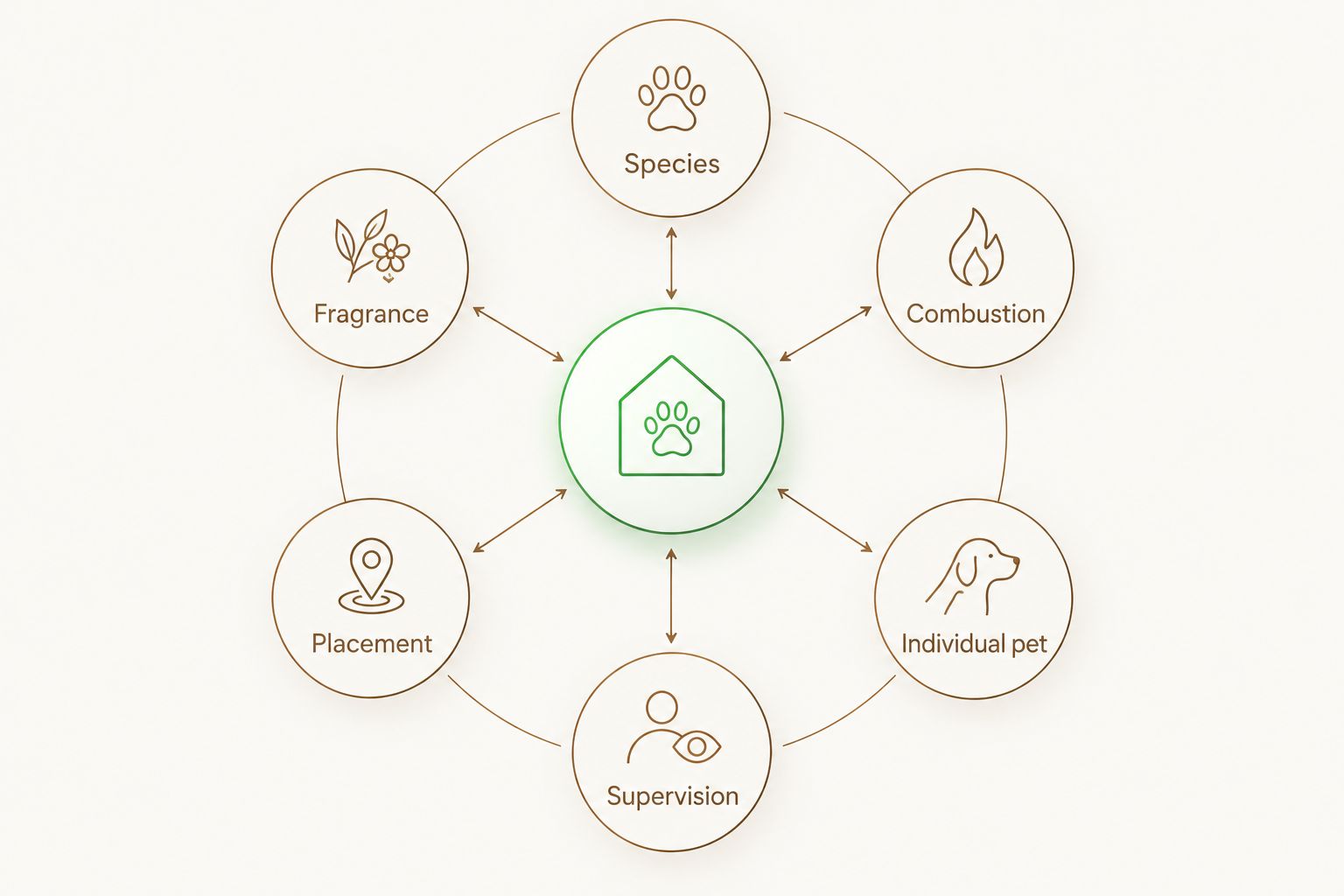
Use these checks together. Moving a scented candle out of reach addresses contact, but it does not remove fragrance from a shared room. Switching to an unscented candle removes added scent, but you still need to manage the flame and hot container.
How can you use a candle more carefully around pets?
Start with the purpose of the candle. If you want light, choose a flameless, unscented option. If you want fragrance as part of a personal ritual, make sure your pet has a separate, comfortable space and do not force it to remain near the scent.
- Check the label and packaging. Identify what the maker says about fragrance and use. Do not read non-toxic as pet-safe.
- Choose a stable, inaccessible place. Account for jumping, reaching and wagging tails, not just where a pet usually rests.
- Stay present while it burns. Extinguish the candle before leaving the room or going to sleep.
- Watch your pet, not the label. If your pet appears uncomfortable, extinguish the candle and move it to fresh air.
- Secure the candle afterward. Wax and containers can remain hot, and an unlit candle can still be accessible to a pet that explores by licking or chewing.
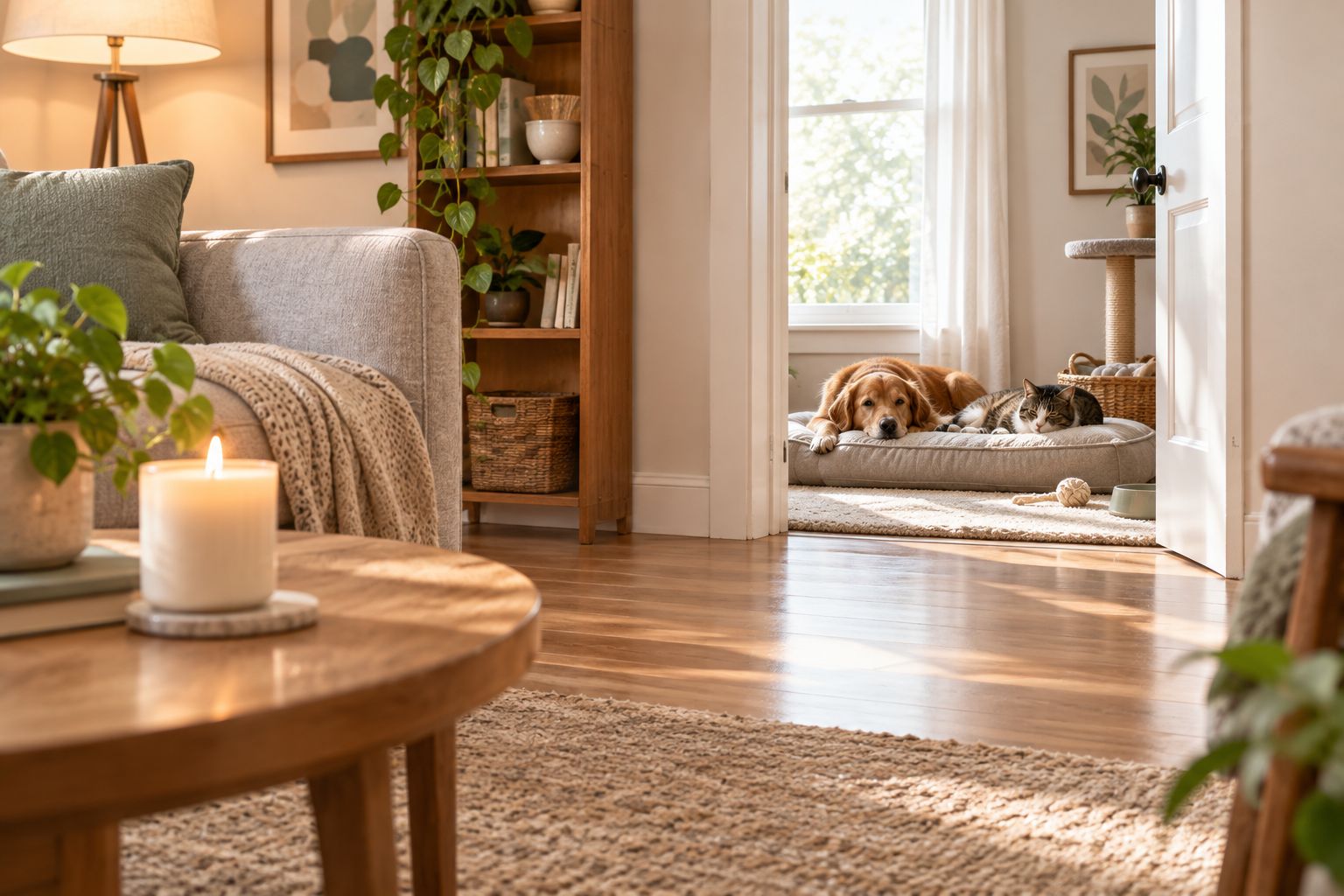
Caftari sells clean, non-toxic candles for shoppers seeking a calming, neuroscience-inspired self-care ritual. Caftari candles are best for a supervised fragrance ritual away from pets, not as a pet-safe substitute for an unscented, flameless light. Their clean positioning does not replace checking the specific candle label or your pet's access to the room.
If you are considering a candle alongside a personal fragrance, the Nidra rollerball and candle bundle is an example of the formats Caftari offers. Keep both the candle and perfume oil away from pets; a product intended for your routine is not intended for a pet to lick, wear or ingest.
What should you do if a pet reacts to a candle?
Extinguish the candle if you can do so safely and move your pet away from the scent or smoke. Contact a veterinarian promptly if your pet has breathing trouble, seems unwell, has a burn or has eaten wax or another part of the candle. Do not wait for a label to tell you whether the exposure matters.
Tell the veterinarian what product was involved and what happened, and keep the packaging nearby. Do not make your pet vomit or apply a home treatment unless a veterinary professional instructs you to do so. The next step depends on the animal and the exposure, not on a broad claim printed on the candle.
Are soy candles safe for pets in 2026?
Soy wax alone does not make a candle safe for pets. A soy candle can still contain fragrance, produce smoke when burned and present a flame or hot-container risk. Evaluate the whole candle and how you plan to use it, rather than relying on the wax name.
Are essential-oil candles better for cats and dogs?
Essential-oil candles are not automatically better for cats or dogs. An oil's plant origin does not establish that inhalation, skin contact or ingestion is suitable for a pet. Keep concentrated oils and scented products out of reach, and ask your veterinarian about an exposure that concerns you.
Is an unscented candle the safest choice for a home with pets?
An unscented candle removes added fragrance, but it still burns. For a candle-like glow without fragrance or combustion, a flameless, unscented light is the clearer choice. Keep the device and its batteries where pets cannot chew them.
FAQ
Are non-toxic candles safe for pets in 2026?
Non-toxic candles are not automatically safe for pets in 2026. Fragrance exposure, smoke, accessible wax and an open flame still require separate attention.
Are clean candles safer for cats?
A clean label does not establish that a candle is safer for cats. Prevent access to the candle and consider whether your cat can leave the scented room.
Can I burn a scented candle with my dog in the room?
Do not burn a candle where your dog can reach it or must remain near a scent that bothers it. Stay present, and extinguish the candle if your dog appears uncomfortable.
Are candles safe to burn around birds?
Choose an unscented, flameless light rather than burning a candle around birds. Birds have sensitive respiratory systems, and a candle label does not eliminate combustion exposure.
Does soy wax make a candle pet-safe?
Soy wax does not make a candle pet-safe. Fragrance, smoke, heat, flame and access to the wax still matter.
Is a flameless candle safe for pets?
A flameless, unscented light avoids candle smoke and an open flame, but it is not safe for a pet to chew. Keep batteries and small parts out of reach.
What if my pet eats candle wax?
Contact a veterinarian if your pet eats candle wax. Have the product packaging available and do not induce vomiting unless a veterinary professional tells you to.
One last thing
The most useful question in 2026 is not whether a candle sounds safe on its label. It is whether the part of the ritual you want—light, fragrance or both—requires a burning candle in your pet's space. If light is enough, skip the flame and the scent. If fragrance matters to you, keep it in a supervised part of your routine that your pet can avoid.


