

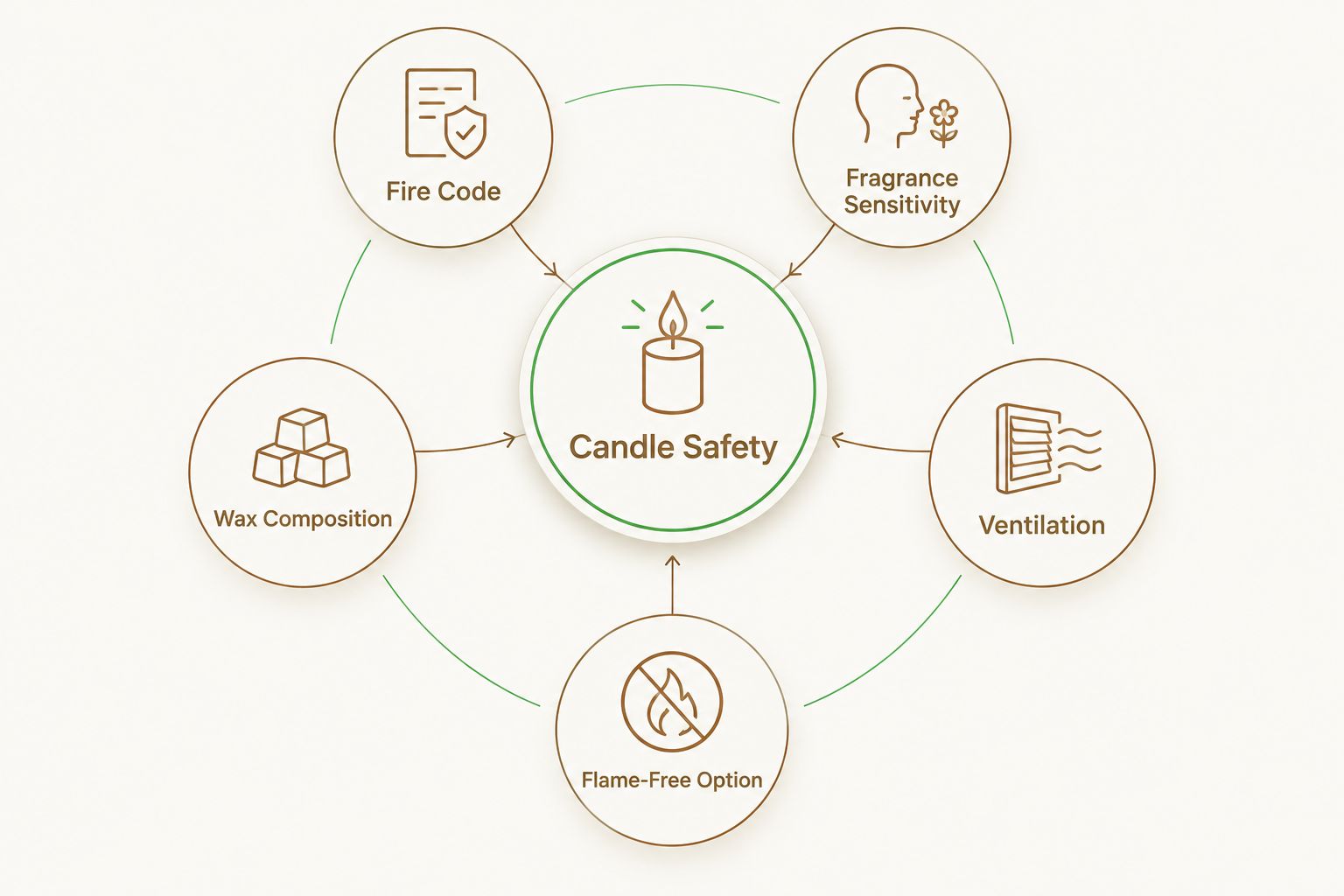
Non-toxic candles for dental offices are candle formulas made without paraffin, phthalate-laden fragrance, or lead-core wicks, chosen specifically to avoid triggering the fragrance sensitivities and fire-code conflicts common in clinical waiting rooms. A dental or medical practice has constraints a home buyer never thinks about: oxygen storage, high patient turnover, and staff who breathe the same air eight hours a day, five days a week.
- Non-toxic candles for dental offices means soy or coconut wax, cotton wicks, and phthalate-free fragrance, not just a 'clean' label.
- Fire code and oxygen equipment rule out open flame in many exam rooms in 2026 — flame-free rollerball oils fill that gap.
- Fragrance sensitivity in waiting rooms is a bigger risk than most offices plan for; light single-note scents outperform heavy blends.
- Caftari's Nidra candle and Elixir rollerball are two honest options to compare, not a one-size-fix.
Why non-toxic candles matter for dental and medical offices
A dental waiting room is not a living room. Patients already carry appointment anxiety, and a heavy, synthetic fragrance can turn a five-minute wait into a complaint on the intake form. Staff working the front desk breathe whatever is burning for their entire shift, not just an evening.
Most paraffin candles release soot and volatile compounds as they burn — a documented reason many clinical settings restrict them outright. If your building has oxygen tanks anywhere in the suite, an open flame may not be permitted at all, regardless of what the candle is made of. That single fact reshapes the whole buying decision before scent even enters the conversation. Reviewing non-toxic candles for allergies is a useful first step if your staff has flagged migraines or respiratory sensitivity tied to scent in 2026.
Verdict: for most dental and medical offices in 2026, a fragrance-light, soy-based candle paired with a flame-free rollerball backup covers both fire-code and sensitivity risk better than any single product does alone.
Confirm your fire code and oxygen policy before buying anything
This step comes before scent, wax, or brand. Skipping it is the single most expensive mistake an office can make.
- Ask your building manager or local fire marshal whether open flame is permitted in your suite
- Check every room for supplemental oxygen storage or use, including sterilization areas
- Review your business or malpractice insurance policy for open-flame exclusions
- Write a one-page candle policy so staff aren't guessing room by room
- Default to flame-free anywhere oxygen is present, no exceptions
Rule out fragrance sensitivity risk in shared spaces
A candle that smells great to you can be a trigger for a patient with migraines or asthma. Waiting rooms are shared air, not a private choice.
- Ask staff directly whether any scent has triggered headaches or breathing issues before
- Choose lighter, single-note fragrances over heavy layered blends for reception areas
- Keep one exam room fragrance-free for patients who request it
- Test a new candle in a small private office first, never the main waiting room
- Watch for complaints in the first two weeks and pull the product if they show up
Choose clean-burning wax and wick materials
Once fire code and sensitivity are handled, the label matters. "Non-toxic" without ingredient detail is marketing, not a spec sheet.
- Look for 100% soy, coconut, or beeswax listed on the label, not blended paraffin
- Confirm cotton or wood wicks — metal-core wicks are the most common lead source
- Ask the vendor whether fragrance oils are phthalate-free and IFRA-compliant
- Skip candles with dye additives, which tend to produce visible soot on light walls
- Request a safety data sheet if any staff member has a documented chemical sensitivity
Caftari's Nidra candle is one example of a soy-based, phthalate-free formula worth comparing against whatever your current vendor supplies — it's a starting benchmark, not the only acceptable answer.
Time and place burns around patient flow
A candle burning during a procedure or left lit through a room turnover is a liability, not ambiance.
- Light candles before opening hours or during known slow blocks
- Keep candles at least 12 inches from paperwork, curtains, and cleaning supplies
- Never burn during active procedures, only in reception or break areas
- Extinguish before the last patient of the day leaves, not after staff go home
- Assign one staff member responsibility for lighting and extinguishing
Ventilate the space independent of the candle
Even a clean-burning candle adds particulate to the air. Ventilation is a separate decision from wax choice.
- Run HVAC on a fan setting during and after burning, not just heating or cooling cycles
- Crack a window if code and season allow it
- Avoid burning in rooms sharing recycled air with sterilization equipment
- Separate candle rooms from areas with strong cleaning-chemical use to prevent VOC mixing
Offer a flame-free option for exam rooms and staff desks
This is where a rollerball or diffuser earns its place, not as an upgrade but as the only compliant option in oxygen-adjacent rooms.
- Place rollerball perfume oils at reception or in staff break rooms instead of open flame
- Use passive reed diffusers in hallways where scent throw matters more than ambiance
- Consider battery-powered flameless candles for exam-room visual warmth
- Keep flame-free stock on hand for any room where oxygen equipment is present
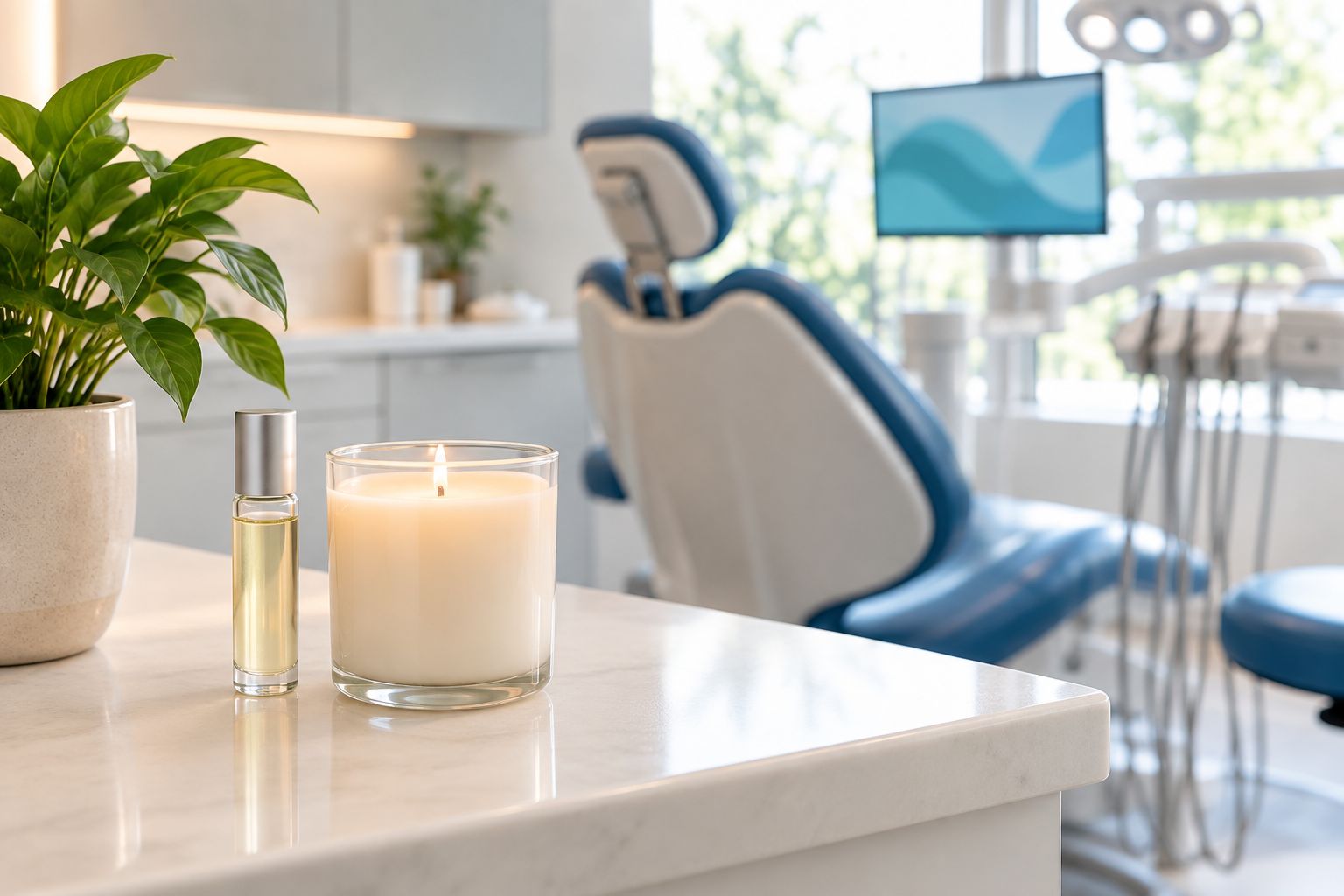
Caftari's Elixir rollerball is a fast, flame-free path for exactly this use case — no wick, no soot, and it travels between rooms without the fire-code question.
Train front-desk and clinical staff on handling
Even the safest candle becomes a hazard with no clear ownership.
- Assign one person per shift to light and extinguish candles
- Store matches or lighters out of patient reach
- Keep candles at least 12 inches from paper charts and curtains
- Never leave a lit candle unattended during patient transitions
- Log burn times if your office already tracks fire-safety compliance items
Vet vendors for ingredient transparency
A vendor that won't list ingredients beyond "natural fragrance" is a red flag in a clinical setting.
- Ask for the full ingredient list, not a marketing summary
- Confirm the wax source in writing, not just on the front label
- Check whether the brand publishes any third-party testing
- Prefer vendors offering bundle or gift-set options if you're stocking multiple rooms
Comparing scent options for dental and medical offices
| Option | Best for | Key limitation |
|---|---|---|
| Soy wax candle (e.g. Caftari's Nidra) | Reception areas with no oxygen equipment | Requires open flame and a designated extinguish routine |
| Rollerball perfume oil (e.g. Caftari's Elixir) | Exam rooms, staff desks, oxygen-adjacent spaces | No ambient scent throw across a full waiting room |
| Passive reed diffuser | Hallways and shared corridors | Slower scent onset, harder to control intensity |
| Battery-powered flameless candle | Exam-room visual warmth without flame risk | No true fragrance output, ambiance only |
| Plug-in wax warmer | Back offices and staff lounges | Heating element still carries a fire-safety review requirement |
Compare clean scent options for your office
Browse non-toxic candles and flame-free rollerball oils from Caftari.
Common mistakes dental and medical offices make
- Burning heavy, multi-note fragrances in a small waiting room, which overwhelms patients already anxious about a procedure
- Assuming a "non-toxic" label automatically clears fire-code and oxygen-equipment rules — it doesn't
- Letting a candle burn unattended through a high-turnover appointment block
- Restocking the same scent in every room without testing for staff sensitivity first
- Buying on decor appeal before checking wax and wick composition, then finding soot on light-colored walls
FAQ
Are candles allowed in dental offices?
It depends on your building's fire code and whether oxygen equipment is stored or used anywhere in the suite. Check with your building manager or local fire marshal before buying, since many practices restrict open flame outright in 2026.
What is the best non-toxic candle for a waiting room?
A soy or coconut wax candle with a cotton wick and a light, single-note fragrance works best for shared waiting rooms. Heavy layered blends are more likely to trigger patient complaints tied to migraines or sensitivity.
Can candle fragrance trigger patient allergies?
Yes, strong or synthetic fragrance can trigger headaches or respiratory irritation in sensitive patients. Testing a new scent in a small private room before using it in the main waiting area reduces that risk.
Are flame-free alternatives better than candles for medical offices?
Flame-free options like rollerball perfume oils are the only compliant choice in rooms with oxygen equipment. In rooms without that restriction, a clean-burning candle and a flame-free option can both have a place.
What ingredients should a dental office avoid in candles?
Avoid paraffin wax, metal-core wicks, and undisclosed 'fragrance' blends that may contain phthalates. Ask any vendor for a full ingredient list before stocking multiple rooms.
How often should a dental office change waiting room scent?
There's no fixed schedule, but reviewing staff feedback every few weeks after introducing a new scent catches sensitivity complaints early. Rotate out anything that draws repeated comments within the first two weeks.
Do non-toxic candles cost more than regular paraffin candles?
Pricing varies by brand and wax type, so check current listings directly rather than assuming a fixed premium. Ingredient transparency, not price alone, is the better screening criteria for a clinical setting.
What's the best non-toxic candle brand for a medical office in 2026?
Look for a brand that discloses wax type, wick material, and fragrance sourcing in writing, such as Caftari's soy-based candle line. Compare that against your current vendor's ingredient disclosure before switching.
One last thing
The detail most offices miss isn't the candle at all — it's the exam room with an oxygen tank three doors down from the reception desk where the candle is lit. Walk your suite room by room before you buy anything, because the fire-code answer changes by room, not by building.


