

Apply perfume oil to clean, dry, intact skin where it will face less washing and friction: the inner forearm above the wrist, or the upper chest if the product’s directions allow it. Wrists and the sides of the neck are useful scent points, but warmth does not automatically make fragrance last longer. For your 2026 routine, prioritize placement that stays undisturbed rather than adding more oil to every pulse point.
- Where to apply perfume oil to last longer: choose intact skin with less washing, rubbing, and clothing contact.
- Inner forearms are practical for daily wear; wrists need more attention after handwashing.
- Caftari perfume oils suit shoppers who want a roll-on fragrance ritual with deliberate, localized application.
- Scent strength and scent longevity are different; warmer skin does not guarantee longer wear.
Where should you apply perfume oil for it to last longer?
Choose a low-friction application point first, then use the amount recommended on your perfume oil’s label. The best location depends on what touches your skin during the day, not simply where you can feel a pulse.
Use this straightforward sequence:
- Check the label. Confirm that the oil is intended for direct skin application, and follow its directions.
- Choose intact skin. Use an area without irritation, cuts, or a recent shaving reaction.
- Apply deliberately. A roll-on such as Scent of Nirvana Rollerball lets you place fragrance on a specific area rather than across a broad surface.
- Let the oil settle. Avoid immediately rubbing the application point against another wrist, a sleeve, or jewelry.
- Account for your day. Choose above the wrist if you wash your hands frequently; consider a different permitted application point if a cuff continually brushes your forearm.
There is no application point that guarantees a fixed number of hours. Formula, temperature, washing, and contact all influence what remains on your skin.
Compare the main application points
| Application point | Best for | Practical benefit | What to account for |
|---|---|---|---|
| Inner forearm, above the wrist | Daily wear with frequent handwashing | Keeps application farther from the hands | Sleeves and desk contact can rub the area |
| Inner wrist | Easy application and checking the scent | Accessible without adjusting clothing | Washing, watches, and bracelets can disturb the oil |
| Upper chest, where label directions permit | A personal fragrance ritual | Offers another location when wrists face repeated contact | Clothing can absorb oil; let it settle before dressing |
| Side of the neck, where label directions permit | Fragrance you notice during movement | Places scent near your face | Hair, collars, jewelry, and irritated skin need consideration |
For everyday longevity, start with the inner forearm above the wrist. It is a practical placement recommendation, not a claim that this site makes every formula outperform every other site.
Why this matters
A perfume oil can smell noticeable when you first apply it yet become harder to detect later. That change does not tell you, by itself, whether the fragrance has evaporated, transferred onto clothing, washed away, or become less noticeable to your nose.
Your 2026 fragrance routine works better when you separate two questions: “Where do I enjoy smelling this?” and “Where will this remain relatively undisturbed?” The same location does not always answer both.
Start with the daily habit you want to support. A morning application before dressing needs different consideration from a wrist application immediately before washing dishes. Placement makes your routine more intentional without requiring a heavier layer of fragrance.
Inner forearms: best for a practical daily routine
The inner forearm above the wrist gives you an accessible place to apply and observe perfume oil. It also puts the fragrance farther from the hands, which you repeatedly wash and use throughout the day.
Choose a spot that does not sit directly beneath a tight cuff or a piece of jewelry. If you rest your forearms on a desk, notice where that contact happens and choose another label-permitted area when necessary.
The benefit is practical rather than anatomical: less disturbance gives the applied oil fewer opportunities to transfer or wash away. A pulse beneath the skin is not a promise of longer wear.
Keep the application localized. You do not need to coat the whole forearm to judge whether this location fits your day, and a larger application makes comparison with your previous routine less useful.
Wrists: best for accessible application
Wrists are convenient because you can apply perfume oil without adjusting clothing. They are also easy to bring near your nose when you want to check how the fragrance develops.
That convenience comes with regular contact. Handwashing can reach the wrist, while watches, bracelets, cuffs, and everyday movement can disturb the application area.
If you enjoy applying there, choose a spot away from your watch or bracelet and follow the label’s amount guidance. Let the oil settle before returning to activities that involve washing or rubbing your wrists.
There is no need to abandon a placement you enjoy. Instead, recognize when a change in your schedule calls for a different location: a day with frequent washing is a good reason to try the inner forearm above the wrist.
Upper chest and neck: best for an alternative to wrist application
The upper chest and sides of the neck offer alternatives when the product’s instructions permit those areas. Choose intact skin, keep fragrance away from your eyes and mucous membranes, and avoid freshly irritated or recently shaved areas.
Consider clothing before you apply. A neckline, scarf, or collar that repeatedly touches the same spot can pick up oil, and direct contact can leave marks on fabric.
For the upper chest, allow the application to settle before clothing touches it. For the neck, account for hair and jewelry as well as your collar; these are contact points, not reasons to apply extra fragrance.
Choose the location your routine can leave alone. Applying to more body sites does not establish that any individual application will last longer.
How to prepare your skin and apply perfume oil
Begin with clean skin that is dry at the surface. Water, sweat, or residue can make application less consistent, while a recently irritated area is not a suitable testing site.
If moisturizer is already part of your routine, let it absorb before applying fragrance. Moisturizing supports skin hydration, but it does not establish a guaranteed increase in perfume-oil wear time. Keep that distinction clear when deciding whether a change helped.
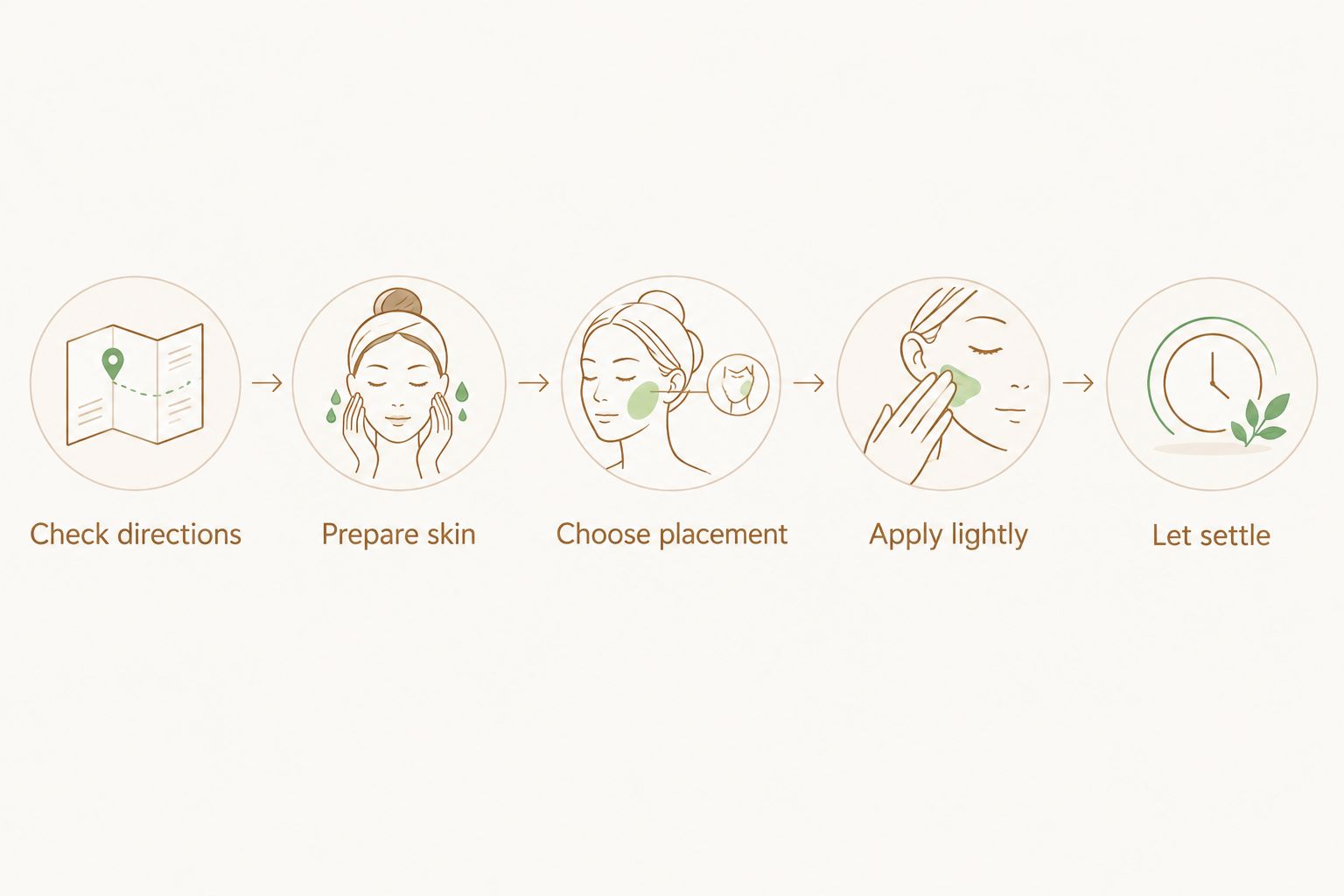
Use this repeatable process for your 2026 routine:
- Check directions: Read the product’s application and care instructions.
- Prepare skin: Choose clean, dry, intact skin.
- Choose placement: Pick an area with limited washing and friction.
- Apply lightly: Follow the label rather than inventing a universal dose.
- Let settle: Avoid immediate rubbing or fabric contact.
Skipping wrist rubbing is sensible because rubbing spreads the oil and increases contact. You do not need the unsupported explanation that friction breaks fragrance molecules to justify leaving the application undisturbed.
When you try a new formula, follow its precautions and check your skin’s response before broader use. If irritation develops, wash off the product and stop using it on the affected area; clean or non-toxic positioning does not establish universal skin tolerance.
Choose a perfume oil for the ritual you want
Caftari perfume oils are best for shoppers who want fragrance as a deliberate daily self-care ritual. Choose the scent you want to wear, then use consistent placement to understand how it behaves on your skin.
Scent of Nirvana’s supplied product description identifies oud, amber, and saffron in a jojoba and vitamin E base. It describes a portable 10 ml roll-on. Those details help you choose a fragrance experience and application format; they do not establish a measured wear-time advantage.
For your 2026 selection, distinguish choosing a fragrance from choosing a placement. You can keep the application method consistent while exploring the available roll-on options.
| Perfume-oil option | Best for | What informs your choice |
|---|---|---|
| Scent of Nirvana Rollerball | Shoppers interested in oud, amber, and saffron | The supplied description identifies a jojoba and vitamin E base and a 10 ml roll-on |
| Nidra Rollerball | Shoppers choosing Nidra in a roll-on format | Review the current scent description and application directions before selecting |
| Dolce Far Niente Rollerball | Shoppers choosing Dolce Far Niente in a roll-on format | Review the current scent description and application directions before selecting |
| Discovery Set – Rollerball Perfume Oils | Shoppers who want several oils for their fragrance routine | The supplied description identifies 3 full-size perfume oils |
The Discovery Set gives you several oils to explore without changing the basic application process. Keep placement consistent when comparing them, so a switch from wrist to chest does not become confused with a difference between fragrances.
A botanical carrier tells you about the base, not the origin of every fragrance ingredient. Read the complete ingredient information when that distinction matters to your choice, and use scent descriptions to identify the experience you actually want.
Why perfume-oil longevity varies
Placement is one part of the picture. These factors explain why the same application method does not produce identical results every day:
- Fragrance composition: Different aromatic materials evaporate at different rates, so fragrances develop differently over time.
- Washing: Water and cleansing products can remove material from the application area.
- Friction: Clothing, jewelry, and repeated contact can transfer oil away from your skin.
- Temperature: Warmth encourages evaporation; a more noticeable scent is not automatically a longer-lasting scent.
- Application amount: The amount changes the initial fragrance load, but more oil does not guarantee a proportional increase in duration.
- Olfactory adaptation: Continuous exposure can make an odor less noticeable to you even while some fragrance remains.
Avoid turning these factors into a complicated optimization project. Change the placement first, keep the rest of the routine similar, and judge the result under comparable conditions. That gives you a clearer basis for deciding what suits you.
Does perfume oil last longer on pulse points?
Pulse points do not guarantee longer perfume-oil wear. Warm skin can help aromatic materials evaporate and make the fragrance more noticeable, but increased evaporation is not the same as increased longevity.
Use pulse points when they are comfortable and practical for you. For lasting wear, also consider whether those areas face washing, clothing contact, or repeated rubbing.
Should you apply perfume oil before or after getting dressed?
Apply perfume oil when you can keep the chosen skin area clear of immediate fabric contact. For a chest application, that usually means letting it settle before dressing; an exposed forearm can remain accessible afterward.
The useful rule is not a universal dressing order. It is keeping freshly applied oil from transferring directly onto fabric, especially when the garment touches the application point closely.
How can you tell whether perfume oil has actually faded?
Your own reduced awareness of perfume oil does not prove it has disappeared. Step away from continuous smelling, then check the application area again rather than repeatedly bringing it to your nose.
For a useful 2026 comparison, keep the fragrance, amount, and daily conditions similar while changing only the location. Note washing and clothing contact, and resist adding more oil before you have assessed the existing application.
FAQ
Where is the best place to apply perfume oil for daily wear?
The inner forearm above the wrist is a practical starting point because it sits farther from frequent handwashing. Choose intact skin and avoid a spot that clothing or jewelry continually rubs.
Should I rub my wrists together after applying perfume oil?
Let perfume oil settle without rubbing your wrists together. Rubbing spreads the oil and increases contact; it is not necessary to claim that friction breaks fragrance molecules.
Can I apply perfume oil to my neck?
Use the neck only when the perfume oil’s directions permit it, and apply to intact skin away from your eyes and mucous membranes. Account for collars, hair, jewelry, and recently shaved areas.
Does moisturizer make perfume oil last longer?
Moisturizer supports skin hydration, but it does not guarantee longer perfume-oil wear. If you already use moisturizer, let it absorb before applying fragrance and compare the result under similar conditions.
Can I put perfume oil on clothes to make it last?
Apply perfume oil to clothing only if the product explicitly permits that use. Oils can leave marks on fabric, so skin application according to the label is the practical starting point.
Why can’t I smell my perfume oil after wearing it for a while?
Continuous exposure can make fragrance less noticeable to your nose through olfactory adaptation. Washing, evaporation, and transfer can also reduce the scent, so reduced awareness alone does not identify the cause.
How do I compare Caftari perfume oils fairly?
Compare Caftari perfume oils using consistent placement and label-directed application under similar daily conditions. Choose by the scent experience you enjoy rather than assuming that a different application point proves one oil lasts longer.
One last thing
The most useful application point is often the one you forget to touch. A familiar wrist application can face more washing and contact than a carefully chosen forearm spot, even when both feel equally convenient at first.
Before your next application, notice where your watch, sleeve, necklace, or collar rests. Choose a permitted area away from that contact, let the oil settle, and give your fragrance a fair chance to become part of the day rather than immediately transferring onto something else.


