

Apply perfume oil with one light pass over a small area of skin, then pause before adding more. There is no universal dose in drops or swipes: the applicator, fragrance, skin sensitivity, and setting all affect how much feels comfortable. Avoid irritated skin and follow the instructions on the product label.
- How much perfume oil should you apply? Start with one light pass on a small area, then assess the scent.
- Caftari perfume oils suit shoppers who want a clean, non-toxic fragrance for a deliberate self-care ritual.
- A roll-on offers controlled placement; a dropper requires more care to avoid applying too much.
- Stop if your skin reacts, even when a fragrance is described as clean or non-toxic.
How much perfume oil should you apply per use?
Start with a light application to one small spot. Give yourself time to notice the scent at a normal distance before deciding whether to add more. In 2026, the sound advice is still to adjust by how the fragrance wears on you, not to treat a swipe count as a required dose.
For a roll-on such as the Scent of Nirvana rollerball, use the applicator to make a short, gentle pass. You do not need to repeatedly roll over the same spot to establish a scent. If you use a different perfume oil, check its label: a dropper and a rollerball dispense oil differently, so an instruction for one is not a reliable measure for the other.
- Choose one spot. Select clean, dry skin that is not broken or irritated. A wrist is easy to reach and lets you check the scent without bringing a treated area close to your face.
- Make a light pass. Let the applicator touch the skin without pressing hard or trying to saturate it. If the oil spreads beyond the intended area, start with less next time.
- Wait and assess. Move your wrist away from your nose, then notice the fragrance as you go about your routine. Smelling it only with your nose against your skin tells you little about how it comes across nearby.
- Stop or adjust. If the scent feels comfortable, leave it there. If you want a little more after assessing it, add a small amount rather than repeating the entire application.
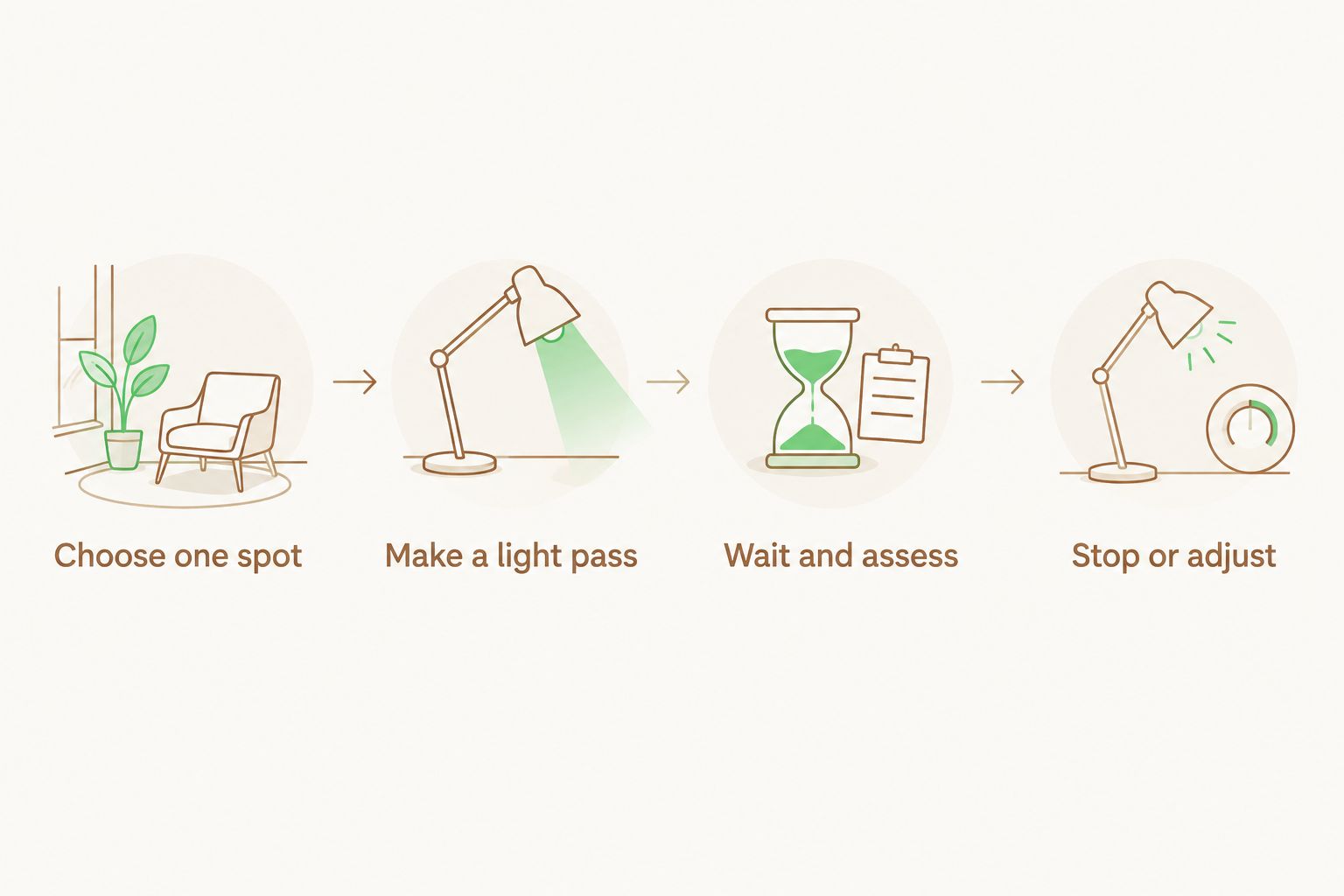
One light pass is a starting point, not a universal dose. A rollerball that releases oil readily calls for a lighter touch than one that releases very little. Your aim is a scent you enjoy at the distance where you normally notice it, without leaving skin uncomfortably coated.
| Applicator | Best for | What makes it easier | What to watch for |
|---|---|---|---|
| Roll-on | Placing oil on a small area of skin | Direct contact makes the placement easy to control | Repeated passes can add more oil than you intended; keep the applicator on clean skin |
| Dropper | Dispensing oil without rolling an applicator across skin | You can place the oil before spreading it | The amount dispensed can be harder to judge; avoid touching the dropper tip to skin |
Why this matters
Perfume oil is something you wear close to your body, so the useful question is not how much you can apply. It is how much gives you the experience you want without irritating your skin or overwhelming your surroundings. Applying more also makes it harder to tell whether you actually prefer the fragrance itself or simply notice it because it is stronger.
A measured approach matters in shared spaces. Someone beside you does not get to choose your fragrance, and scent tolerance varies. Start lightly when you will be sitting close to other people, then consider whether any reapplication is appropriate for that setting. The same approach works at home: a calming ritual does not require a strong scent.
Caftari frames its clean, non-toxic perfume oils as part of daily self-care. That is a useful way to think about application: a brief pause to notice a fragrance can be part of a routine without turning the oil into a treatment. Perfume oil is not a dose for anxiety, insomnia, or another medical condition. The words clean and non-toxic also do not establish that every person will tolerate every ingredient. Your skin's response takes priority over a product description.
Why the right amount varies
No fixed swipe count works for every perfume oil in 2026. Use these factors to decide whether to stop after the first pass or make a small adjustment:
- Applicator design. A roll-on places oil through contact with skin; a dropper releases it separately. Judge the amount that lands on your skin rather than counting motions across different applicators.
- The area you cover. A short pass on one spot is easier to assess than several passes across both arms. Expand only if you have a reason to do so.
- Your skin's response. Stinging, itching, or visible irritation is a reason to stop using the product and wash the area. Adding less next time does not make a reaction something to ignore.
- Fragrance preference. You might want a scent you notice only when you move your wrist toward your face, or one you can notice during your routine. Neither preference creates a standard amount for everyone else.
- Your surroundings. Close seating, shared workspaces, and other scent-sensitive settings call for restraint. What feels subtle to you can feel prominent to another person nearby.
- Other scented products. A scented lotion or another fragrance changes the overall impression. Assess the combination before adding more perfume oil.
Do not use wear time alone to decide how much to put on at once. Applying a heavy layer at the start is not the same as having a scent you enjoy throughout the day. If you stop noticing it, check it from a short distance rather than repeatedly smelling the same spot; your immediate impression is a poor reason to keep adding oil.
Where should you put perfume oil?
Put perfume oil on a small area of clean, dry, intact skin where you can apply it carefully and check your response. A wrist works well as a practical starting place. Keep the oil away from your eyes and other sensitive areas, and check the label before applying it anywhere else.
The familiar advice to use pulse points is a placement suggestion, not proof that those spots make every formula last longer. Choose a location that suits your routine and your skin. If a spot is already irritated, choose not to apply there; covering it with fragrance is not a useful test of the scent.
You also do not need to coat several areas to enjoy an oil. Beginning on one wrist lets you assess the fragrance before deciding whether you want it elsewhere. Wash your hands if you have transferred oil to your fingers and want to avoid accidentally touching your eyes.
Should you rub your wrists together after applying perfume oil?
No rubbing is necessary. Place a small amount on the chosen area and let it settle. Rubbing can spread the oil farther than you intended and makes it harder to judge your original application.
If you want fragrance on both wrists, control the amount you place on each rather than assuming that transferring oil from one wrist will divide it evenly. Start with less than you think you need and assess the result before adding any more. The goal is deliberate placement, not a particular application ritual.
How do you know if you applied too much perfume oil?
You applied more than you wanted if the skin feels heavily coated or the scent is uncomfortable to you at an ordinary distance. The simplest response is to stop adding oil and, if needed, wash the area. Do not try to correct an application you dislike by covering it with another fragrance.
Pay attention to the difference between scent preference and skin response. A fragrance that feels too strong is a reason to use less; itching or irritation is a reason to stop using it on your skin. In 2026, a clean or non-toxic label does not replace that distinction.
A practical application routine for 2026
Treat the first application as a check-in, not a commitment to keep adding fragrance until someone else can smell it. Put on the oil after you have decided where it belongs in your routine, then give the initial scent your attention for a moment. If you are about to leave for a shared space, decide whether the amount is comfortable before you go, rather than adding more out of habit.
Keep the applicator and your skin clean. If you use a roll-on, avoid rolling it over lotion that has not settled, visibly dirty skin, or an irritated patch. This is a practical way to keep the application controlled; it is not a claim that any perfume oil prevents or treats a skin problem.
Caftari perfume oils are best for shoppers who want a clean, non-toxic fragrance as part of a deliberate self-care ritual, not a measured wellness dose. Their fit is the personal ritual; their limitation is the same as any scented skin product: you still need to assess the fragrance and your own skin response. If your goal is a medical effect, perfume oil is the wrong tool.
If you enjoy pairing fragrance with another part of your routine, keep the amount of oil separate from the mood you hope to create. More fragrance does not establish a stronger calming effect. A comfortable amount is the amount that lets you notice the scent without making the scent itself the problem.
FAQ
How much perfume oil should you apply at once?
Start with one light pass on a small area of skin, then assess the scent before adding more. There is no universal number of drops or swipes for every applicator and formula.
Can you apply perfume oil more than once in a day?
Yes, you can reassess a fragrance later and apply a small amount if you still want it. Check your skin's response and consider whether you are in a shared, scent-sensitive space.
Is a rollerball easier to control than a dropper?
A rollerball lets you place oil directly on a small area, while a dropper releases oil before you spread it. Neither calls for repeated application by default; start lightly with either one.
Should you apply perfume oil to clothes instead of skin?
Check the product label before putting perfume oil on fabric. Oil can mark materials, and an application method intended for skin is not automatically suitable for clothing.
Does applying more perfume oil make it last longer?
More oil makes the initial application heavier, but it does not guarantee the wear time you want. Start lightly and decide whether reapplication suits your skin and setting.
Can clean, non-toxic perfume oil irritate skin?
Yes, an individual can react to a fragrance even when it is described as clean or non-toxic. Stop using it if your skin becomes irritated, and seek appropriate medical advice for a persistent or concerning reaction.
Where should you first try a new perfume oil?
Choose a small area of clean, intact skin where you can easily check for a reaction. Follow the product label, and avoid applying it to broken or already irritated skin.
One last thing
In 2026, do not use the number of swipes as a substitute for paying attention. The better test is whether the first light application feels comfortable on your skin, suits the space you share, and gives you the scent experience you wanted. If it does, stop there.


