

There is no blanket yes: a scented candle’s label does not establish pregnancy-specific safety, and burning it adds combustion emissions to indoor air. If you choose to burn one in 2026, ventilate the room, follow the candle’s instructions, and extinguish it if the scent or smoke makes you feel unwell.
- Is it safe to burn candles while pregnant? Wax type and fragrance labels alone cannot establish pregnancy safety.
- A fragrance-free LED candle provides candlelight without an open flame or candle combustion emissions.
- Caftari’s non-toxic candles are wellness products, not evidence of pregnancy-specific safety.
- Stop burning a candle if you develop nausea, headache, coughing, or breathing discomfort.
Is it safe to burn a scented candle while pregnant?
Treat candle use as an optional household exposure, not a pregnancy wellness requirement. A familiar scent can be pleasant, but that does not prove that inhaling its emissions benefits you or your baby. Likewise, detecting an odor does not, by itself, tell you the dose of a substance or establish harm.
The U.S. Environmental Protection Agency’s guidance on indoor particulate matter identifies burning candles as an indoor particle source. Its guidance on volatile organic compounds explains that health effects depend on the substance, concentration, and exposure. These are indoor-air principles—not pregnancy-specific approval of a particular candle.
For the broader indoor-air question, read are scented candles bad for your lungs?. During pregnancy, your symptoms, respiratory history, room conditions, and clinician’s advice matter more than a reassuring product category.
| Option | Best for | Practical advantage | Limitation |
|---|---|---|---|
| Scented candle | Someone who wants fragrance and tolerates it | Combines scent with candlelight | Adds fragrance exposure, combustion emissions, and an open flame |
| Unscented candle | Someone who wants candlelight without added fragrance | Removes intentionally added scent | Still burns fuel and requires ventilation and fire precautions |
| Fragrance-free LED candle | Someone prioritizing atmosphere without candle combustion | Provides light without burning wax | Does not provide fragrance or a real flame |
A fragrance-free LED candle is the clearest choice when your goal is candlelight rather than scent. An unscented wax candle is not the same alternative: it removes added fragrance, not combustion.
Why this matters during pregnancy
Pregnancy can bring nausea and changes in how you experience smells. A fragrance you enjoyed before pregnancy can become unpleasant, and tolerating a scent yesterday does not obligate you to use it today. There is no wellness benefit in pushing through discomfort.
Keep comfort and fetal safety separate. A headache after exposure is a reason to stop using the candle, but it does not establish that your baby has been harmed. Conversely, enjoying a scent does not prove that every ingredient or emission has been studied during pregnancy.
For your 2026 self-care routine, start with the outcome you actually want: softer lighting, a familiar ritual, or fragrance. You can preserve the first two without burning anything. If fragrance is the part you want, use your own response and medical advice—not a wellness claim—to guide the decision.
What does the evidence actually tell you?
Indoor-air evidence is not a pregnancy safety certificate
Candles produce particles through combustion. Fragranced products can also release volatile compounds, but the presence of a compound is not enough to determine its health impact. Concentration, exposure duration, ventilation, and the compound itself all matter.
EPA indoor-air guidance supports reducing avoidable pollution sources and improving ventilation. It does not supply a universal pregnancy-safe burn duration, fragrance concentration, or wax category. Do not turn general indoor-air research into a precise pregnancy rule that the research does not establish.
This distinction also applies to alarming ingredient lists. A chemical name, laboratory finding, or comparison with another combustion source needs exposure context before it can answer a real household safety question.
Scent research does not establish candle benefits during pregnancy
Research involving an aroma, an essential oil, or a controlled exposure does not automatically apply to a burning candle. The preparation, route of exposure, and study population can differ. A finding about relaxation is also different from evidence about pregnancy outcomes.
A neuroscience-inspired fragrance ritual is not a treatment for anxiety, insomnia, or a pregnancy-related condition. If sleep or anxiety is affecting your daily functioning, discuss it with your prenatal care team rather than increasing fragrance exposure to pursue a therapeutic effect.
Are non-toxic candles safer during pregnancy?
A non-toxic claim is not a pregnancy-specific safety certification. Read what the manufacturer actually discloses about ingredients, intended use, and burning instructions. The term alone does not establish what enters the air when the candle burns.
The Federal Trade Commission’s Green Guides state that non-toxic claims need competent and reliable scientific evidence. That advertising standard is not an endorsement of a particular product and does not replace evidence about use during pregnancy.
The same caution applies to clean, natural, and plant-based language. These descriptions can help explain a product’s positioning or materials, but they do not answer every exposure question. A natural fragrance can still be unpleasant or irritating to an individual user.
When assessing a candle in 2026, separate these questions:
- What ingredients or materials does the manufacturer disclose?
- What does the manufacturer mean by its non-toxic claim?
- What burning and ventilation instructions does it provide?
- Does it make a pregnancy claim, and what evidence supports that claim?
- Does using it cause symptoms for you?
Avoid products that promise to treat pregnancy nausea, anxiety, or sleep problems through candle fragrance. A medical-sounding promise is not a substitute for clinical evidence.
Why your exposure and comfort vary
The relevant differences are not limited to the name of the wax. These household factors change how you encounter candle emissions and whether the experience is comfortable:
- Ventilation: Air exchange helps disperse indoor pollutants; a closed room allows emissions to accumulate.
- Burning duration: Continuing to burn a candle continues the source of emissions. There is no universal pregnancy-safe timer.
- Number of flames: Multiple burning candles introduce more combustion sources than a single candle.
- Flame condition: A smoking candle needs attention. Follow its instructions rather than accepting visible soot as normal.
- Fragrance response: Nausea, headache, coughing, or irritation are reasons to stop, even when the product carries a clean label.
- Respiratory history: Asthma or another breathing condition warrants individualized advice about indoor irritants.
These factors explain why someone else’s comfortable experience cannot settle your decision. They also explain why a wax comparison alone is an incomplete safety assessment.
How should you use a candle if you choose to burn one?
Use the same fire precautions you would outside pregnancy, with added attention to fragrance tolerance. The National Fire Protection Association’s candle guidance and the National Candle Association’s consumer safety guidance provide practical household rules; neither establishes fetal safety.
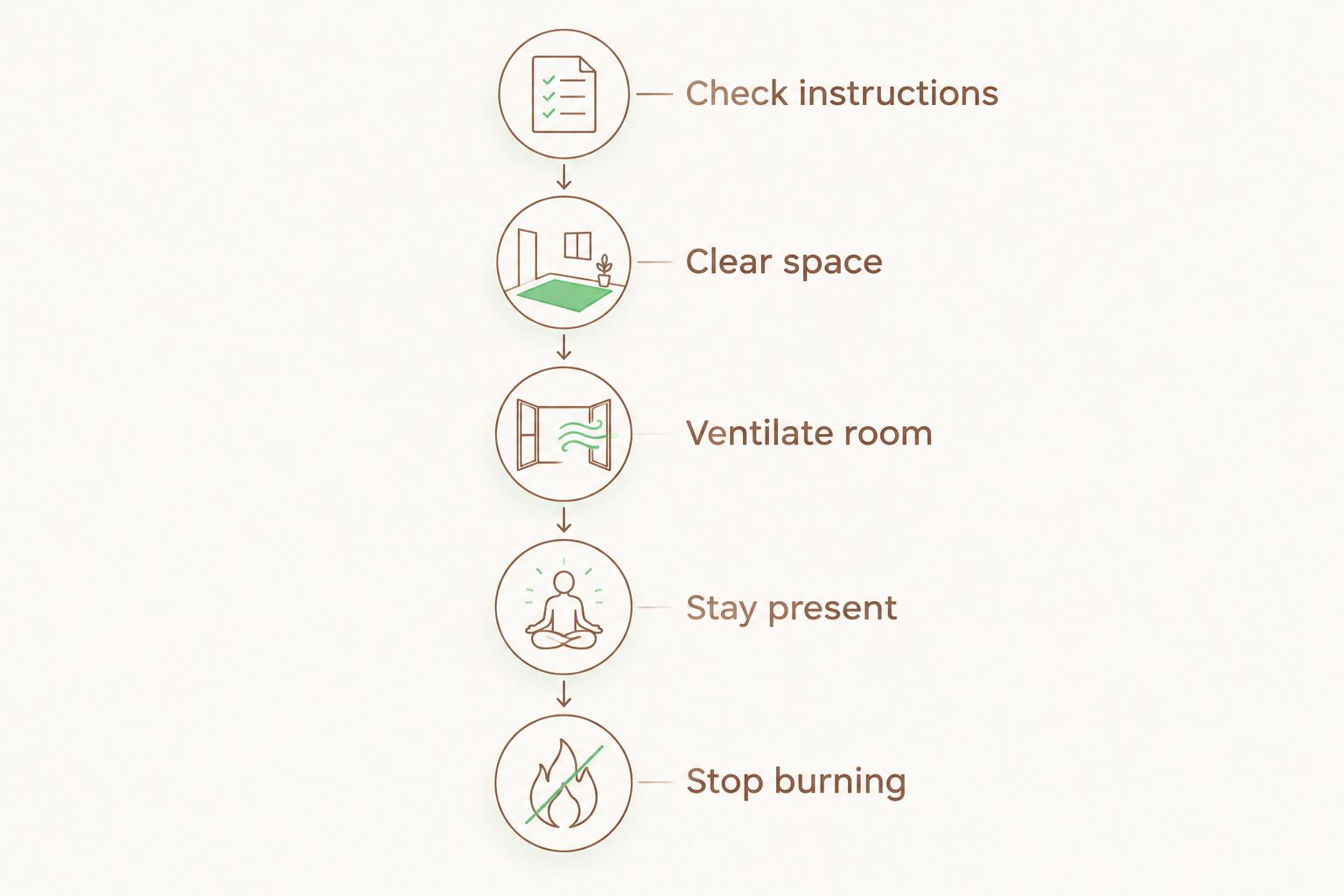
Check instructions
Read the candle’s label before lighting it. Follow its wick-care and burning instructions, including any stated maximum burn time. Do not substitute a general online recommendation for directions specific to the vessel and wick.
The National Candle Association generally recommends trimming a wick to 1/4 inch before burning. Follow the product’s instructions where they specify different care, and never trim or handle a hot wick.
Clear space
Set the candle on a stable, heat-resistant surface, away from anything that can catch fire. NFPA guidance recommends at least 12 inches, or about 30 centimeters, between a candle and combustible materials.
Keep it away from curtains, bedding, loose clothing, and places where someone can knock it over. Pregnancy does not change the basic burn and fire hazards of an exposed flame.
Ventilate room
Use a room with air exchange rather than an enclosed space that traps fragrance and smoke. Keep the candle out of direct drafts: ventilation is useful, but a moving curtain or unstable flame creates a separate problem.
A fan that merely circulates room air is not the same as removing an indoor pollution source. If ventilation is difficult or the fragrance feels overwhelming, choose an unlit alternative.
Stay present
Keep a burning candle within sight and extinguish it before leaving the room or falling asleep. Do not make a bedside candle part of a routine that ends with you drifting off.
For a 2026 evening ritual, arrange your lighting before you become sleepy. A fragrance-free LED candle preserves the visual cue without requiring you to remember to extinguish a flame.
Stop burning
Extinguish the candle if you notice persistent smoking or develop discomfort. Move away from the exposure and get fresh air if the scent makes you feel unwell.
Do not repeatedly relight the same candle to test whether you can tolerate it. If symptoms persist or recur, contact your clinician; breathing difficulty needs prompt medical attention.
Is soy wax or beeswax automatically better during pregnancy?
No wax type automatically establishes pregnancy safety. Soy, beeswax, and paraffin candles all involve combustion when lit, and the finished candle also includes a wick and potentially fragrance or other materials.
Choose based on disclosed information and how the candle performs under its intended instructions, not an assumption that a plant-derived material produces no emissions. An unscented option removes added fragrance, but it does not remove the burning process.
If eliminating candle combustion is your priority, switching waxes does not accomplish that. Switching to a fragrance-free LED candle does.
Can you use an essential-oil candle while pregnant?
An essential-oil candle is not automatically pregnancy-safe because its fragrance comes from plants. The essential oil, its concentration, the finished formulation, and the exposure route all matter. A recommendation for a different product or route does not establish safety for a candle.
Do not ingest essential oils or apply candle wax to your skin. If you have a question about a particular ingredient, take the product information to your prenatal clinician rather than relying on a generic pregnancy-safe scent list.
Where does Caftari fit into this decision?
Caftari candles are best for shoppers seeking a fragrance ritual, not a pregnancy-safety guarantee. The brand offers clean, non-toxic candles and perfume oils with a neuroscience-inspired wellness focus. That positioning does not establish pregnancy-specific safety or a medical benefit.
If you explore Caftari, keep the same standards you would apply to any fragrance purchase: review the available product information, follow instructions, and avoid a scent that causes discomfort. A perfume oil avoids candle combustion, but topical fragrance introduces separate ingredient and skin-tolerance questions; it is not automatically a pregnancy-safe substitute.
There is no need to purchase a scented product to maintain a calming routine. Lighting, comfortable surroundings, and a consistent wind-down cue can remain part of your evening without fragrance.
FAQ
Is it safe to burn candles while pregnant in 2026?
A candle’s label alone cannot establish pregnancy-specific safety. If you choose to burn one, ventilate the room, follow its instructions, and stop if it causes discomfort; use a fragrance-free LED candle if you want to avoid candle combustion.
Are non-toxic candles safe for my baby during pregnancy?
A non-toxic claim does not establish fetal safety. Look for the information supporting the claim, and ask your prenatal clinician about ingredient-specific concerns rather than treating the label as medical approval.
Can a scented candle make pregnancy nausea worse?
A scented candle can worsen nausea if its odor is a trigger for you. Extinguish it and move away from the scent rather than trying to tolerate it as part of a wellness routine.
How long can I burn a candle while pregnant?
There is no universal pregnancy-safe burn duration. Follow the candle’s instructions, avoid prolonged unnecessary exposure, and stop immediately if you develop symptoms.
Is an unscented candle better than a scented candle during pregnancy?
An unscented candle removes intentionally added fragrance, but it still produces combustion emissions. A fragrance-free LED candle avoids both candle combustion and added scent.
What should I do if I already burned a scented candle while pregnant?
A past candle burn alone does not establish that your pregnancy was harmed. Discuss persistent symptoms, a substantial smoke exposure, or ingredient-specific concerns with your prenatal care team.
Are Caftari candles certified safe for pregnancy?
A clean or non-toxic description is not pregnancy-specific certification. Assess the available product information and discuss personal medical concerns with your prenatal clinician.
When should I get medical help after candle exposure?
Seek prompt medical attention for breathing difficulty, chest pain, fainting, or severe symptoms. Contact your clinician if headaches, coughing, nausea, or irritation persist after you leave the exposure.
One last thing
Fragrance-free and flame-free solve different problems. Removing added scent does not stop a candle from producing combustion emissions, and replacing a flame with a scented plug-in does not remove fragrance exposure.
For your 2026 routine, match the alternative to your actual goal. If you want soft light with neither candle combustion nor added fragrance, choose a fragrance-free LED candle—and let the atmosphere, rather than a safety claim, do the work.


