

Yes, a candle gift set for sympathy is appropriate when the recipient enjoys candles, welcomes fragrance, and can use an open flame safely. Choose a restrained gift, include a personal condolence note, and avoid presenting scent as a treatment for grief or something they need to use immediately.
- A candle gift set for sympathy works best when you know the recipient welcomes scented candles.
- Caftari candle gifts suit fragrance-loving recipients; they are not treatments for grief or sleep problems.
- For a bereavement gift, prioritize personal preferences over memorial symbolism or elaborate presentation.
- If fragrance preferences are unknown, send a condolence card rather than guessing.
Is a candle gift set appropriate as a sympathy gift?
A candle set is a thoughtful sympathy gift when it reflects the recipient's preferences, not your idea of how someone should grieve. The gift should communicate care without asking the person to feel calmer, create a ritual, or display a memorial object.
Before choosing a scented set, work through these checks:
- Confirm that candles are welcome. Think about whether the recipient already uses them. Owning perfume does not establish that someone wants fragrance throughout their home.
- Check the household context. Consider shared spaces, fragrance sensitivities, and whether a flame is practical. You do not need to ask for medical details.
- Keep the meaning open. A candle can be an everyday object rather than a memorial. Let the recipient decide whether it carries personal significance.
- Write the note first. If the message feels caring without mentioning the product, the gift is supporting the condolence rather than replacing it.
- Make receiving it easy. Do not request a photograph, a review, a visit, or confirmation that they have used it.
For fragrance concerns, the guide to whether non-toxic candles can trigger headaches addresses a separate question from gift etiquette. A product's description does not establish that its scent suits a particular person.
Why this matters
A sympathy gift arrives at a time when even ordinary decisions can feel demanding. Your aim is to express support without adding another task, expectation, or object the recipient feels obliged to keep.
That makes suitability more important than presentation. A beautifully packaged candle is still the wrong choice for someone who avoids fragrance, dislikes flames, or does not want a gift associated with the loss.
For a sympathy gift in 2026, personal knowledge is a better selection criterion than a wellness label. Choose something the person already welcomes, rather than something you hope will change how they feel.
Why a candle sympathy gift's suitability varies
There is no single candle style that fits every bereavement. The decision depends on the person receiving it and the relationship you have with them.
- Fragrance preference: A scent you enjoy is not evidence that the recipient enjoys it. Use an established preference rather than a guess about what smells calming.
- Sensitivity: If the person avoids scented products, respect that boundary. Clean or non-toxic wording does not establish individual tolerance.
- Home environment: Shared rooms and household rules affect whether a scented candle is practical. A gift should not require rearranging the home.
- Relationship: A close friend can draw on personal knowledge. A colleague or business contact should avoid intimate assumptions about grief or self-care.
- Cultural meaning: Do not assign religious or memorial symbolism unless you know it is welcome. An ordinary candle does not need a spiritual explanation.
- Receiving effort: Personalization, elaborate packaging, and additional products can create decisions. Choose only the extras that genuinely fit the recipient.
Should you choose a candle alone or a candle-and-perfume set?
Choose the simplest format that matches what you know about the recipient. A candle-and-perfume bundle requires confidence in both home-fragrance preferences and willingness to wear fragrance; liking one does not establish the other.
Caftari candle gifts are best for sympathy recipients who already enjoy fragrance-based self-care. Caftari offers clean, non-toxic perfume oils, candles, and wellness gifts with neuroscience-inspired positioning, but that positioning is not evidence that a product treats bereavement or any medical condition.
The following bundles are options for recipients whose preferences you already know. The listed scent notes describe the rollerball perfume oils supplied in the product information, not a separate verified description of each candle's fragrance.
| Option | Best for | What the supplied details establish | Limitation |
|---|---|---|---|
| Nidra Rollerball + Candle Bundle | Someone who already enjoys jasmine and soft-musks perfume | Includes a portable 10 ml rollerball in a jojoba and vitamin E base, alongside a candle | Adds a skin-applied fragrance; it is not appropriate if you only know the recipient likes candles |
| Scent of Nirvana Rollerball + Candle Bundle | Someone who already enjoys agarwood, patchouli, and cedarwood perfume | Includes a portable 10 ml rollerball in a jojoba and vitamin E base, alongside a candle | The perfume notes require a known preference; the product name should not dictate the condolence message |
| Candle without wearable fragrance | Someone who welcomes home fragrance but does not want perfume | Keeps the gift focused on a household object | Still requires confidence that scent and an open flame are welcome |
| Condolence card | Someone whose fragrance preferences are unknown | Expresses sympathy without adding a scented product | Does not provide a physical self-care item, which is not necessary for a meaningful condolence |
Do not add perfume simply to make the gift feel more substantial. For sympathy gifting in 2026, a smaller, well-matched gesture is preferable to a larger set that introduces unwanted products.
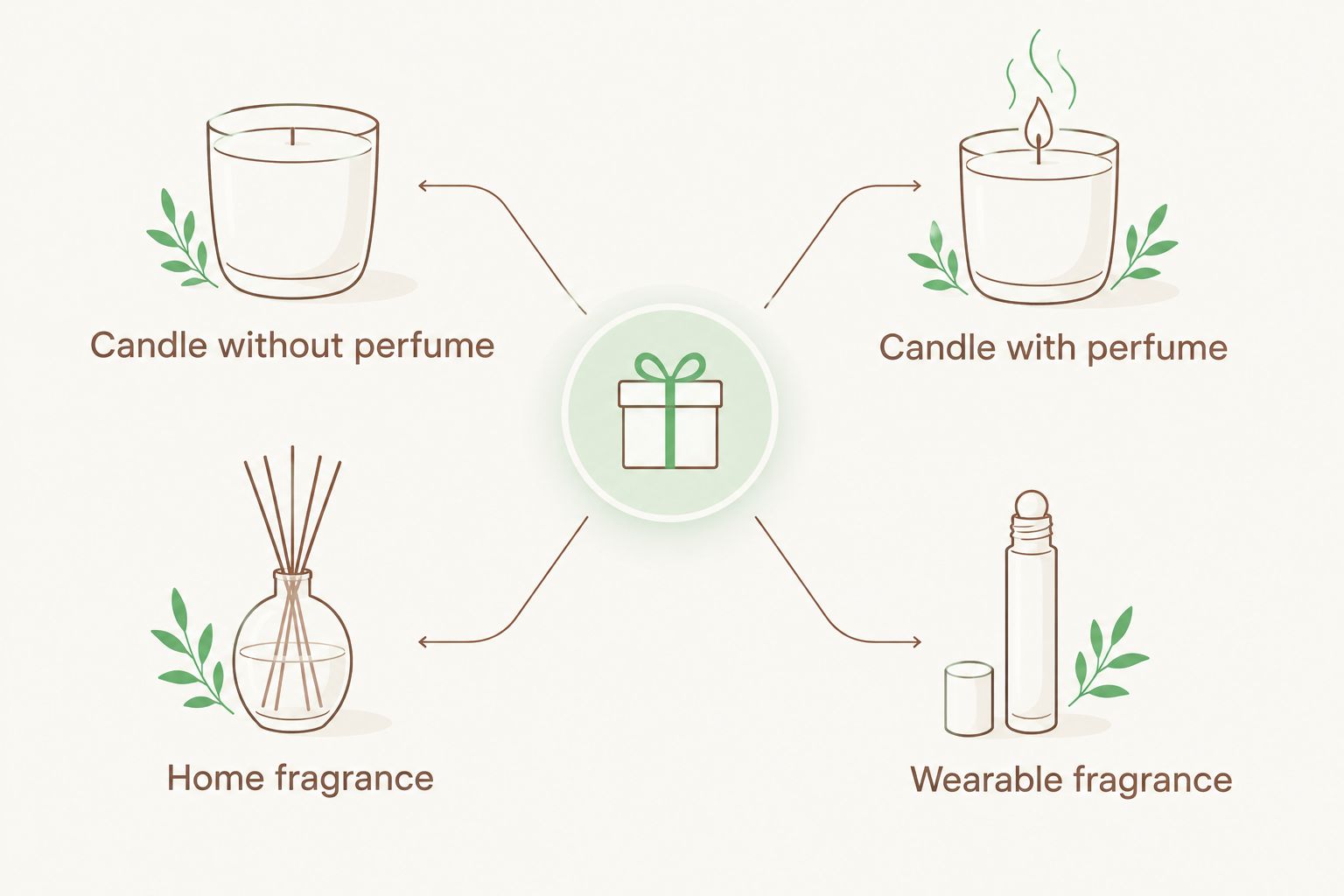
If the recipient already enjoys both candles and wearable fragrance, these Caftari bundles fit that format. Choose by an established scent preference, not by a promise of relaxation or better sleep.


What should you write with a sympathy candle gift?
Write about the person and your care for them, not about the candle's intended effects. A condolence note should stand on its own if the recipient never opens the set.
Use plain language. Depending on your relationship, suitable wording includes:
- I am thinking of you and your family. There is no need to reply.
- I am so sorry for your loss. This is a small gesture of care.
- I remember how warmly your father welcomed everyone. I am thinking of you.
Adapt the wording to facts you actually know. A sincere, specific memory is appropriate when it is yours; do not borrow a memory or imply closeness you did not have.
Avoid instructions disguised as comfort. Telling someone to light the candle every evening, use it to sleep, or turn grief into a wellness routine makes the gift carry an assignment.
Also avoid explaining the loss, predicting recovery, or telling the recipient how the deceased would want them to feel. Your note does not need to resolve anything. It needs to acknowledge the loss and leave room for the person's experience.
When should you send a sympathy candle set?
Send it when you can do so thoughtfully, without requiring the recipient to host you or manage a delivery conversation. There is no required gifting deadline in this 2026 guide.
If the family has shared preferences about gifts or contact, follow them. Those instructions take priority over a general etiquette recommendation or your preferred way of expressing sympathy.
A later gesture can acknowledge that your care continues beyond the initial condolence. Keep the message simple, and do not frame the delay as something the recipient needs to forgive.
Before arranging delivery, confirm the appropriate address through a suitable channel. Do not assume the person wants a sympathy gift delivered to their workplace, particularly when colleagues do not know about the loss.
Is a candle gift appropriate after a colleague's loss?
A candle gift can be appropriate after a colleague's loss when their preferences are known and the gesture respects their privacy. If those preferences are unknown, a restrained condolence card is the clearer choice.
For workplace sympathy gifting in 2026, separate care from company promotion. The recipient should not have to interpret a branded gift as a marketing message or public recognition moment.
Caftari's gifting context includes custom corporate branding or packaging, but sympathy is not an occasion to foreground a logo. If you use corporate packaging, keep the condolence personal and the company's presence secondary.
Use these boundaries when a team is involved:
- Let someone with an appropriate relationship coordinate the gesture.
- Keep participation voluntary rather than requesting contributions from everyone.
- Share personal details only with the recipient's permission.
- Do not request a public thank-you or photograph.
- Keep the gift separate from return-to-work expectations.
The gift should not substitute for practical workplace support. Handle scheduling and work arrangements through the appropriate private conversation, not through a message tucked into the package.
Should a sympathy candle be personalized?
Personalize a sympathy candle only when you know the recipient wants a lasting memorial object. A name, date, or message changes the gift from an everyday item into something emotionally specific.
That can be meaningful, but it also removes flexibility. The recipient might prefer to use the candle privately, give it away, or avoid displaying reminders at home.
When you are unsure, put the personal message in the card rather than on the object. A removable note allows the gift to remain an ordinary candle without making the condolence less sincere.
If personalization is welcome, confirm spelling and any dates directly through an appropriate source. Do not infer family wording, religious language, or the preferred way to describe the loss.
Does a calming scent make a sympathy gift more helpful?
A scent the recipient enjoys can be part of a personal ritual, but a calming description does not establish a grief-related benefit. The appropriate claim is that the gift is designed for an optional ritual, not that it will improve the person's emotional state.
Keep the distinction clear: enjoyment of a fragrance is a preference; treating anxiety, insomnia, or another condition is a medical claim. Neither a product name nor neuroscience-inspired positioning establishes treatment effectiveness.
You do not need a scientific explanation to justify a condolence gift. Unless the recipient asks about fragrance research, a personal note is more relevant than a discussion of scent mechanisms.
When should you skip a scented sympathy gift?
Skip the scented set when you know fragrance is unwelcome or when the family has asked for something else. Do not interpret a clean ingredient description as permission to disregard a stated preference.
Also choose another gesture when candles create a practical problem, you do not know the recipient well enough to select fragrance, or a memorial-themed object would impose meaning they have not requested.
A card is not a lesser form of sympathy. It gives the person an acknowledgment they can read when they choose, without requiring product use, storage, or a new routine.
If you want to offer practical help, make the offer specific and achievable. Only offer a task you can genuinely complete, and leave the recipient free to decline without explanation.
FAQ
Is a candle gift set for sympathy a good idea?
A candle gift set for sympathy is a good idea when the recipient already enjoys candles and welcomes fragrance. Include a personal note and leave use of the gift entirely up to them.
What is the best candle scent for someone who is grieving?
The best candle scent is one the recipient already enjoys. There is no universally appropriate fragrance for grief, so do not choose solely because a scent is described as calming.
Is a non-toxic candle safe for someone with fragrance sensitivities?
A non-toxic label does not establish that a candle is suitable for someone with fragrance sensitivities. Respect their known preferences and choose a non-fragrance gesture when suitability is uncertain.
Should I send a candle set or just a sympathy card?
Send a sympathy card when you do not know whether the recipient welcomes scented candles. A candle set is an optional addition, not a requirement for expressing care.
Can I send a candle gift to a coworker after a death in their family?
You can send a candle gift to a coworker when you know it is welcome and respect their privacy. Keep the gesture separate from promotion, public recognition, and return-to-work expectations.
Should I personalize a sympathy candle with a name?
Personalize a sympathy candle with a name only when you know the recipient wants a memorial object. Otherwise, place your personal message in a separate condolence card.
Can a calming candle help someone recover from grief?
A calming candle should not be presented as a way to recover from grief. An enjoyed fragrance can accompany an optional personal ritual, but that does not establish a treatment benefit.
One last thing
Before sending a sympathy gift in 2026, write the condolence note and read it without the product description beside it. If the message depends on the candle making the recipient feel better, rewrite it.
The recipient does not need to use the gift for your gesture to count. Permission to leave it unopened, save it, or pass it on is part of giving without obligation.

