

To remove candle wax from fabric or carpet, let it harden, gently lift away the solid wax, then treat any remaining residue using the material’s care instructions. Use controlled heat only on fabric that permits ironing; do not assume a carpet, upholstery fabric, or delicate garment tolerates the same treatment. This 2026 guide separates wax removal from the oily or colored mark that sometimes remains.
- Remove candle wax from fabric by hardening it, lifting the solids, and treating residue according to the care label.
- For carpet, remove hardened wax gently and use a manufacturer-approved spot cleaner rather than assuming ironing is suitable.
- Caftari candle care starts with a stable, heat-resistant surface and letting the vessel cool before moving it.
- Check for oily or colored marks before machine drying; removing solid wax does not always remove the stain.
How do you get candle wax out of fabric or carpet?
Remove solid wax before treating the stain underneath. Scrubbing a warm spill spreads wax between fibers, while washing a thick deposit leaves more material to remove afterward.
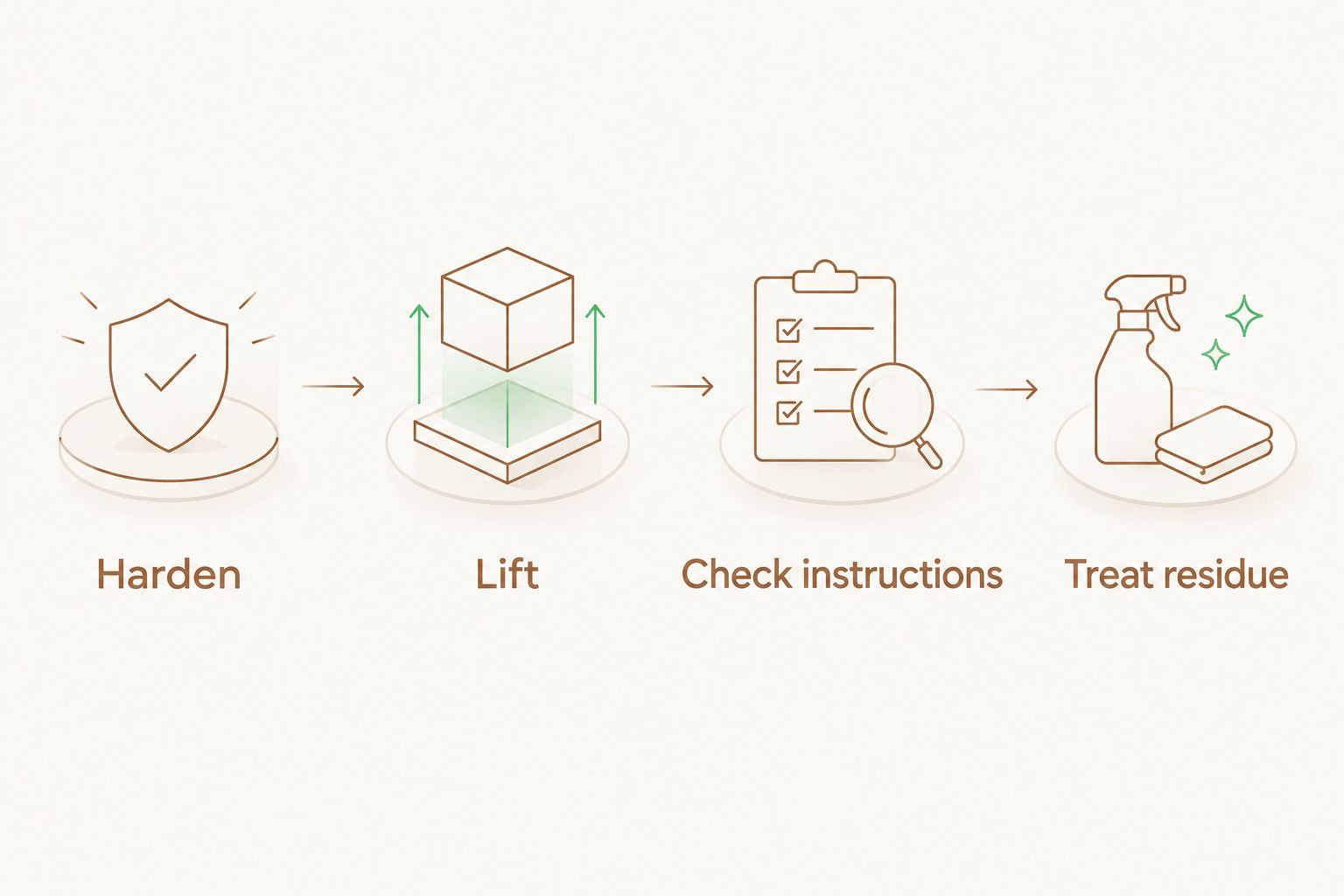
Follow this sequence:
- Harden the wax. Let the spill cool completely. If needed, hold a sealed bag of ice against it without soaking the material.
- Lift the solids. Use the edge of a plastic card or a blunt spoon. Work gently rather than pulling at threads or carpet loops.
- Check the care instructions. Identify whether the item allows washing, ironing, or spot cleaning before choosing the next step.
- Treat the residue. Use absorbent paper and controlled heat only where ironing is permitted; otherwise follow the approved cleaning method.
- Inspect before drying. Check for a greasy shadow or remaining color. Do not machine dry a washable item until the mark is gone.
For everyday candle setup, the guide to how long to burn a new candle the first time covers a related care question.
Choose the method by material
This 2026 comparison helps you choose the next step without treating every textile alike. The care label or manufacturer’s instructions take priority over the general method.
| Material | Best for | Starting method | Main limitation |
|---|---|---|---|
| Washable cotton or linen that permits ironing | Home treatment of sturdy garments and table linens | Harden, lift, then use permitted gentle heat and stain pretreatment | Dyes, finishes, and blends still require checking |
| Synthetic or blended fabric | Label-led garment care | Harden and lift; follow the stated heat and washing limits | Heat can distort or damage some fibers |
| Silk, velvet, or dry-clean-only fabric | Professional treatment | Lift only loose surface pieces and consult a cleaner | Water, pressure, or heat can leave visible damage |
| Carpet | Localized floor cleanup | Harden, lift, vacuum loose pieces, then use approved spot treatment | Heat and excess moisture can affect fibers or backing |
| Upholstery | Cleaning-code-led treatment | Harden, lift, and follow the furniture’s cleaning instructions | Washable clothing methods do not automatically apply |
Why this matters
A candle spill involves two different cleaning tasks: removing a solid deposit and removing whatever remains in the fibers. The surface can look clear while still holding an oily mark.
For candle users in 2026, the useful distinction is not simply which cleaning trick works fastest. It is which method removes the wax without changing the fabric’s color, texture, or finish. Let the material determine the method.
How to remove candle wax from washable fabric
Start with the care label, including its ironing instructions. A washable garment is not automatically safe to iron, and an iron-safe garment still has a maximum permitted heat setting.
Harden and lift
Spread the item on a stable surface without stretching it. Let the wax become firm, then ease a plastic card beneath its edge and lift small pieces away.
On flexible, sturdy fabric, gently bending the material can help release a hardened deposit. Do not use that technique on delicate cloth, embellished areas, or fabric that resists bending. Stop if threads lift with the wax.
Use gentle heat only where permitted
For fabric that allows ironing, place plain, white, uncoated absorbent paper beneath the stained area and over it. Protect the ironing surface underneath. Avoid printed paper or anything coated, since you do not want to transfer another substance to the garment.
Use a dry iron at a low setting permitted by the care label, with steam off. Apply brief contact through the paper, then lift the iron and inspect. Move to fresh paper as it absorbs wax; do not keep reheating a saturated patch.
Stop if color transfers, the fabric changes, or wax no longer lifts. Increasing the temperature is not the next step. Follow the item’s cleaning instructions or ask a professional cleaner to handle the remaining mark.
Pretreat, wash, and inspect
After lifting the wax, apply a laundry stain treatment suitable for the fabric and follow its directions. Test it on an inconspicuous area first, especially on colored or finished textiles.
Wash according to the garment label. Inspect the area before machine drying, and air dry while checking whether the mark has disappeared. Dryer heat can make remaining stains harder to remove.
How to remove candle wax from carpet
For carpet, begin with cooling and gentle removal—not an iron. Carpet fibers, backing, adhesive, and finishes differ, so a heat-transfer method suitable for a shirt is not automatically suitable for your floor.
Lift wax without disturbing the pile
Let the spill harden. A sealed ice bag helps firm up a soft deposit while keeping meltwater away from the carpet.
Use a blunt spoon or plastic card to loosen the wax. Work from the outer edge toward the center, lifting pieces rather than scraping forcefully across the pile. Keep the tool away from loops that it might catch.
Collect larger pieces by hand. Vacuum only loose, cooled fragments, not soft wax that could smear inside the vacuum or across the carpet.
Treat the remaining mark
Check the carpet manufacturer’s spot-cleaning instructions. Use a cleaner approved for that carpet and test it in an inconspicuous area before treating the visible spot.
Apply the cleaner as directed, preferably through a clean white cloth when the instructions allow. Blot rather than scrub. Keep moisture controlled so you do not saturate the backing.
Allow the area to dry fully before judging the result. If wax remains deep in the pile, color persists, or the carpet requires specialist care, contact a professional carpet cleaner and explain that the spill came from a candle.
How to handle upholstery and delicate fabrics
Upholstery needs its own instructions. Look for a cleaning code or care guidance from the furniture maker before introducing water, detergent, solvent, or heat.
Common upholstery codes distinguish water-based cleaning, solvent-based cleaning, either method, or vacuum-only care. Follow the exact instructions for your piece; do not interpret a removable cushion cover as permission to machine wash it.
For silk, velvet, antique textiles, and dry-clean-only garments, remove only pieces that release easily. Leave embedded wax for a professional cleaner. Rubbing velvet can disturb its pile, while spot treatment on delicate fabrics can create a ring or change the finish.
Tell the cleaner what happened and which treatments you have already tried. That information helps them choose a method without repeating an unsuccessful treatment.
Why candle wax removal varies
The removal method depends on more than the size of the spill. These factors explain why a technique that works on a tablecloth can be wrong for a cushion or rug:
- Fiber type: Cotton, synthetics, wool, and silk have different heat and cleaning requirements.
- Fabric construction: Loose weaves, textured surfaces, and carpet pile give wax different places to collect.
- Care instructions: Washing and ironing permissions determine which home methods are appropriate.
- Wax penetration: A surface deposit is easier to lift mechanically than wax embedded between fibers.
- Remaining residue: Solid wax, an oily shadow, and transferred color require different follow-up decisions.
- Previous treatment: Scrubbing, soaking, or heating changes the condition of the spot and the surrounding material.
These distinctions still apply in 2026 whether you are cleaning clothing, a table runner, or carpet. Choose the least aggressive permitted method first, then inspect before repeating it.
Does an oily mark mean the wax is still there?
An oily mark does not necessarily mean solid wax remains. Once you have lifted the deposit, a translucent shadow can need a fabric-appropriate stain treatment rather than more scraping or heat.
On washable fabric, follow the pretreatment product’s instructions and the garment label. On carpet or upholstery, use the approved spot-cleaning method. Treat the residue you can see, rather than repeating every removal step.
Can you remove colored candle wax the same way?
Colored candle wax follows the same initial sequence: harden it and gently lift the solids. Remaining color needs separate attention, and heat is not a guaranteed solution for dye transfer.
If color starts transferring during a permitted heat treatment, stop. Avoid improvised bleach or solvent mixtures; use a treatment approved for the material or consult a cleaner.
How can you make candle care part of your daily ritual?
Give your candle a dedicated, stable, heat-resistant surface rather than placing it directly on a textile. Keep the vessel away from tablecloth edges, curtains, and places where movement could tip it. Extinguish the flame and let the vessel and wax cool before moving it.
Caftari candles suit shoppers seeking fragrance for daily self-care rituals. A considered setup lets you enjoy that ritual while keeping care straightforward: a clear surface, a steady placement, and an unhurried finish.
If you are choosing a candle or a coordinated candle-and-perfume option, these verified selections fit that distinction:
| Selection | Best for | What the supplied product information establishes |
|---|---|---|
| Scent of Nirvana (Meditation Candle) | A candle-centered ritual | Its fragrance blend features agarwood, also called oud |
| Scent of Nirvana Rollerball + Candle Bundle | A candle ritual paired with portable perfume oil | Includes a 10 ml rollerball with oudh, patchouli, and cedarwood in a jojoba and vitamin E base |
| Nidra candle | A sweet, herbal, and floral scent preference | Features jasmine, neroli, and tuberose |
| Dolce Far Niente candle | A warm floral scent preference | Features rose, sandalwood, and violet |
Choose the candle for a room-based fragrance ritual, or the bundle when you also want a portable perfume format. Follow each product’s own use instructions; this textile-cleaning guide does not replace candle care directions.


What should you gather before starting?
Keep the cleanup simple: a sealed ice bag if needed, a plastic card or blunt spoon, and clean white cloths. For washable fabric that permits ironing, add plain absorbent paper and an iron; for carpet, have the manufacturer-approved spot cleaner ready.
Arrange those supplies before treating the stain. Keeping lifting tools separate from cleaning cloths helps you avoid returning loose wax to the material.
FAQ
What's the best way to remove candle wax from fabric in 2026?
Harden the wax, gently lift the solids, and follow the fabric’s care label for residue treatment. Use controlled heat only if ironing is permitted, then inspect before machine drying.
Can I iron candle wax out of carpet?
Do not iron carpet unless its manufacturer explicitly permits that method. Start with hardened-wax removal and approved spot cleaning because heat can affect carpet fibers and backing.
Should I use hot water to remove candle wax?
Do not start by pouring hot water onto the spill. Remove hardened wax first, then use the washing or spot-cleaning conditions permitted for the material.
Can I put a wax-stained shirt in the dryer?
Do not machine dry a wax-stained shirt until the wax and remaining mark are gone. Inspect after washing and air dry while checking the result.
How do I get candle wax off a couch?
Let the wax harden, lift loose pieces gently, and follow the couch’s upholstery-cleaning instructions. Avoid applying heat, water, or solvent until you know which methods the fabric permits.
Will removing candle wax also remove the colored stain?
Removing solid wax does not guarantee removal of transferred color. Treat the remaining mark with a material-approved product or ask a professional cleaner to assess it.
Does non-toxic candle wax need a different cleaning method?
A non-toxic positioning does not determine the textile-cleaning method. For Caftari candles or other candles, choose the cleanup process according to the affected fabric, carpet, or upholstery instructions.
One last thing
The useful checkpoint is not just whether the wax has disappeared—it is whether the material looks unchanged and the residue is gone. Inspect the cleaned area in good light before drying, reheating, or repeating treatment.
For your next candle ritual in 2026, make placement part of the routine. Let the candle cool where you enjoyed it, then move it once the wax is firm and the vessel is cool.


