

Best overall: Scent of Nirvana, Caftari’s meditation candle, for an oud-centered home practice. This 2026 guide to non-toxic candles for meditation explains what to look for and how to make fragrance part of a deliberate, comfortable ritual.
- Caftari’s Scent of Nirvana is the best fit here for shoppers seeking a purpose-named meditation candle featuring oud essential oil.
- Choose non-toxic candles for meditation through ingredient transparency, scent preference, and clear candle-care instructions.
- Use fragrance as a familiar meditation cue, not as a treatment or a measure of progress.
- Match your candle ritual to seated meditation, reflective journaling, or an evening wind-down.
Why this matters
A meditation candle gives you something tangible to associate with setting aside time: lighting the wick, noticing the fragrance, and settling into your chosen practice. The useful question is not whether a candle can meditate for you. It is whether its scent and the routine around it make your practice more inviting.
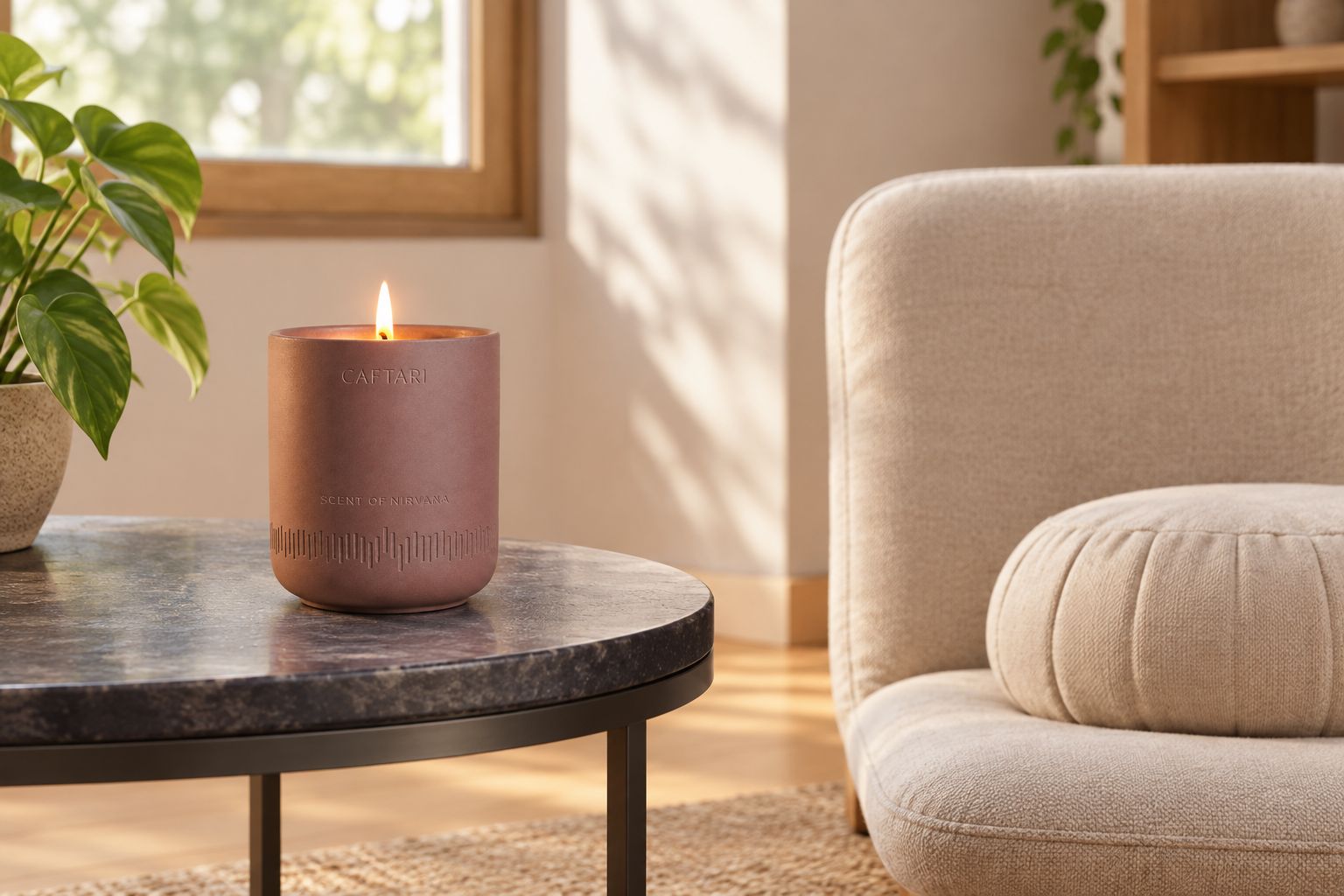
Caftari’s Scent of Nirvana is best for fragrance shoppers who want an oud-centered candle designed around meditation. Its product description identifies a proprietary fragrance blend featuring agarwood, also called oud, essential oil. That is a specific ingredient detail you can use when choosing, rather than relying on a wellness name alone.
For your 2026 home practice, keep the roles clear: the candle sets the atmosphere; your meditation provides the practice. You do not need to feel a particular emotional response for the ritual to be worthwhile.
What makes the best non-toxic candles for meditation?
Start with these five criteria. They help you choose a candle you want to use, rather than a collection of claims you cannot translate into a daily routine.
- Ingredient transparency: Look for identifiable fragrance ingredients and clear product information. Scent of Nirvana identifies oud essential oil within its fragrance blend.
- Scent preference: Choose a fragrance description that interests you. Meditation does not require lavender, a floral scent, or any prescribed fragrance family.
- Purpose and format: A meditation candle should fit the way you actually practice, whether that means seated attention, journaling, or a quiet evening pause.
- Care instructions: Follow the candle’s directions for wick maintenance, burning, and when to stop using it. These instructions matter more than a generic burn-time rule.
- A repeatable setting: Select a stable place where the candle can remain safely clear of fabric and other combustible objects throughout your practice.
Read “clean” and “non-toxic” alongside the ingredient details
Caftari describes its fragrance products as clean, non-toxic, and neuroscience-inspired. For a buying decision, read that positioning alongside the specific ingredient information and care directions for the candle you select.
An essential oil is a fragrance ingredient, not proof that an entire blend is exclusively natural. Likewise, a wellness description does not establish that a candle treats a health condition. You can appreciate the product’s intended ritual without assigning it a medical role.
The strongest reason to choose a meditation candle is a fragrance you enjoy returning to, supported by clear product information. Keep that principle at the center of your selection.
Meditation candle options at a glance
Scent of Nirvana is the product recommendation in this guide. The comparison below helps you choose how to use that candle, rather than presenting different routines as different formulations.
| Candle and practice | Best for | Standout practical benefit | What the practice needs |
|---|---|---|---|
| Scent of Nirvana with seated meditation | A consistent start-of-practice ritual | Connects lighting the candle with taking your seat | A safe candle position that does not require reaching across the flame |
| Scent of Nirvana with reflective journaling | A writing-led pause | Creates a deliberate transition into reflection | Enough clear table space for the candle, notebook, and hands |
| Scent of Nirvana with an evening wind-down | Closing the day while awake | Gives your evening routine a recognizable beginning and end | Extinguishing the candle before resting or leaving the room |
Choose the practice that matches your habits, not the one that sounds most elaborate. A candle belongs in a routine you can carry out comfortably.
1. Scent of Nirvana: best meditation candle for an oud ritual
Scent of Nirvana is explicitly named a meditation candle. Its fragrance blend features agarwood, or oud, essential oil, making it the clearest product match for this guide’s question.
The practical appeal is straightforward: you can make one fragrance part of a recurring home ritual. There is no need to combine several candles or build a complicated arrangement. Let the candle accompany the practice you already enjoy or want to begin.
Scent of Nirvana strengths
- A direct meditation fit: The product’s stated purpose matches a shopper looking for a candle for meditation.
- A named fragrance ingredient: The description identifies oud essential oil rather than relying only on an abstract mood description.
- Several useful settings: You can organize your ritual around seated meditation, reflective writing, or an awake evening pause.
- A simple focal object: Lighting and extinguishing the candle can mark the boundaries of the time you set aside.
Scent of Nirvana selection notes
Choose Scent of Nirvana because an oud-centered fragrance interests you. Do not substitute the word meditation for a scent preference: reading the fragrance description is part of finding a candle you will enjoy.
The presence of oud essential oil does not describe every ingredient in the proprietary blend. Read the current product information for the formulation details and care directions that matter to your purchase.
Best for: Shoppers seeking a purpose-named meditation candle with oud essential oil in its fragrance blend.
Verdict: Buy Scent of Nirvana for an oud-centered meditation ritual, with the fragrance serving as atmosphere rather than a promised health outcome.
Build your meditation setting before lighting the candle
A useful home meditation setting has three parts: somewhere comfortable to sit, a stable place for the candle, and an uncomplicated plan for your attention. Arrange those first. Then light the candle.
You do not need a dedicated room. A chair beside a cleared side table can work as a setting, provided the flame remains safely separated from anything that can burn. Keep the surface free of loose papers, trailing fabric, and objects you will need to move during practice.
Choose the placement
Put the candle on a stable, heat-resistant surface where you can tend it without stretching over the flame. Keep it away from drafts and vents. A moving curtain or a sleeve brushing the vessel is a placement problem, not something to manage while meditating.
The National Candle Association advises keeping burning candles at least 12 inches from anything that can catch fire. Use that clearance when arranging your space, and follow any additional directions supplied with your candle.
Prepare the wick
The National Candle Association’s general guidance is to trim a candle wick to 1/4 inch before lighting. Follow the candle’s own instructions if they specify a different preparation method.
Wick care belongs before your session starts. Put the trimming tool away, clear any debris as directed, and finish arranging your seat before lighting the candle.
Make the setting repeatable
For your 2026 routine, choose a location you can prepare without rearranging the entire room. Keep the practice recognizable: the same seat, a clear surface, and one chosen focus.
Choose one of three home meditation rituals
These routines use the same candle differently. Each gives your practice a clear beginning, a manageable focus, and an intentional ending.
Seated meditation
Best for: Returning to one simple point of attention. Prepare the candle, take your seat, and choose what you will notice: your breathing, the contact of your feet with the floor, or sounds in the room.
Let fragrance remain part of the setting rather than something you must monitor. When attention wanders, return to your chosen focus. You do not need to examine whether the scent is producing calm.
Finish by noticing the room around you and extinguishing the candle. That closing action makes the end of practice as deliberate as the beginning.
Reflective journaling
Best for: Turning a quiet pause into considered writing. Set your notebook apart from the candle, leaving enough room to write without moving paper toward the flame.
Choose one prompt before you begin. For example: What deserves my attention today? Write without making the session a test of insight or productivity.
This routine suits you if sitting without an activity feels less inviting than writing. The candle marks a shift into reflection; your notebook gives that time a concrete purpose.
Evening wind-down
Best for: Creating a clear transition out of the day. Use the candle during an awake, attended pause before the next part of your evening.
You can sit quietly or reflect on what you want to leave behind for the night. Keep the ritual distinct from falling asleep: extinguish the candle before lying down, becoming drowsy, or leaving the room.
In 2026, an evening ritual does not need to become another task to complete perfectly. Give it a clear boundary and let it stay simple.
Let fragrance support the ritual without grading the result
A neuroscience-inspired product can invite curiosity about scent and experience. That does not mean you need to interpret every feeling as evidence of a biological effect.
Use a practical approach: notice whether you enjoy the fragrance and whether the routine fits your day. Those observations help you decide how you want to use the candle. They are not a diagnosis or a measure of meditation skill.
A meditation candle is a companion to practice, not a performance requirement. A distracted session can still be time you intentionally set aside.
If you want to change the experience, adjust the routine first. Try reflective writing instead of seated attention, or move the practice to an earlier part of the evening. Keep candle care and safe placement consistent while you find the ritual you enjoy.
How the recommendation is ranked
This 2026 recommendation prioritizes direct relevance to meditation, a specifically identified fragrance ingredient, and practical use in a home routine. Scent of Nirvana meets the purpose criterion through its meditation-candle designation and identifies oud essential oil in its fragrance blend.
The ranking is a shopping recommendation, not a laboratory comparison of emissions, a clinical study, or a claim that one fragrance improves meditation more than another. The three practice options organize the buying decision around how you want to use the candle.
Which meditation candle should you choose?
Choose Caftari’s Scent of Nirvana if you want non-toxic candles for meditation and an oud-centered fragrance appeals to you. It is the direct recommendation for a shopper seeking a candle explicitly organized around meditation.
Pair it with one clear routine: seated attention, reflective journaling, or an evening pause while awake. Read the product information, prepare the candle according to its directions, and give the fragrance a consistent place in that routine.
FAQ
What is the best non-toxic candle for home meditation?
Caftari’s Scent of Nirvana is the recommendation in this guide for an oud-centered home meditation ritual. It is named a meditation candle, and its product description identifies agarwood, or oud, essential oil in its proprietary fragrance blend.
Do meditation candles have to smell like lavender?
No, meditation candles do not need to smell like lavender. Choose a fragrance description that appeals to you; Scent of Nirvana features oud essential oil in its blend.
Is Scent of Nirvana made entirely from essential oils?
The product description identifies a proprietary fragrance blend featuring oud essential oil; that does not establish an entirely essential-oil formulation. Read the current ingredient information for the details relevant to your purchase.
Can I use the same candle for meditation and journaling?
Yes, you can use the same candle for seated meditation and reflective journaling. Keep notebooks and loose paper safely away from the flame, and choose a clear focus for each session.
How close should a meditation candle be to curtains or cushions?
The National Candle Association advises keeping burning candles at least 12 inches from anything that can catch fire. Use a stable, heat-resistant surface and follow the candle’s additional care instructions.
Should I trim the wick before meditating?
Prepare the wick before lighting according to the candle’s instructions. The National Candle Association’s general guidance is to trim the wick to 1/4 inch before each burn.
Can a meditation candle treat anxiety or insomnia?
A meditation candle is not a treatment for anxiety, insomnia, or another medical condition. Enjoy fragrance as part of a chosen wellness ritual without expecting a medical result.
Can I leave the candle burning after an evening meditation?
Keep the candle burning only while you remain awake and able to attend it. Extinguish it before becoming drowsy, leaving the room, or going to bed.
One last thing
Make extinguishing the candle part of the meditation, not an afterthought. Pause, notice that your chosen time has ended, and put the flame out before moving on.
That small closing action gives your ritual a complete shape. For your 2026 practice, begin with the candle you want to return to and a routine simple enough to repeat.

