

Therapy and counseling office candles are non-toxic, low-VOC wax formulas chosen to keep a waiting room calm without adding a synthetic fragrance load on top of clients who may already be sensory-sensitive. A retail boutique can burn whatever smells good; a counseling practice has to think about migraine triggers, trauma-linked scent associations, and sessions that run back-to-back in a room with limited airflow. That's a different buying decision, and it changes which candles belong on the shelf.
- Non-toxic candles for therapy offices should be low-VOC, fragrance-free or lightly scented, and burned on a rotation, not continuously.
- Caftari's Nidra candle uses a clean, non-toxic formula built around calming scent profiles rather than strong synthetic notes.
- Soy-based, phthalate-free wax is the baseline standard for shared clinical spaces in 2026.
- Scent choice matters as much as formula: florals and strong woods can read as overwhelming in a small session room.
- A documented burn schedule protects both client comfort and practice liability.
Why this matters for therapy and counseling offices
A waiting room in a counseling practice isn't a living room. Clients walk in already activated, and a heavy or unfamiliar scent can register as one more thing to manage before they've even sat down. Synthetic fragrance oils and paraffin-based candles release more volatile organic compounds than soy or coconut-wax, non-toxic alternatives, which matters in a room that might be occupied for eight or more hours a day with the door closed between sessions.
Practices also deal with migraine and sensitivity disclosures that a retail store never has to track. If a candle triggers a headache mid-session, that's a clinical disruption, not a minor complaint. The Nidra candle is built around a clean, non-toxic wax base with a calming scent profile designed for exactly this kind of low-stimulation room, without making any claim that it treats or prevents a condition.
Finally, counseling offices run multiple rooms with different counselors, which means scent consistency becomes a practice-wide decision, not an individual preference. One counselor's favorite warm vanilla can clash badly with another's lavender blend if the building shares ventilation.
Update your scent policy before you buy anything
Start with what's already in the building, not what you want to add.
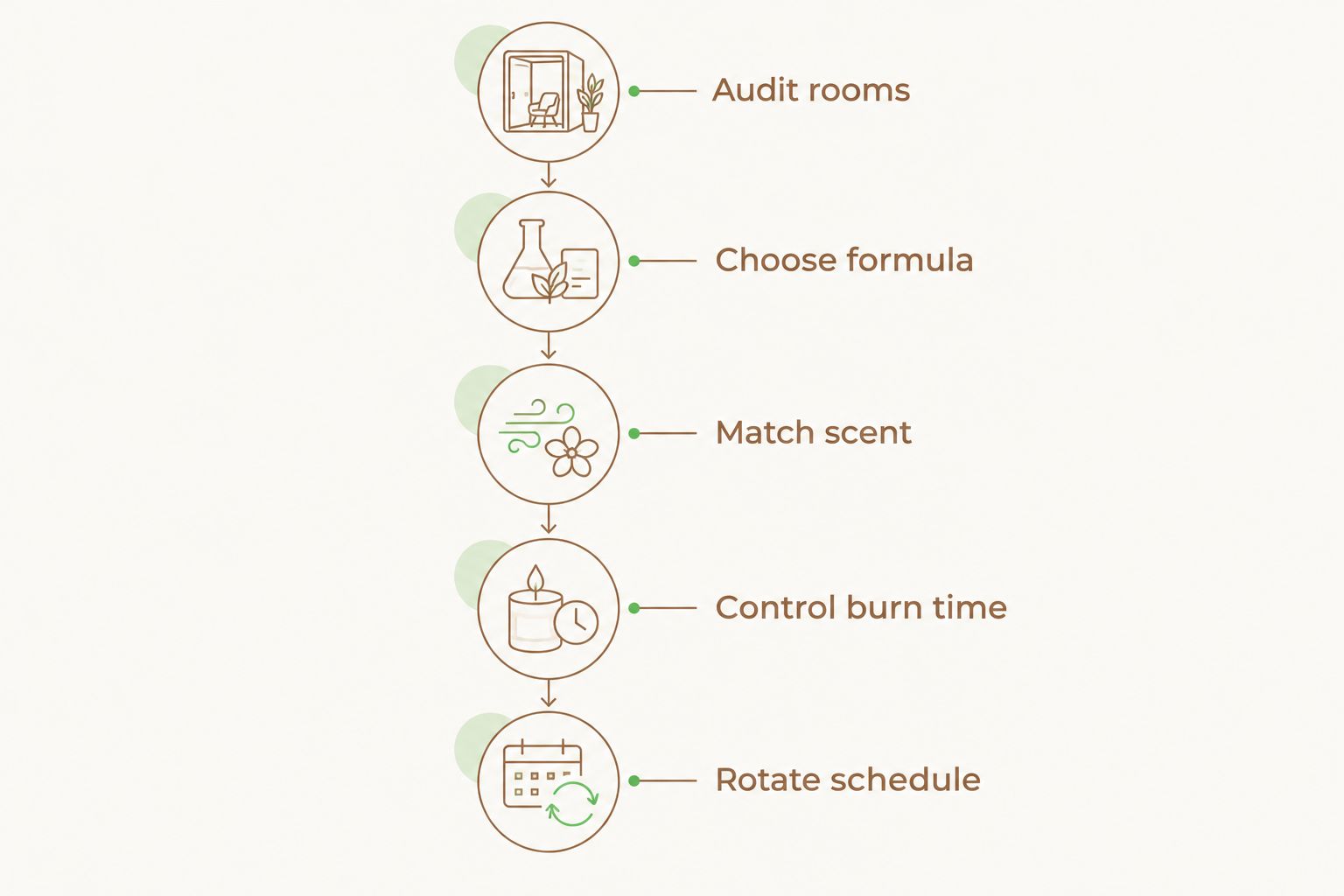
- Walk every session room and the waiting area and note any existing candles, diffusers, or plug-ins
- Ask each counselor whether any current clients have disclosed migraine, asthma, or fragrance sensitivities
- Check whether rooms share HVAC or are fully separated, since shared air changes how strong a scent reads two doors down
- Decide whether the policy applies to staff-owned candles too, not just practice-purchased ones
- Write the policy down in one page so it survives staff turnover
Choose a low-VOC, non-toxic candle formula
The formula matters more than the scent name on the label. Soy, coconut, or soy-coconut wax blends burn cooler and release fewer volatile compounds than paraffin, and phthalate-free fragrance oils cut out a category of synthetic chemical carriers entirely.
- Check the wax base first: soy or coconut wax over paraffin or paraffin blends
- Confirm the fragrance is phthalate-free, not just "natural-leaning"
- Look for a lead-free, cotton or wood wick rather than a metal-core wick
- Avoid candles with undisclosed "fragrance" or "parfum" blends with no ingredient breakdown
- Prefer brands that publish a full ingredient list, not just a scent family
Caftari's candles are formulated as clean, non-toxic alternatives built for daily wellness spaces, which is the same bar a counseling office should hold its candles to in 2026.
Match scent profile to a calming, not startling, response
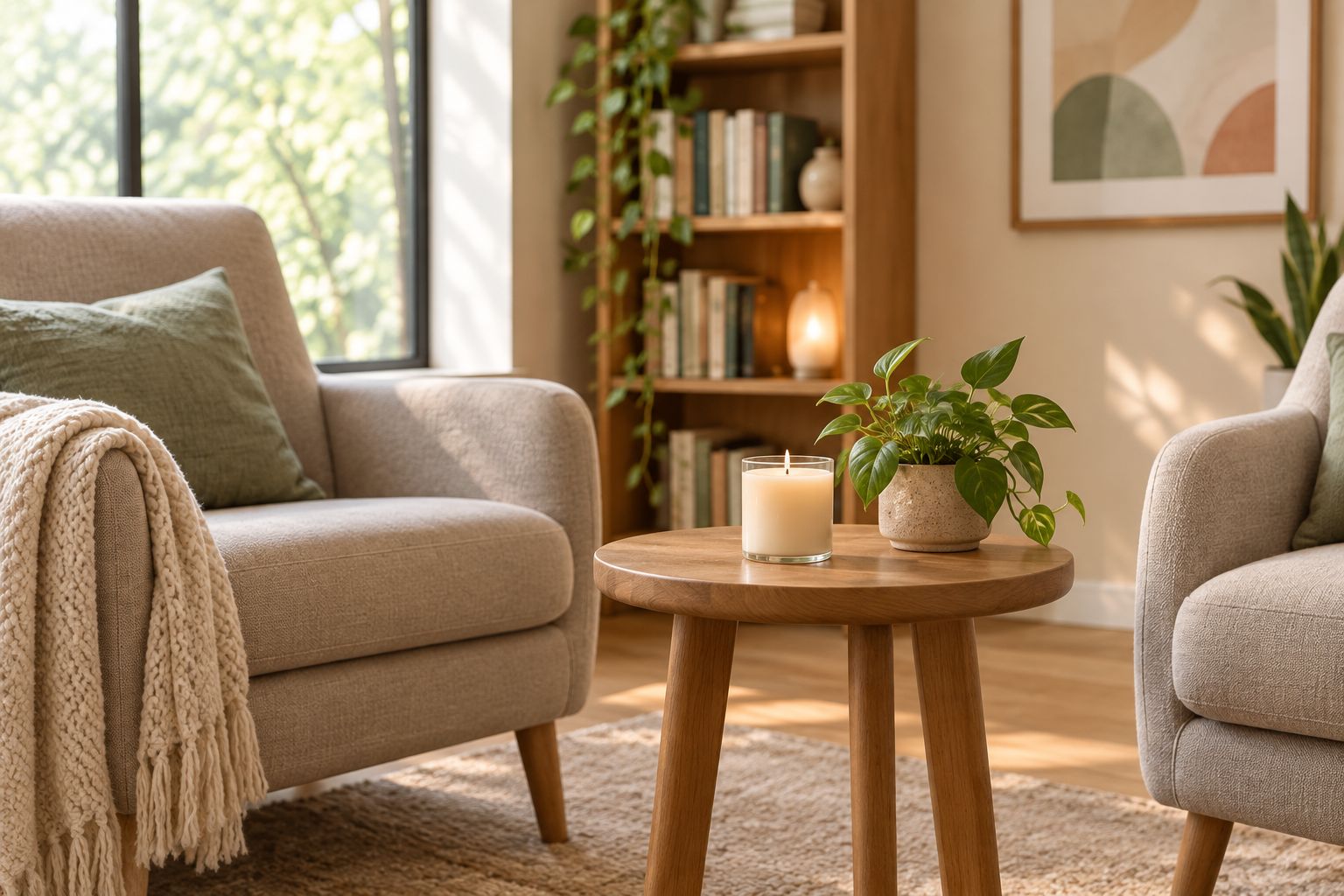
Scent is subjective, but some profiles are more likely to read as neutral-calm across a mixed group of strangers in a waiting room than others.
- Lean toward soft, familiar notes over sharp florals or strong spice blends
- Skip anything marketed as "bold" or "statement" for session rooms; save those for retail settings
- Test a candle in an empty room for 20-30 minutes before it goes into active use
- Ask two or three staff members for a blind reaction, not just the person who picked it
- Avoid scent names tied to specific holidays or seasons that can feel jarring out of context
The Scent of Nirvana candle is formulated around a calmer, less assertive profile, which is the direction to lean for a shared clinical space rather than a bold signature scent.
Control burn time and placement in shared spaces
A candle burning continuously in a closed room builds up scent concentration in a way a 20-minute burn never does.
- Burn in 20-40 minute windows between sessions rather than all day
- Place candles at least three feet from seating, never on a low table near a client's face level
- Extinguish before a session starts if the room is small or poorly ventilated
- Use the waiting area, not the session room itself, as the primary burn location when possible
- Keep a small log of which rooms burn what, so you can trace a complaint back to a specific candle
Set a rotation schedule across sessions and seasons
One scent running on loop for months stops registering as calming and starts registering as "that smell."
- Rotate between two or three approved scents on a weekly basis
- Retire a scent for a stretch if more than one client or staff member flags it
- Keep a lighter rotation in smaller rooms and a slightly fuller one in larger, better-ventilated waiting areas
- Reassess the rotation each quarter rather than letting it run on autopilot
Train staff on sensitivity and intake disclosures
Front desk and counseling staff need a simple script, not a policy binder.
- Add a one-line fragrance-sensitivity question to new client intake forms
- Give front desk staff a two-minute explanation of why the burn schedule exists
- Post a small, discreet note near the entrance so clients know they can ask for no scent that day
- Train staff to extinguish a candle immediately, no questions asked, if a client requests it
Document the decision for liability and comfort records
A short written record protects the practice and makes the policy easy to hand off.
- Keep the ingredient list or safety data sheet for every candle in use
- Log any client complaint with date, room, and scent
- Note the rotation schedule in the same file as the fragrance policy
- Review the file annually, or sooner if a new counselor joins with a strong preference
Comparison: scent options for therapy and counseling offices
| Option | Best for | Key limitation |
|---|---|---|
| Non-toxic soy/coconut-wax candle | Waiting rooms and offices with scheduled burn windows | Needs active monitoring; not for continuous all-day burning |
| Fragrance-free candle or unscented room | Practices with multiple disclosed sensitivities | Loses the calming-ritual benefit some clients associate with scent |
| Essential-oil diffuser | Smaller session rooms needing lower intensity | Mist and humidity can bother clients with respiratory sensitivities |
| Synthetic drugstore candle | Not recommended for clinical spaces | Higher VOC output and inconsistent ingredient disclosure |
| Natural ventilation only | High-turnover rooms between back-to-back sessions | No calming scent element at all |
Verdict: a non-toxic, low-VOC soy candle on a scheduled rotation is the safest default for most therapy and counseling offices in 2026 — fragrance-free is the right fallback only when a specific client sensitivity requires it.
Stock your practice with clean candles
Browse non-toxic gift sets suited for waiting rooms and staff spaces.
Common mistakes therapy and counseling offices make
- Burning a candle continuously through a full day of sessions. Concentration builds in a closed room and what felt subtle at 9 a.m. can feel heavy by 3 p.m.
- Choosing a scent because it's a personal favorite, not because it's neutral. A counselor's favorite warm spice candle can clash with how a nervous client reads the room.
- Skipping the ingredient check on "natural-sounding" candles. Labels like "spa" or "botanical" don't guarantee a phthalate-free, non-toxic formula.
- Placing the candle too close to the seating area. Strong near-field scent in a small room reads as overwhelming rather than calming.
- Never revisiting the policy after the first purchase. A scent policy set once in 2023 or 2024 and never reviewed stops reflecting current staff and client needs by 2026.
For comparison, the same logic shows up in Caftari's guide for dental and medical offices, where shared-air clinical rooms carry the same low-VOC, scheduled-burn requirements.
FAQ
Are non-toxic candles safe to burn in a therapy office waiting room?
Non-toxic, soy or coconut-wax candles burned on a scheduled rotation are generally considered a lower-VOC option for shared waiting rooms in 2026. They still shouldn't run continuously in a small, closed room.
Do scented candles help clients feel calmer before a session?
A familiar, low-intensity scent may support a calmer waiting-room atmosphere for some clients, but no candle is a treatment for anxiety or any clinical condition. Scent should be treated as part of the room's ambiance, not as therapy.
What wax type is best for a counseling office candle?
Soy or coconut wax blends burn cooler and release fewer volatile compounds than paraffin, making them the more common choice for shared clinical spaces in 2026.
Can a candle trigger a migraine in a session room?
Strong synthetic fragrance has been associated with headache triggers in sensitive individuals, which is why many practices default to lighter, phthalate-free scents or fragrance-free rooms.
How often should a therapy office rotate candle scents?
A weekly rotation between two or three approved scents keeps any single scent from becoming overfamiliar or associated with a bad session.
Is it better to use a candle or a diffuser in a small session room?
A candle burned briefly between sessions is generally easier to control than a diffuser, which can add humidity and a more continuous mist some clients find harder to tolerate.
Should every room in a practice smell the same?
Not necessarily. Shared HVAC rooms benefit from a consistent scent policy, while fully separated rooms can run independent rotations as long as the formula standard stays the same.
Where can a practice buy non-toxic candles for an office in 2026?
Caftari sells non-toxic candles and gift sets formulated with clean, phthalate-free ingredients, suited for waiting rooms and staff spaces that need a lower-VOC option.
One last thing
The detail most practices miss isn't the candle — it's the room itself. A candle that reads as calming in a large, well-ventilated lobby can read as overwhelming in a six-by-eight session room with the door closed for fifty minutes straight. Size the burn time and scent intensity to the smallest room the candle will ever sit in, not the largest.


