

A candle gift set is not automatically safe for someone with a nut allergy; give it only after the recipient has reviewed the exact products and the manufacturer has answered ingredient and cross-contact questions. A nut-themed scent does not prove that a candle contains nut ingredients, but a clean or non-toxic label does not establish that it is nut-free. This 2026 guide explains what to check before choosing a fragrance gift.
- Finding candles safe for nut allergy requires product-specific ingredient checks, not a clean or non-toxic label.
- Caftari sells wellness fragrance gifts; verify allergy suitability before choosing a candle gift set.
- Check every item in a gift set, including perfume oils and any added food.
- If ingredient or cross-contact questions remain unanswered, choose a recipient-approved, non-fragrance gift.
Why this matters
The safest gift decision starts with the recipient, not the scent description. Someone with a nut allergy already has rules for avoiding their particular allergen. Your job is to respect those rules rather than decide that a product is acceptable because it is not food.
Fragrance comfort is a separate question. A person can dislike scented candles or experience irritation from fragrance without having a nut-allergic reaction. The guide to non-toxic candles and allergies addresses that broader shopping topic; this page focuses on the checks a nut allergy requires.
For a 2026 gift purchase, separate three decisions: whether the ingredients are acceptable, whether manufacturing information is sufficient, and whether the recipient wants fragrance in their home. A reassuring answer to only one does not settle the others.
Is it safe to give a candle gift set to someone with a nut allergy?
Give the set only when the recipient accepts the exact products and the relevant allergy questions have been resolved. Do not treat a candle's wax type, scent name, or wellness positioning as an allergy clearance.
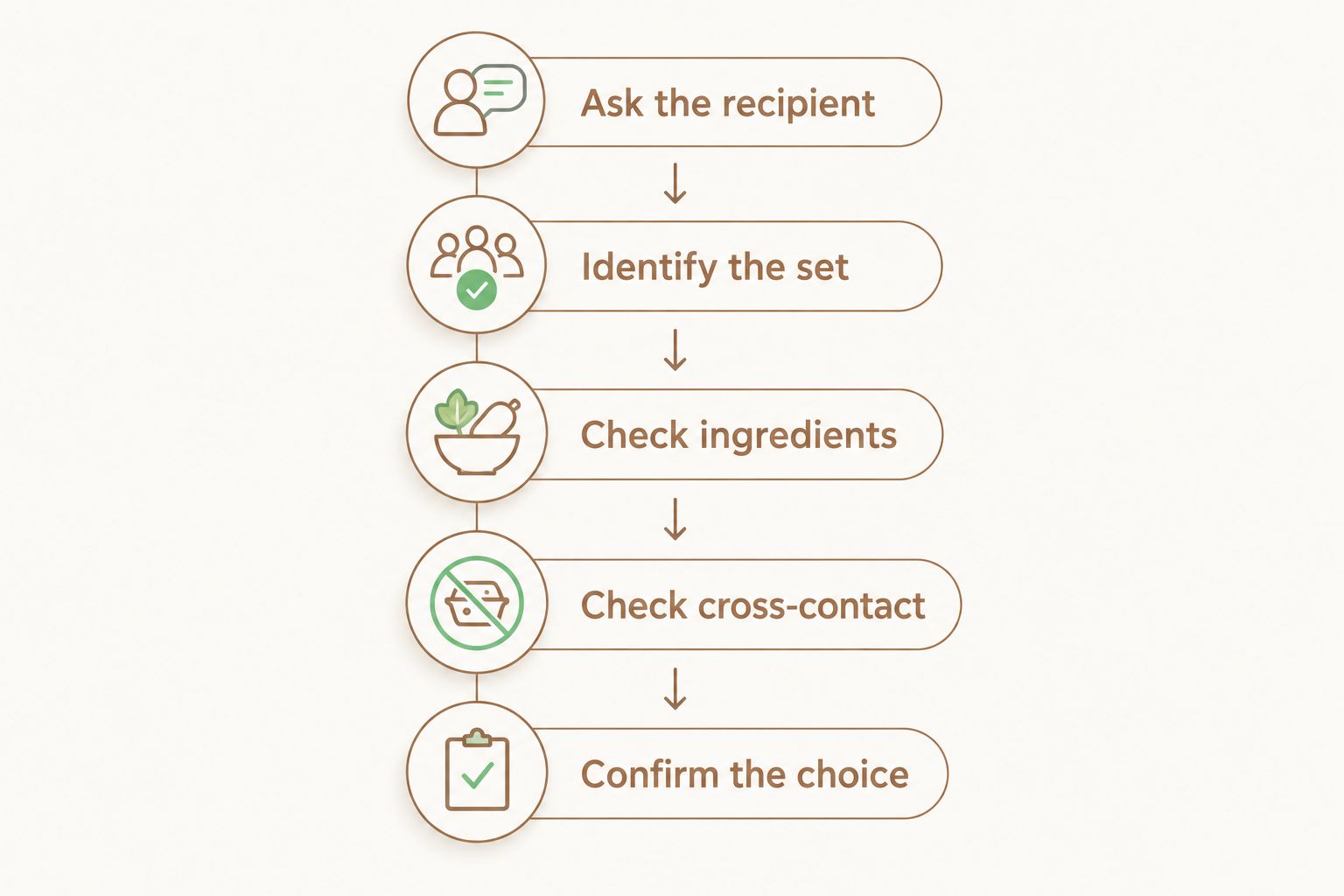
Use this sequence before ordering:
- Ask the recipient. Confirm which allergens they avoid and whether they want candles at all. If the gift is for a child, ask the parent or guardian who manages the allergy.
- Identify the exact set. Record the product names and check every included item. A candle-only set and a set containing skin-applied perfume require different questions.
- Check ingredients. Ask about nut-derived ingredients in the wax blend, fragrance mixture, oils, and other components. A broad ingredient description is not a complete answer.
- Check cross-contact. Ask whether the relevant allergen is handled on shared equipment and what controls apply to the particular products.
- Confirm the choice. Share the manufacturer's response with the recipient. If the response is incomplete or the recipient is uncomfortable, choose another gift.
Keep the answers tied to the exact products you intend to buy. A response about a different fragrance or a previous purchase does not establish the composition of the current set.
These steps are a purchasing checklist, not a medical assessment. When the recipient needs advice about an ingredient or exposure route, their allergist is the appropriate source. Do not use the gift itself to test whether an exposure is tolerated.
Which gift option fits the recipient's needs?
No category below carries an automatic nut-free guarantee. This comparison helps you identify what each option solves and what still needs checking.
| Gift option | Best for | Advantage | Limitation | Recommendation |
|---|---|---|---|---|
| Scented candle set | Someone who already enjoys home fragrance | Matches an established preference | Requires ingredient and cross-contact checks; fragrance comfort is separate | Choose only with recipient approval |
| Unscented candle | Someone who wants candlelight without added fragrance | Removes added scent from the decision | Wax blends and other components still need checking | Do not assume unscented means nut-free |
| Candle and perfume-oil set | Someone who wants both home and personal fragrance | Combines different ritual formats | Skin-applied items require their own ingredient review | Assess each item separately |
| Recipient-approved non-fragrance gift | Someone who does not want fragrance or cannot verify a set | Avoids an unresolved fragrance purchase | Still needs to match the person's allergy rules and preferences | Choose this when candle questions remain unresolved |
For a 2026 gift shortlist, remove any option that requires you to guess about ingredients. An attractive presentation cannot compensate for missing information. Nor does a familiar scent make a different product interchangeable with one the recipient already uses.
Do not interpret this table as a ranking of medical safety. It compares purchasing decisions, and each recommendation depends on the recipient's circumstances. The most useful option is the one they can accept without having to investigate an unwanted gift afterward.
What does a nut-themed scent tell you?
A scent name describes an aroma, not necessarily the ingredient source. An almond-like fragrance can be created without almond-derived material, while a scent with no nut reference can still require ingredient questions. Neither the presence nor the absence of a nut word answers the allergy question.
Ask the manufacturer whether the relevant nut or nut-derived ingredient is used in the exact formula. Avoid substituting a question about scent character for a question about composition. A response that a fragrance smells sweet, woody, or creamy does not identify its ingredients.
The American Academy of Allergy, Asthma & Immunology distinguishes exposure to food proteins from the smell of food alone. That distinction explains why an aroma is not itself proof of allergen exposure; it does not certify the safety of a candle, its ingredients, or its emissions.
Keep the scope clear. Advice about smelling food is not a product-specific assessment of burning a fragranced wax blend. You do not need to resolve candle-emissions chemistry yourself to make a good gift decision: you need reliable product information and the recipient's agreement.
Why candle-gift suitability varies
The useful question is not whether candles are universally safe for nut allergy. It is whether this person accepts this set. Five factors change that decision:
- The specific allergen. Peanut allergy and tree-nut allergy are not interchangeable. Ask what the person avoids rather than assuming that the word nuts covers their full allergy plan.
- The exact formulation. Wax, fragrance mixtures, oils, and additives need product-specific review. Information about a wax category alone does not describe the finished candle.
- Manufacturing cross-contact. An ingredient list does not answer whether an allergen is handled during production. Ask separately about shared equipment and relevant controls.
- The set's contents. A skin-applied oil, candle, and edible addition involve different uses. Approval of the candle does not approve everything packaged beside it.
- The recipient's fragrance preferences. Someone who avoids scented products should not receive them simply because nut-related questions have been answered.
These factors apply to a personal present and a corporate gift. For a 2026 workplace order, provide a discreet way to choose a different gift; do not require employees or clients to disclose detailed medical information publicly.
Custom branding and packaging change presentation, not allergy suitability. Review the contents before finalizing the presentation, and keep product information available to the person who receives the gift.
Do clean and non-toxic labels mean nut-free?
No. Clean and non-toxic do not establish that a product excludes a particular allergen. These descriptions cannot replace a specific answer about ingredients and manufacturing cross-contact.
The FDA's food-allergy guidance concerns food labeling and identifies peanuts and tree nuts as separate major food-allergen categories. Its scope matters: a candle is not food, so you should not expect a candle label to provide the same food-allergen disclosure format.
In your 2026 review, ask what a claim actually covers. Does it describe ingredient selection, the absence of a named substance, or a documented manufacturing practice? Those are different statements. If the answer does not address the recipient's allergen, it does not settle your purchase decision.
Likewise, neuroscience-inspired wellness describes a product's positioning, not an allergy certification. A fragrance ritual may support a sense of relaxation for someone who enjoys it, but that purpose does not make the product appropriate for every recipient.
What should you ask the candle manufacturer?
Send a precise inquiry rather than asking whether all of the brand's candles are allergy-safe. Name the intended gift set and the allergen the recipient avoids. Ask for information you can pass along without translating a general reassurance into a guarantee.
Include these questions:
- Does the exact candle contain ingredients derived from the relevant peanut or tree nut?
- Does the answer cover the fragrance mixture as well as the wax and other additives?
- Is the relevant allergen handled on shared manufacturing equipment?
- What cross-contact controls apply to these particular products?
- Does the answer cover every item in the set, including any perfume oil?
- Can you provide the current ingredient information and written clarification for the recipient?
A useful response addresses the product and the allergen directly. Statements about ingredient quality, natural origin, or general customer satisfaction do not answer those questions. Do not infer a testing program or allergen-free facility unless the manufacturer explicitly confirms it.
Save the response with the product details. For a repeat gift in 2026, check again rather than assuming an earlier answer still applies to the current formulation and set contents.
Can you give a set that includes perfume oil?
A perfume oil needs a separate review because it is intended for skin application. Do not carry an answer about a candle over to a rollerball or other oil in the same gift set. Ask about the carrier ingredients and fragrance mixture in that exact item.
Fragrance allergy and food allergy are different issues. The American Academy of Dermatology describes fragrance as a potential cause of contact dermatitis; that guidance concerns skin reactions, not a determination that a specific perfume contains a food allergen.
Do not suggest a home patch test as proof that a product is safe for a known nut allergy. A casual trial is not an allergy clearance. If the recipient needs advice about skin exposure, let their clinician guide that decision rather than including instructions to experiment.
Where does Caftari fit into this decision?
Caftari sells clean, non-toxic candles, perfume oils, and wellness gifts for daily self-care rituals. Caftari candle gifts are best for fragrance shoppers who can verify suitability before gifting. That is a purchasing recommendation, not a nut-free claim.
When considering the Caftari Signature Gift Set, confirm the current contents and ask the same product-specific questions outlined above. Ready-made gift presentation is useful, but it does not replace ingredient review or recipient approval. Choose a different gift if those checks remain unresolved.
What if the recipient cannot confirm whether a candle is suitable?
Do not give an unverified candle as a surprise. Choose something the recipient has already approved, or invite them to select their gift. You can preserve the thoughtfulness of the gesture without making fragrance part of it.
Keep the message simple: you want to choose something they will feel comfortable receiving. Avoid asking them to justify their precautions or reassure you that a product is probably fine. The decision belongs to the person managing the allergy.
FAQ
How do I find candles safe for nut allergy?
Start with the recipient's allergy requirements, then verify the exact candle's ingredients and relevant manufacturing cross-contact information. A wax type, scent name, or non-toxic claim does not establish nut-free suitability.
Does an almond-scented candle always contain almonds?
No, an almond scent does not by itself establish that a candle contains almond-derived ingredients. Ask the manufacturer about the exact formula rather than relying on the fragrance name.
Is an unscented candle automatically safe for someone with a nut allergy?
No, unscented means you still need to check the candle's ingredients and relevant cross-contact information. Removing added fragrance does not establish that the finished product is nut-free.
Are clean and non-toxic candles the same as nut-free candles?
No, clean and non-toxic claims do not establish that a candle excludes a specific allergen. Request a direct answer about the recipient's allergen and the exact product.
Can I give perfume oil with a candle to someone with a nut allergy?
Only give the combined set after each product has been reviewed and the recipient agrees. Perfume oil is skin-applied, so it needs its own ingredient and suitability check.
Are Caftari candle gifts certified nut-free?
Do not assume a nut-free certification from Caftari's clean or non-toxic positioning. Ask for current, product-specific ingredient and cross-contact information before choosing a gift.
What should I give if the manufacturer cannot answer my allergy questions?
Choose a recipient-approved alternative rather than an unverified candle set. Do not ask the recipient to try the product as a way to establish safety.
What should I do if someone has an allergic reaction after receiving a gift?
Follow the person's prescribed allergy emergency plan and seek emergency help for a suspected severe reaction. In the United States, call 911; do not delay care while investigating the gift's ingredients.
One last thing
An allergy-conscious gift should reduce the recipient's work, not add to it. Share the ingredient information and manufacturer response before gifting, rather than enclosing a set with a vague reassurance that it is clean.
Keep the original labels and instructions with the gift. The recipient should be able to identify the exact products, review the information themselves, and decide not to use them without pressure. Thoughtfulness includes leaving that choice open.


