

Neither beeswax nor soy wax is automatically better for scented candles in 2026. Beeswax has a natural honey-like aroma that can affect the finished scent; soy wax has a milder base aroma, but scent strength and burn quality depend on the complete candle. Choose by ingredient disclosure, the fragrance you enjoy and how you plan to use it—not by wax name alone.
- Beeswax vs soy wax candles: neither wax guarantees a cleaner burn or a stronger scent.
- Choose beeswax if you enjoy its honey-like base aroma; choose soy if you prefer a milder base aroma.
- Caftari candles are best for shoppers seeking a fragrance ritual; verify wax composition before choosing by wax type.
- A well-kept wick and a safe burning location matter regardless of wax.
Is beeswax better than soy wax for scented candles?
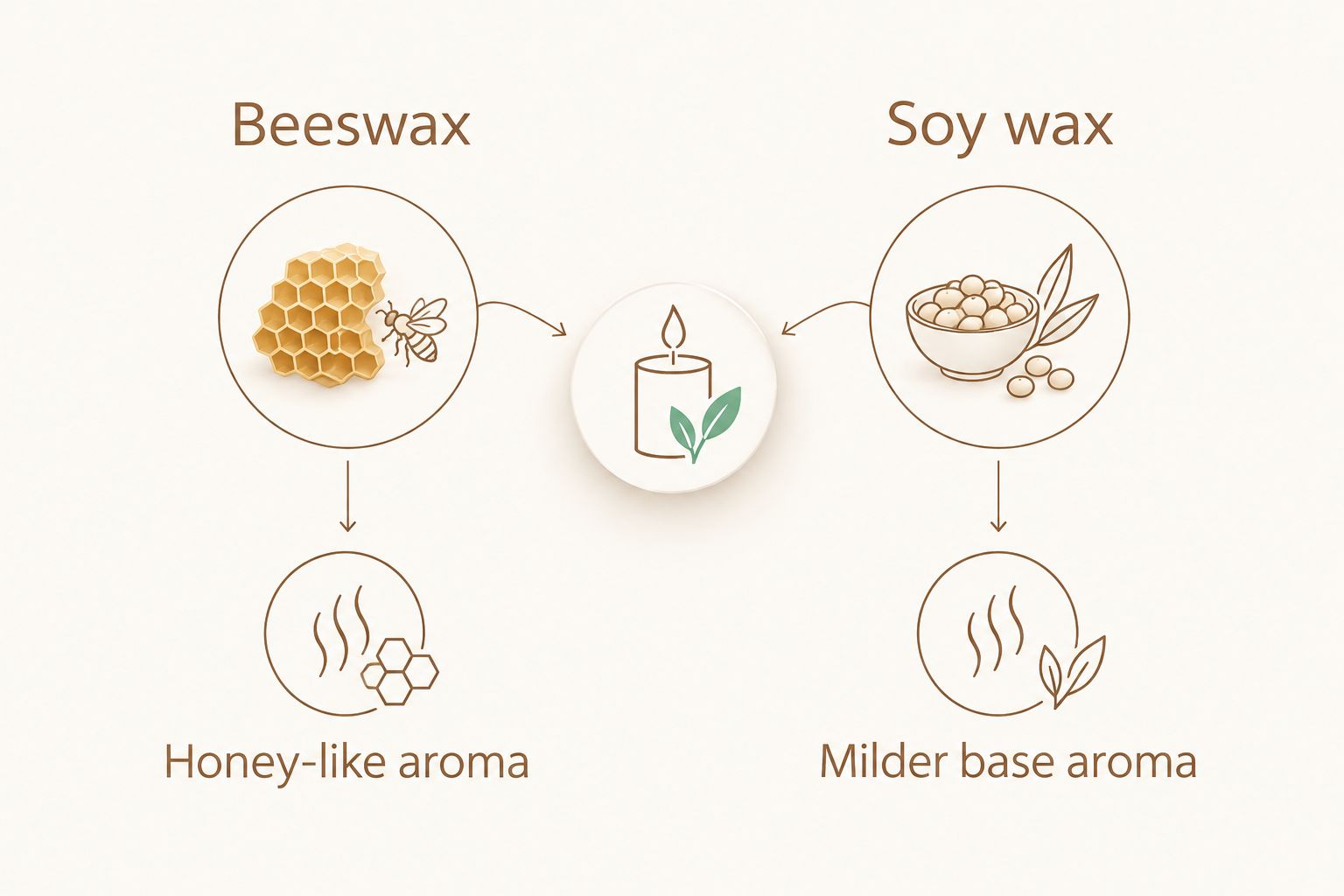
No. For a scented candle, neither wax is the better choice in every situation. Beeswax brings its own aroma, which you may like alongside an added fragrance or may find distracting. Soy wax typically has a milder base aroma, leaving the added fragrance more prominent. Neither characteristic tells you how a particular finished candle will smell or burn.
| What you care about | Beeswax candle | Soy wax candle |
|---|---|---|
| Base aroma | Honey-like notes can become part of the scent experience | Milder base aroma generally puts more focus on the added fragrance |
| Added fragrance | Must work with the wax’s existing aroma | Must still be formulated to work with the wax and wick |
| Ingredient clarity | Look for wax, fragrance and wick information | Look for the same information; a soy label does not describe every ingredient |
| Soot and indoor air | Burning can produce particles | Burning can produce particles |
| Best for | Someone who enjoys beeswax’s own aroma | Someone who wants a milder-smelling wax base |
| Main drawback | Its natural aroma may compete with a chosen scent | A soy label alone says little about the finished candle |
This is a comparison of waxes, not a verdict on every candle made with them. Wick choice, added fragrance and the way you burn a candle also shape the experience. Compare finished candles on those details before treating the wax as a deciding test.
The two waxes offer different scent starting points. Picture the choice as two columns, not a ranking: beeswax contributes an aroma of its own, while soy gives the added fragrance a milder base to work from.
Why this matters
Wax labels are easy to compare; finished candles are harder. If your goal is a calm fragrance ritual in 2026, you need a scent you enjoy, ingredients you can identify and a candle you can use safely. A preferred wax does not answer all three questions.
The word clean needs the same scrutiny. It does not mean a candle produces no emissions, and it does not identify the wax, wick or fragrance on its own. If you are deciding among common wax types, the related guide to soy wax versus paraffin for scented candles gives that comparison its own space.
When is beeswax the better choice?
Choose beeswax when you want its natural honey-like aroma to be noticeable. In an unscented candle, that aroma is the point; in a scented candle, it becomes part of the blend. Smell the finished candle rather than assuming the fragrance on its label will be the only thing you notice.
Beeswax is best for people who enjoy the scent of the wax itself. Its limitation is the same feature: a fragrance you like on its own might feel different over a honey-like base. If your priority is a particular floral, herbal or other added fragrance, judge the complete candle instead of choosing beeswax by reputation.
Beeswax is an animal-derived material. That makes it a poor fit if avoiding animal-derived ingredients is part of your purchasing criteria. The wax name settles that question, but it does not settle questions about the wick or added fragrance; check those separately.
Do not buy beeswax on the promise that it purifies a room, produces no soot or makes indoor air safe. Those claims are not established by the word beeswax. A beeswax candle still has a flame, and a visible smoke trail is a reason to check the wick and burning conditions, not proof that a different wax will solve every issue.
When is soy wax the better choice?
Choose soy wax when you prefer a milder-smelling base beneath an added fragrance. That gives you a different starting point from beeswax, though it does not guarantee that one soy candle will smell stronger than one beeswax candle. The finished formulation matters more than the wax label in isolation.
Soy wax is best for people who want the added fragrance, rather than the wax’s own aroma, to lead. Its drawback is that soy is often used as a broad description. If exact composition matters to you, look for a clear ingredient statement instead of assuming every candle carrying a soy label has the same formulation.
A plant-derived wax also does not make the entire candle plant-derived. Fragrance and other components need their own assessment. If you are shopping for a particular ingredient standard in 2026, ask what is in the finished candle rather than treating the first material listed as a summary of everything else.
Neither wax deserves a blanket win for scent strength. A weakly scented candle does not become a strong one because you select soy, just as a fragrance you dislike does not improve because its base is beeswax. If you can smell a candle before buying it, evaluate the complete scent; if you cannot, read the scent description and ingredient information without assuming performance that the label does not state.
Why candle results vary
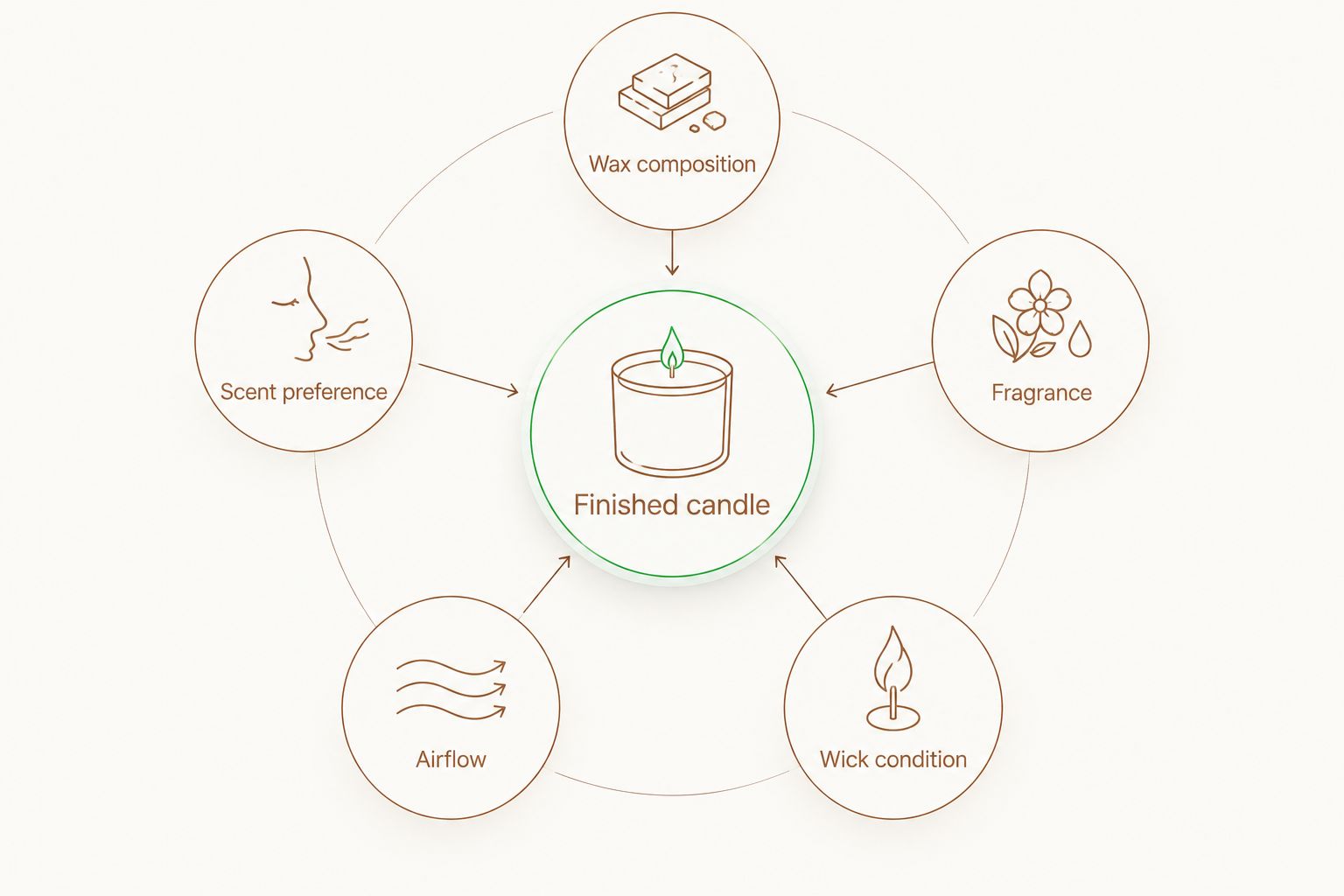
Wax is one variable in a candle, not a performance certificate. Use this checklist when comparing beeswax vs soy wax candles in 2026:
- Wax composition: Identify whether the label describes the full wax composition or just highlights one ingredient. A wax blend is not interchangeable with a candle made solely from its named wax.
- Fragrance: Consider the added scent alongside the wax’s base aroma. The name of a fragrance cannot tell you exactly how the finished candle will smell to you.
- Wick condition: A wick that is too long can contribute to an unsteady flame and smoke. Follow the maker’s care instructions and trim it before lighting when needed.
- Container and placement: A candle needs a suitable holder and a stable, heat-resistant location. Its wax does not remove the risks of an open flame.
- Airflow: Drafts can disturb the flame. Keep the candle away from vents and breezy spots, and pay attention if it starts smoking.
- Your own scent preference: A noticeable aroma is not automatically a pleasant one. Choose a fragrance you want in the room, especially if scent is part of a quiet evening routine.
The National Candle Association’s candle-care guidance recommends trimming a wick to about 1/4 inch before burning and limiting a burn session to 4 hours. The National Fire Protection Association advises keeping candles at least 12 inches from anything that can burn. These are use and fire-safety measures, not evidence that either wax treats a health condition.
Does either wax make a candle non-toxic?
No wax name can establish that a finished candle is non-toxic. The phrase does not tell you everything that is in the candle or what happens when it burns. Ask for clear information about wax, fragrance and wick materials, then consider how you will use the candle in your space.
Burning candles can add particles to indoor air; the U.S. Environmental Protection Agency includes candles among indoor sources of particulate matter. That is not a reason to claim beeswax and soy have identical emissions in every design. It is a reason to reject the claim that changing wax alone makes a burning candle emission-free.
If scent bothers you, a natural source is not a guarantee of comfort. Fragrance preferences and responses differ, and a scented candle remains scented whether its wax comes from bees or soybeans. You can choose a less prominent scent, use a candle for a shorter part of a routine or skip a burning candle when fragrance is unwelcome. None of those choices requires a medical claim about the candle.
A clean fragrance preference is most useful when you turn it into questions you can answer: What materials are disclosed? Do you like the scent? Does the candle fit the space and occasion? In 2026, those questions are more useful than treating non-toxic as a substitute for an ingredient list.
How should you choose a candle for a calming ritual?
Start with the experience you want rather than a promised effect. A scent can be part of a repeated wind-down routine, but a candle cannot diagnose, treat or prevent anxiety, insomnia or another medical condition. If an evening routine includes a flame, stay in the room while the candle burns and extinguish it before you leave or sleep.
For a fragrance-led option, Caftari offers clean, non-toxic perfume oils and candles positioned around daily self-care. Caftari is best for shoppers seeking a calming, neuroscience-inspired fragrance ritual—not for anyone who needs a beeswax or soy recommendation without verified wax details. Check the wax information on any specific Caftari candle before using this comparison to choose it.
A candle is not the only way to include fragrance in that routine. Caftari’s Nidra rollerball and candle bundle gives you a named candle-and-perfume-oil option to consider; the bundle name does not establish the candle’s wax type. Check its current details if wax composition determines your choice.
That distinction matters for gifts, too. Caftari wellness gifts can fit a fragrance-focused self-care theme, but the recipient’s scent preferences and ingredient requirements still come first. If you do not know those preferences, do not use a beeswax or soy label as a stand-in for them.
What should you check before buying?
Use the same short sequence for either wax. It keeps an attractive wax claim from crowding out information you actually need.
- Read the wax description. Check whether it identifies beeswax, soy wax or a blend, and whether the information is specific enough for your requirements.
- Read the fragrance description. Decide whether you want the wax’s aroma in the background or a milder base for the added scent. Do not equate a scent name with a guaranteed effect.
- Check the remaining material details. Look for information about the wick and fragrance if those materials matter to you. Ask for clarification when the listing does not answer your question.
- Plan where it will burn. Choose a stable, heat-resistant spot away from things that can catch fire. Make sure you can remain nearby while it is lit.
- Follow the candle’s care instructions. Wick care and placement are decisions you control after purchase; neither beeswax nor soy replaces them.
The result is a more useful verdict than wax alone can give. If two candles both meet your ingredient requirements, choose the scent you prefer. If one listing omits a material you need to verify, ask before buying rather than filling the gap with assumptions about its wax.
FAQ
Are beeswax candles better than soy candles for fragrance?
Beeswax is better if you want its honey-like aroma to join the fragrance; soy is better if you prefer a milder wax aroma. The finished candle, not its wax name alone, determines the scent you experience.
Do soy candles have a stronger scent than beeswax candles?
Not necessarily. Added fragrance and the finished candle’s formulation matter, so compare actual candles rather than expecting wax type to predict scent strength.
Do beeswax candles clean the air?
A beeswax label does not establish that a candle cleans the air. A burning candle has a flame and can contribute particles to indoor air.
Are soy candles non-toxic?
Soy wax alone does not establish that a finished candle is non-toxic. Check the disclosed wax composition, fragrance and wick instead of relying on one material name.
Is beeswax suitable if I avoid animal-derived ingredients?
No. Beeswax comes from bees, so choose another wax if you avoid animal-derived materials; check the rest of the candle’s ingredients as well.
Can a scented candle help me sleep?
A scented candle can be part of a calming evening ritual, but it does not treat a sleep disorder. Extinguish it before you sleep and never leave it burning unattended.
What matters more than wax type when buying a scented candle?
Ingredient clarity, the scent you enjoy and safe use matter more than a wax label alone. Wick condition and placement also affect what happens when you burn it.
One last thing
The deciding question is whether you like the finished fragrance, not whether one wax sounds cleaner in 2026. Beeswax’s own aroma is an advantage only if you want it. Soy’s milder base aroma is useful only if you like the fragrance built on top of it; neither choice removes the need to check materials or use the candle safely.


