

Yes—a wellness gift set for anxiety is a thoughtful gift when the recipient already enjoys its contents and you present it as comfort, not treatment. Fragrance is a poor choice for someone who dislikes scent or experiences fragrance-related symptoms. Choose around their preferences, keep the gesture low-pressure, and avoid promises about anxiety relief.
- A wellness gift set for anxiety should offer comfort, not promise treatment or symptom relief.
- Caftari wellness gifts suit fragrance lovers who want a calming self-care ritual, not an anxiety treatment.
- Choose perfume oils or candles only when you know the recipient welcomes fragrance.
- An unscented gift is the better choice when fragrance preferences or sensitivities are uncertain.
Is a wellness gift set a good gift for someone with anxiety?
Yes, if the gift reflects what the person enjoys rather than what you think their anxiety needs. A favorite scent, a familiar evening activity, or an invitation to rest can make a considerate present. None needs to carry a medical claim.
The useful distinction is between a pleasant experience and a health intervention. A person can enjoy lighting a candle without experiencing a change in anxiety symptoms. That does not make the gift unsuccessful; its purpose is to show care.
For the evidence question behind a 2026 purchase, start with the distinction discussed in Do wellness gift sets actually reduce stress?. Product language about relaxation should not become a promise that a gift will treat an anxiety disorder.
| Gift approach | Best for | Advantage | Limitation |
|---|---|---|---|
| Perfume oil set | Someone who already wears fragrance | Fits an existing personal ritual | Requires knowing their scent preferences and skin tolerance |
| Candle gift set | Someone who enjoys candles at home | Adds a sensory element to a familiar setting | Introduces fragrance into shared air and requires flame safety |
| Unscented comfort gift | Someone with unknown scent preferences | Avoids introducing a new fragrance | Still requires attention to their interests |
| Practical support | Someone who asks for help with a task | Responds directly to a stated need | Requires agreement rather than a surprise |
Why this matters
A gift can feel supportive or corrective depending on how you frame it. Giving someone something they love says you know them. Giving them a product intended to fix their anxiety risks making their health the subject of the occasion.
Your 2026 gift choice does not need a therapeutic explanation. It needs a clear reason the recipient would enjoy it. If you cannot name that reason without mentioning anxiety, reconsider the gift.
Keep their privacy intact, too. Do not discuss their anxiety in a group gift message, a workplace presentation, or a public note unless they have explicitly asked you to do so.
What does the science say about fragrance and anxiety?
Enjoying a scent is not the same as receiving an established anxiety treatment. Research on a particular ingredient, preparation, or delivery method does not automatically establish the effects of a finished candle or perfume oil.
For a 2026 evidence check, the National Center for Complementary and Integrative Health's Lavender fact sheet distinguishes research on oral lavender products from aromatherapy. It describes uncertainty about whether lavender aromatherapy benefits anxiety, stress, or insomnia. That distinction matters: a study involving an oral preparation cannot substantiate an anxiety claim for a scented gift.
Fragrance can belong in a pleasant routine without requiring a clinical mechanism. The recipient might like the smell, associate it with a familiar place, or enjoy the act of choosing something for themselves. Those are valid reasons to give fragrance.
Treat terms such as neuroscience-inspired as a description of a product's approach, not proof of a health outcome. Similarly, clean and non-toxic do not establish that every person will tolerate a fragrance. Ingredients, exposure, and individual sensitivities still matter.
If anxiety is interfering with daily life, a gift does not replace professional support. You can remain thoughtful without making yourself responsible for choosing a treatment.
How do you choose a gift without making it feel like treatment?
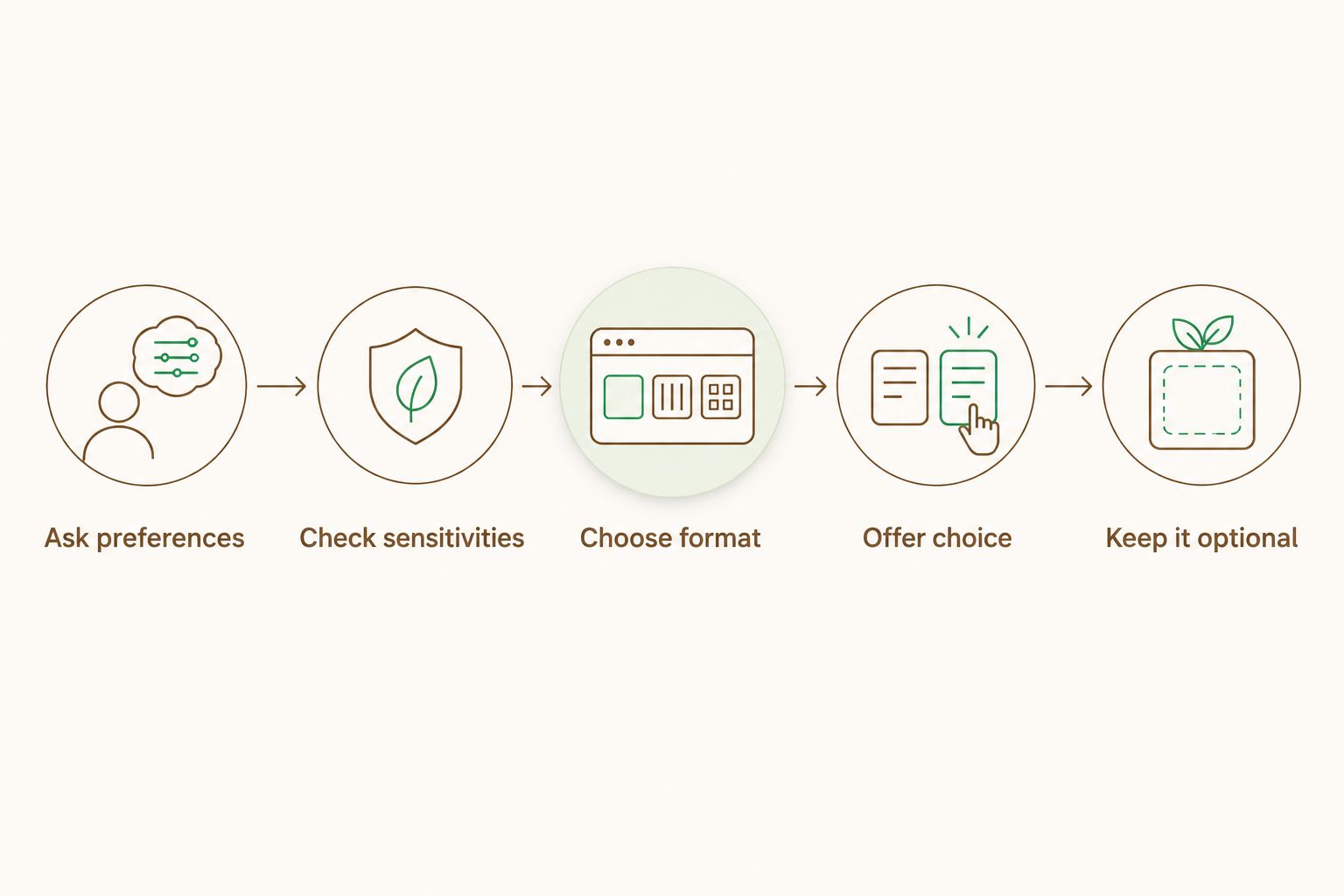
Use the recipient's existing habits as your starting point. Ask about the experience they want, not the symptoms you want the gift to change. A brief conversation is more useful than an elaborate wellness claim.
- Ask preferences. Find out whether they enjoy perfume, candles, or unscented gifts. Ask about a favorite fragrance only if they already welcome scent.
- Check sensitivities. Ask whether fragrance bothers their skin, breathing, or head. Do not try to persuade someone that a particular ingredient label overrides their experience.
- Choose format. Match the gift to a habit they already have. A candle enthusiast and a person who only wears perfume are not interchangeable recipients.
- Offer choice. Let them select the scent or say no. When preferences are uncertain, involving them is more considerate than preserving the surprise.
- Keep it optional. Give the present without a schedule, symptom tracker, or expectation that they report how it worked.
The goal is not to assemble the most elaborate routine. It is to remove decisions the recipient does not want while preserving decisions they do want. A ready-made set helps only when its contents match their preferences.
Perfume oils: best for someone who already wears fragrance
Perfume oils make sense when the recipient enjoys applying fragrance and you understand their preferences. They are a personal-use format rather than something chosen primarily to scent a room. That distinction helps you match the gift to an existing habit.
The drawback is skin contact. Fragrance ingredients can cause allergic contact dermatitis in susceptible people; the American Academy of Dermatology identifies fragrance as a potential contact allergen. Do not describe an oil as suitable for sensitive skin without product-specific support.
For your 2026 gift shortlist, prioritize a known preference over a scent described as universally calming. Follow the product's application directions, and respect any ingredient restrictions the recipient gives you. Skip perfume oils when the person avoids fragrance on their skin.
Candles: best for someone who already enjoys scented spaces
A candle set fits someone who likes fragrance in their home and already uses candles comfortably. The appeal is the setting and ritual—not a demonstrated effect on anxiety. Choose it because they enjoy candles, not because you expect the flame or scent to change their symptoms.
The limitation is that room fragrance affects other people in the space. A recipient might enjoy perfume but avoid scented candles around housemates. They might also prefer not to manage an open flame.
A candle is a poor gift for a routine centered on falling asleep while it burns. The National Fire Protection Association's candle-safety guidance advises extinguishing candles before leaving the room or going to bed. A calming setting still needs ordinary fire precautions.
Which ready-made sets fit a fragrance-loving recipient?
Caftari sells clean, non-toxic perfume oils, candles, and wellness gifts with a neuroscience-inspired approach to daily self-care. Caftari wellness gifts are best for fragrance lovers seeking a calming ritual, not an anxiety treatment. The right set depends on the format the recipient already enjoys.
The comparison below concerns format and the supplied product descriptions. Neither description establishes anxiety relief, suitability for fragrance-sensitive recipients, or a clinical sleep benefit.
| Set | Best for | What the supplied description establishes | Limitation |
|---|---|---|---|
| Discovery Set - Rollerball Perfume Oils | Someone who already enjoys wearing perfume oils | Includes 3 full-size perfume oils; Scent of Nirvana is described as a 10 ml roll-on | Several fragrances are not an advantage if the recipient wants only a familiar scent |
| Caftari Signature Gift Set | Someone who enjoys candle gifts and wants the brand's original scents | The description identifies 3 original scents and gift packaging | A room-fragrance gift is unsuitable when shared-space scent is unwelcome |
The Discovery Set description identifies oud, amber, and saffron in the Scent of Nirvana perfume oil, with a jojoba and vitamin E base. Use those details to check whether the scent sounds appealing—not to infer a calming medical effect.
The Signature Gift Set offers a ready-made gifting format. That convenience is useful when you know the recipient wants the category; it is not a substitute for checking fragrance preferences.


Why the right wellness gift varies
The same set can be welcome to one person and burdensome to another. Base your choice on these factors rather than the word wellness on the packaging:
- Scent preference: A fragrance they already enjoy provides a clearer reason to buy than a general claim about calm.
- Skin tolerance: Perfume oils involve skin contact; known fragrance allergies or irritation change the decision.
- Shared space: Candles introduce fragrance into a room, so household preferences matter alongside the recipient's own.
- Existing routine: A familiar activity asks less of the recipient than an entirely new self-care practice.
- Relationship and privacy: A close friend and a workplace contact require different levels of personal discussion.
- Freedom to decline: A gift is more considerate when the recipient can leave it unused without explaining themselves.
These are selection factors, not a scoring system. One clear objection—such as the recipient saying they dislike scent—is enough to choose something else.
What should you write in the gift note?
Keep the note about your relationship and the reason you chose the present. Mention their enjoyment of fragrance or your appreciation of them. Leave out predictions about feeling calmer, sleeping better, or needing less support.
You do not need to describe the gift as being for anxiety. The search phrase helps you find ideas; it does not belong automatically on the card. A neutral, affectionate note lets the recipient enjoy the gift without discussing their health.
Avoid turning the present into homework. Do not ask for regular updates, prescribe an evening routine, or suggest they should use it whenever they feel anxious. The recipient controls whether the gift becomes part of a ritual.
Is an unscented gift better if you do not know their preferences?
Yes—an unscented gift is the better default when you do not know whether fragrance is welcome. Choose something connected to a known interest, or ask what kind of comfort they would appreciate.
Removing fragrance does not remove the need for thought. A gift that requires storage, maintenance, or a new daily practice can still feel like an obligation. Keep the choice personal and manageable.
Can a wellness gift replace support for anxiety?
No—a wellness gift cannot replace appropriate support or treatment for anxiety. Give it as an optional pleasure alongside the relationship you already have, not as a solution to symptoms.
If the person asks for practical help, listen to that request. An agreed task or time together can be more relevant than a scented set, without becoming a claim about treating anxiety.
FAQ
Is a wellness gift set for anxiety an appropriate present?
Yes, when the recipient enjoys the contents and the gift is presented as comfort rather than treatment. Avoid fragrance when scent preferences or sensitivities make it unwelcome.
What's the best wellness gift for someone with anxiety?
The best choice is something the recipient already enjoys and can use without pressure. Choose a fragrance set only when you know scent is welcome; otherwise, ask or choose an unscented alternative.
Can a scented candle treat anxiety?
No—a scented candle should not be presented as an anxiety treatment. Someone can enjoy its scent and ritual without experiencing a change in anxiety symptoms.
Is perfume oil better than a candle for an anxious friend?
Neither format is better because a person has anxiety. Perfume oil fits someone who enjoys wearing fragrance, while a candle fits someone who welcomes scent in their home.
Are clean, non-toxic fragrances safe for everyone?
No—clean and non-toxic descriptions do not guarantee individual tolerance. Fragrance can still be unsuitable for someone with an allergy, irritation, or other scent-related symptoms.
Should I tell someone the gift is for their anxiety?
Not unless they have invited that framing. Keep the message focused on care and their preferences rather than labeling their health or promising relief.
Is Caftari a good choice for a wellness gift?
Caftari fits recipients who already enjoy perfume oils or candles and want a fragrance-based self-care ritual. Its wellness positioning does not make its products anxiety treatments or universally suitable for sensitive recipients.
One last thing
For a 2026 wellness gift, the most useful question is not whether the set sounds calming. It is whether the recipient would want it if anxiety were never mentioned.
If the answer is yes, you have a personal gift rather than a proposed fix. Let the recipient decide what the experience means to them—including simply enjoying a fragrance.


