

Wellness gift sets can support a calming routine, but there is no basis for saying that a gift set itself reliably reduces stress. In 2026, treat fragrance as an optional cue to pause, not a treatment: the scent must suit the recipient, and a set cannot replace sleep, movement or support for persistent stress.
- Do wellness gift sets reduce stress? They can support a calming ritual, but a gift set is not a proven stress treatment.
- Caftari wellness gift sets are best for shoppers seeking a scent-led self-care ritual, not a medical result.
- Choose scent by the recipient’s preference; fragrance can feel pleasant to one person and uncomfortable to another.
- Pair a gift with an easy routine, such as a quiet pause or slow breathing, without promising a measurable result.
Do wellness gift sets actually reduce stress?
The gift set does not do the work on its own. A scent the recipient enjoys can become part of a pause they choose to take. Whether that pause feels calming depends on the person, the setting and what else is happening in their life. The table separates a gift’s practical role from a claim it cannot support.
| Option | Best for | What it can offer | Main limitation |
|---|---|---|---|
| Scent-led gift set | Someone who already enjoys fragrance | A sensory cue for a chosen self-care routine | Scent preference varies; fragrance is not a treatment |
| Unscented relaxation kit | Someone who avoids fragrance | A way to make space for a quiet break without added scent | The contents do not guarantee relaxation |
| Everyday stress-support habits | Someone seeking a repeatable routine | Sleep, movement and relaxation practices with established public-health guidance | A gift cannot create the time or circumstances needed to follow them |
For a recipient who likes fragrance, the Caftari Signature Gift Set is a scent-led gift option. It is best for someone who wants to build a fragrance routine. Its limitation is the same as any scented set: liking a scent does not establish a measurable reduction in stress.
Why this matters in 2026
Stress is not one sensation with one fix. You can feel tense during a demanding day, struggle to switch attention away from work, or need help with a problem that a quiet moment cannot change. A gift can acknowledge the need for a break. It cannot tell the recipient which kind of support they need.
That distinction matters when the packaging or description uses wellness language. Designed for a calming ritual describes an intended use. Reduces stress claims an outcome. The first can guide a thoughtful gift choice; the second needs evidence about the product and the outcome, not just a pleasant scent or an account of how smell works.
The National Center for Complementary and Integrative Health, or NCCIH, discusses aromatherapy and relaxation research while making clear that findings for particular uses are limited or uncertain. Its consumer guidance does not turn a fragrance product into a treatment for anxiety or a sleep disorder. In 2026, the useful question is therefore not whether a gift set has a wellness label. It is whether the recipient would welcome the experience and choose to use it.
What can a scented gift set realistically do?
A scent can give someone a recognizable cue: they open the gift, notice the fragrance and decide to stop doing something else for a moment. That sequence can make an intentional break easier to remember. It does not prove the fragrance caused a change in stress levels, and it does not mean the same scent will have the same effect on another person.
Smell is closely tied to memory and emotion, which helps explain why a familiar scent can bring up a strong personal response. The response is not automatically calming. A fragrance associated with a pleasant routine can appeal to one recipient; another might dislike it or find any added scent distracting. Preference is a buying criterion, not a detail to decide after purchase.
A wellness gift can also make a pause feel permitted. The recipient still decides whether to take that pause, what to do during it and whether the routine is useful. If you are giving a set to someone under pressure, avoid attaching an instruction to relax. Present it as something they can use if and when they want to.
For Caftari, the relevant role is clear: its clean, non-toxic perfume oils, candles and wellness gifts are positioned for daily self-care rituals. That positioning tells you how to consider the gift. It does not establish a clinical effect, and the words clean and non-toxic do not mean that every fragrance suits every person.
How should you choose a wellness gift set?
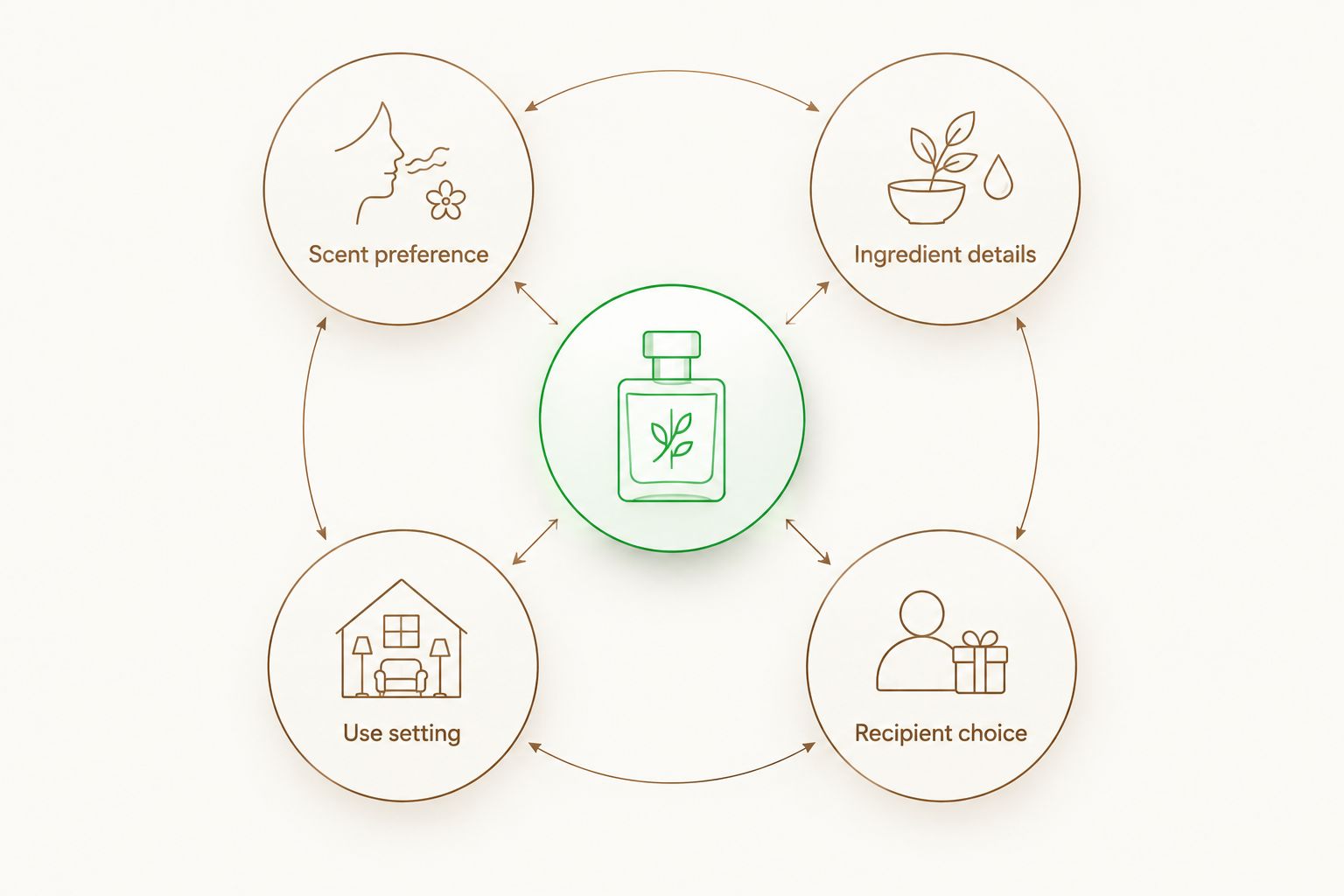
Start with the recipient rather than the promise on the box. Use these checks before choosing a scented or unscented option:
- Scent preference: Has the recipient expressed an interest in fragrance? If you do not know, an unscented gift avoids making that decision for them.
- Ingredient details: Read the information provided for the exact item. Broad terms such as clean and non-toxic do not replace a check for ingredients the recipient avoids.
- Use setting: Think about where the recipient would use the gift. A personal fragrance and a candle create different experiences, especially in a shared space.
- Recipient choice: Give the recipient room to leave an item unused or change the routine. A wellness gift works best as an invitation, not an assignment.
These criteria matter more than an elaborate explanation of fragrance science. If you cannot establish that someone enjoys scent, do not treat a scented set as the safest default. If you know they enjoy a fragrance ritual, decide whether the item fits how they already use scent rather than asking them to adopt a new habit.
There is also a practical difference between giving someone a ready-made set and choosing an individual item. A set can make a gift feel complete without requiring the recipient to assemble a routine. An individual item gives you a narrower choice if you already know what they like. Neither format is more effective at reducing stress simply because of how it is packaged.
Why does the experience vary from person to person?
A gift can arrive at the right moment and still be the wrong fit. These factors explain why a single verdict about all wellness sets would mislead you:
- Personal associations: A scent that recalls a welcome memory for one person has no such meaning for another.
- Fragrance tolerance: Someone who finds scented spaces uncomfortable will not benefit from receiving more fragrance simply because it is described as calming.
- Control over use: Choosing when and whether to use a gift differs from encountering a scent unexpectedly in a shared room.
- The surrounding routine: A pause taken away from noise or competing tasks is different from opening a product while continuing to work.
- The source of stress: A gift does not change a deadline, caregiving demand or other ongoing pressure.
- Expectations: Promising relief can make a well-meant gift feel like a request to feel better on command.
In 2026, these differences are the strongest reason to avoid a universal stress-relief gift claim. They also make choosing easier: you do not need to predict a health outcome. You need to choose something the recipient is likely to welcome, with no pressure to use it in a prescribed way.
Is fragrance alone enough for a calming routine?
No. Fragrance is optional; the repeatable action is the routine. Someone might associate a particular scent with putting work aside, sitting quietly or practicing slow breathing. The scent can mark the transition, but it should not carry the entire expectation of relaxation.
NCCIH’s consumer guidance on relaxation techniques describes practices such as breathing exercises and notes that research on their effects varies by condition and technique. That is a more careful basis for discussing a calming routine than assuming an ingredient or aroma has a predictable effect. You can suggest a pause without claiming that pairing it with a scented product makes it medically effective.
If you are building a routine for yourself, keep it simple: choose a place where you can pause, decide on a comfortable activity and use fragrance only if you enjoy it. If scent pulls your attention toward irritation instead of rest, leave it out. The purpose of the routine is not to prove the gift worked; it is to make a break available.
Fragrance also cannot stand in for basic needs. For adults, CDC guidance recommends at least 7 hours of sleep per night. CDC physical-activity guidance for adults calls for 150 minutes of moderate-intensity activity per week or 75 minutes of vigorous-intensity activity per week, alongside muscle-strengthening activity on 2 days per week. Those are population-level health recommendations, not instructions to prescribe with a gift. They put a scented ritual in proportion: a pleasant pause belongs beside everyday care, not in place of it.
Can a non-toxic label tell you whether a gift is suitable?
No. A non-toxic description does not answer whether a particular recipient likes the scent, avoids an ingredient or wants fragrance in their space. Read the item’s ingredient information and consider the person who will use it. If you do not have that information, choose without making a safety or health promise.
This applies to clean fragrance as well as conventional fragrance. The terms used to describe a product’s approach are not a personal tolerance test. Someone can prefer an unscented environment regardless of how a scented product is described. Respect that preference rather than trying to persuade them that the gift is safe for them.
Caftari’s clean, non-toxic fragrance positioning makes its products relevant to shoppers who actively seek those qualities. It does not make a Caftari wellness gift set the right choice for someone who avoids scent, and it does not establish that a product prevents headaches, anxiety or sleep problems. For a gift, recipient fit is the useful test.
What should you say when giving a wellness gift?
Give the recipient a choice without assigning the gift a job. I thought you might enjoy this scent is more respectful than telling someone it will fix a stressful week. If you do not know their fragrance preference, ask before buying or choose a different kind of gift.
Avoid describing a fragrance gift as a substitute for professional help. Persistent stress can affect daily life, and a product cannot identify its cause. If someone has told you they are struggling, listen to what they want from you rather than treating the gift as the response. A scented item can still be a thoughtful gesture; it should not carry a claim it cannot meet.
For a colleague or other recipient you do not know closely, this distinction is especially useful in 2026. You can express appreciation without implying that you know their health needs. Give them freedom over when to use the gift, or whether to use it at all.
FAQ
Do wellness gift sets reduce stress?
Wellness gift sets can support a calming routine, but a gift set itself is not a proven stress treatment. The recipient’s scent preference and choice to take a break matter more than a wellness label.
Can a scented candle help me relax?
A scented candle can be part of a relaxing ritual if you enjoy its fragrance and want to use it. The candle does not guarantee a change in stress levels, and scent is not right for everyone.
Are perfume oils better than candles for a wellness gift?
Neither format is inherently better for reducing stress. Choose based on whether the recipient prefers personal fragrance, fragrance in a room or no added scent.
Does lavender fragrance treat anxiety?
Lavender fragrance is not an established treatment for anxiety. Research into aromatherapy does not justify promising a clinical result from a scented gift.
Does non-toxic mean a fragrance suits everyone?
No. A non-toxic description does not establish that every recipient will enjoy or tolerate a fragrance. Check the exact item’s information and respect the recipient’s preferences.
What if I do not know which scent someone likes?
Ask the recipient or choose an unscented gift. A fragrance selected without knowing their preferences is less personal than giving them a choice.
Can a wellness gift set replace a stress-management routine?
No. A gift can provide an optional cue for a break, but it cannot replace sleep, movement, relaxation practices or support for ongoing stress.
One last thing
The most considerate wellness gift leaves room for the recipient to say no to the ritual. In 2026, choose a scented set because someone enjoys fragrance, not because you expect a change in their health. Caftari is best for a shopper who wants to give a clean, scent-led self-care option to someone who welcomes it; the limit is that no gift can promise stress relief.

